
When truck owners search for truck apu installation, apu installation, or apu install cost, the question behind the search is a decision: should this electric APU (eAPU) be installed by the owner, or by the factory or a qualified technician? An electric APU has no second engine and is simpler in structure than a diesel APU, but it is still real electrical work on a high-current 24V system peaking at 200A. WeVolt's policy differs from the common diesel APU assumption—self-installation does not void the warranty; only faults caused by incorrect installation are excluded. This article explains what the two paths involve, how the costs compare, where the risk boundaries lie, and how to decide, with the boundaries stated. The example unit is the WeVolt Apex eAPU, designed and manufactured by WeVolt.
Install It Yourself, or Have It Installed?
Most buyers arrive at this point after comparing systems, understanding performance, and confirming warranty coverage—and then get stuck on a very practical question: does this 24V system get installed by the owner, or by the factory or a qualified technician? The question is common among people searching truck apu installation or how to install apu, yet most installation-cost articles online only quote a price and never address the decision.
One point should be stated first: self-installing an electric APU follows a different logic from the diesel APU norm of "professional installation or no warranty." Diesel APUs generally require installation by an authorized shop to keep the warranty intact. With the WeVolt eAPU, self-installation or independent servicing alone does not remove warranty coverage; only faults caused by incorrect installation or wiring are excluded. This is not a marketing line—it is the warranty text itself (see Section 5 and the notes at the end). What this article does is explain that policy clearly and give you a framework for judging whether a self-install is realistic.
This is a decision page covering "who does the work." For wire gauge and fuse sizing, see eAPU Wiring & Fuse Sizing Guide; for the installation process, warranty, and parts supply, see eAPU Installation, Warranty & Support. The three articles complement one another without repeating technical detail.
The Two Paths
The DIY path
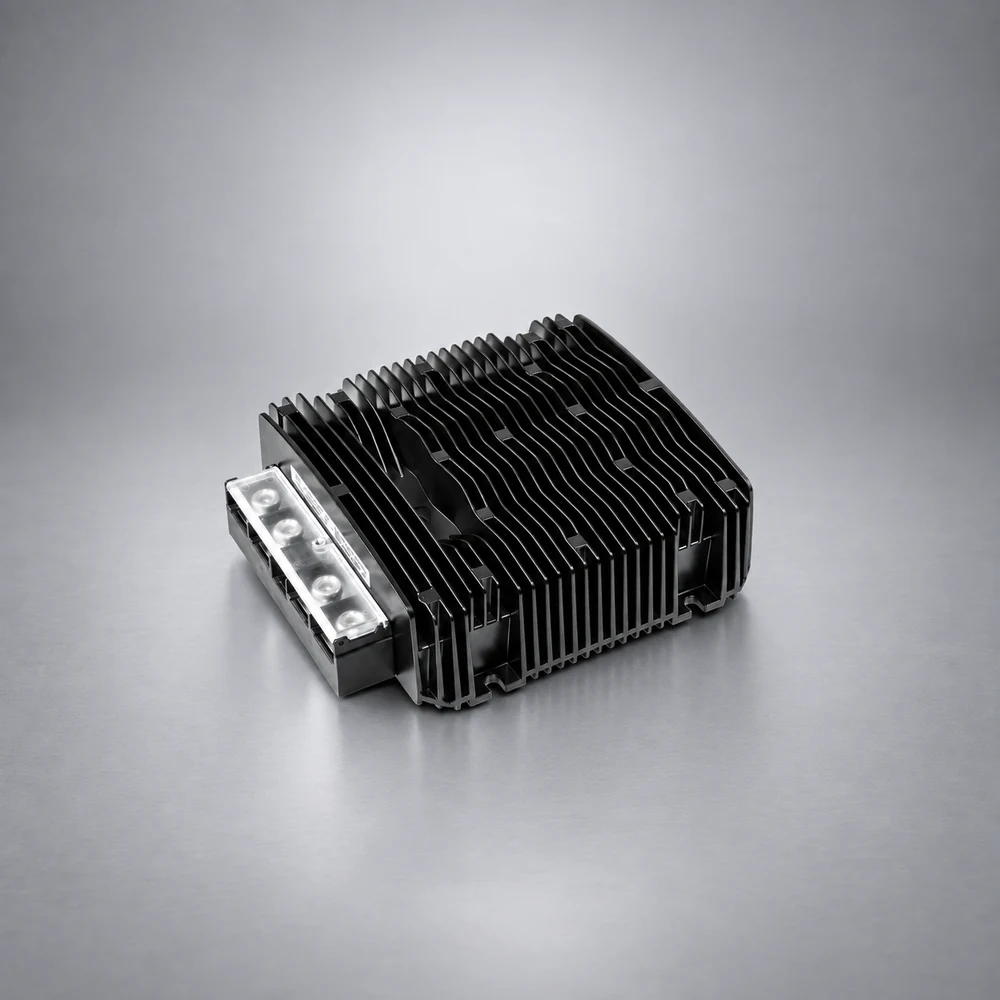
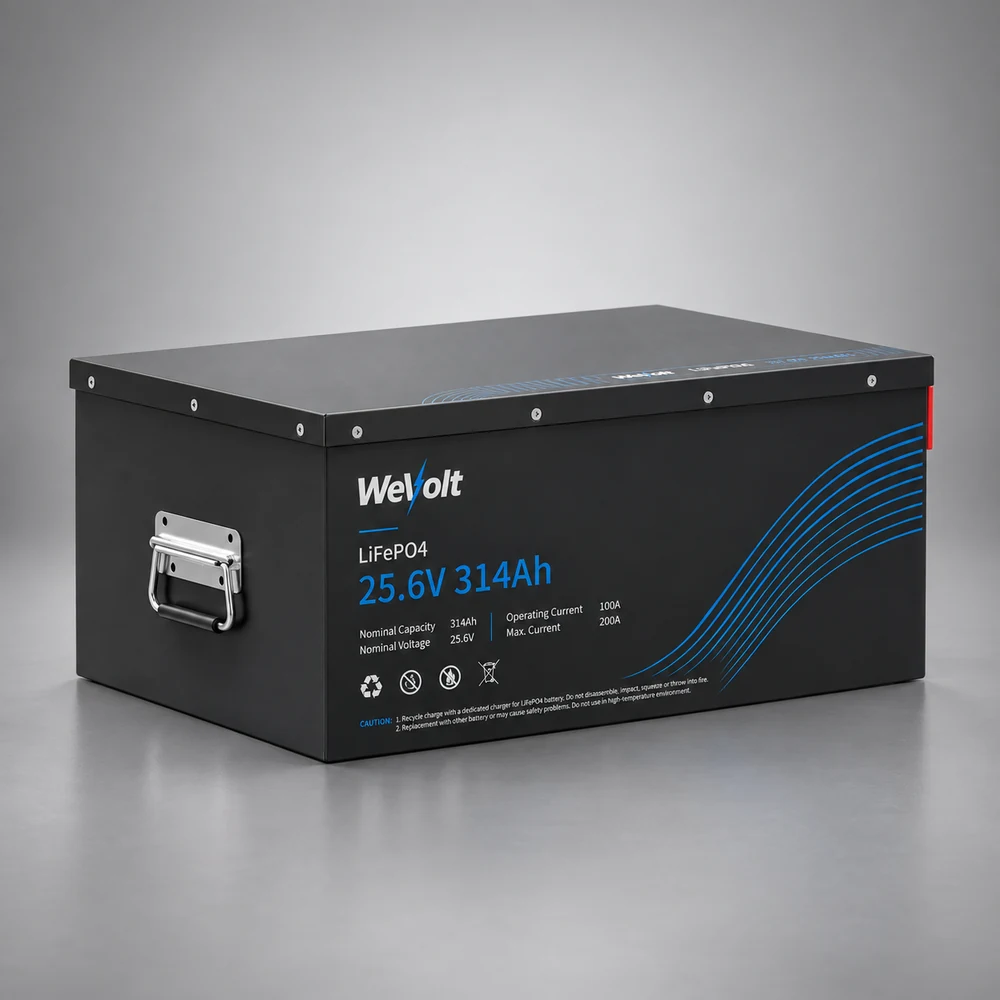
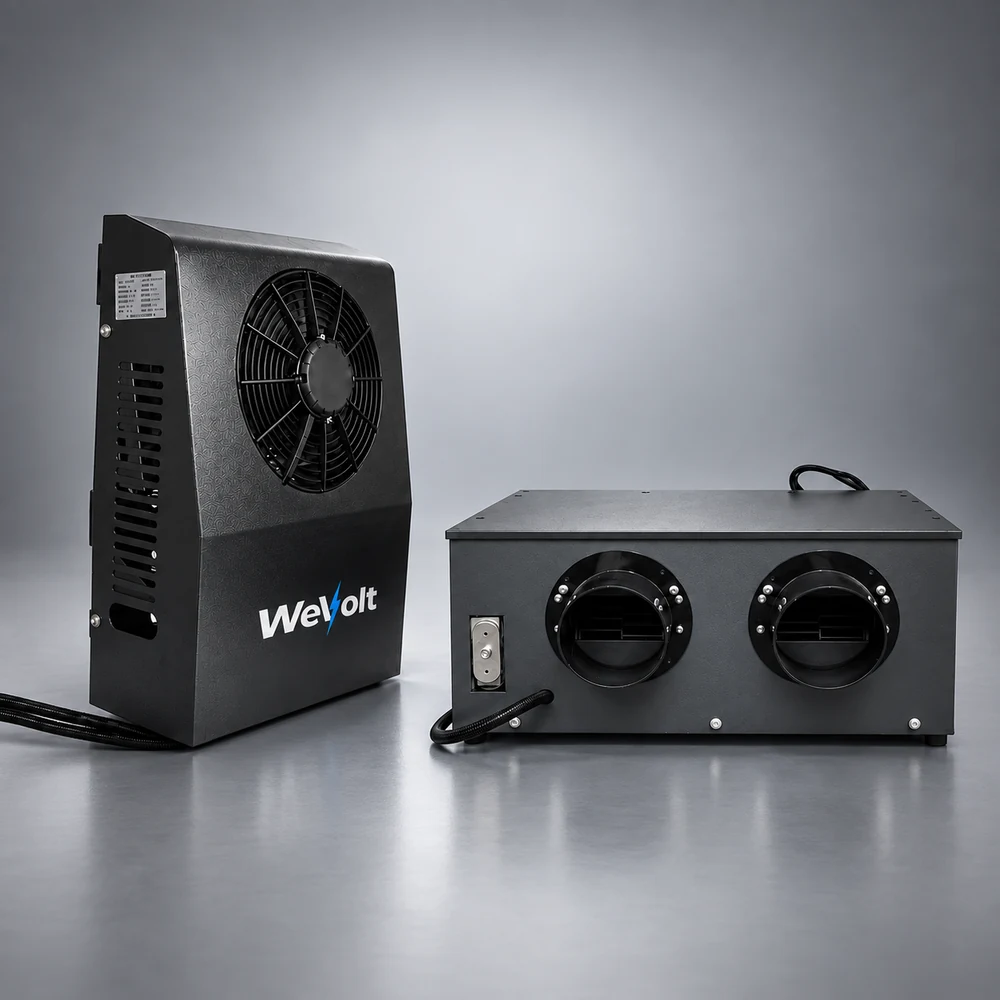
Purchase the complete WeVolt Apex eAPU kit—the standard three-piece set (auxiliary lithium battery + inverter-based parking air conditioner + bidirectional DC-DC charger) is included, while the inverter and diesel parking heater are optional—and then install it yourself following the 6-step wiring procedure in the official manual. You are responsible for labor costs and any trial-and-error expenses. WeVolt Apex eAPU's official parts list already includes all necessary installation components (Class T fuses, main switch, bus bar, UL terminals, and 2/4/1-0 AWG cables), so the question "What's missing from the kit?" has already been answered in the "Installation, Warranty, and Support" section—you won't need to search high and low for parts.
The factory / qualified technician path
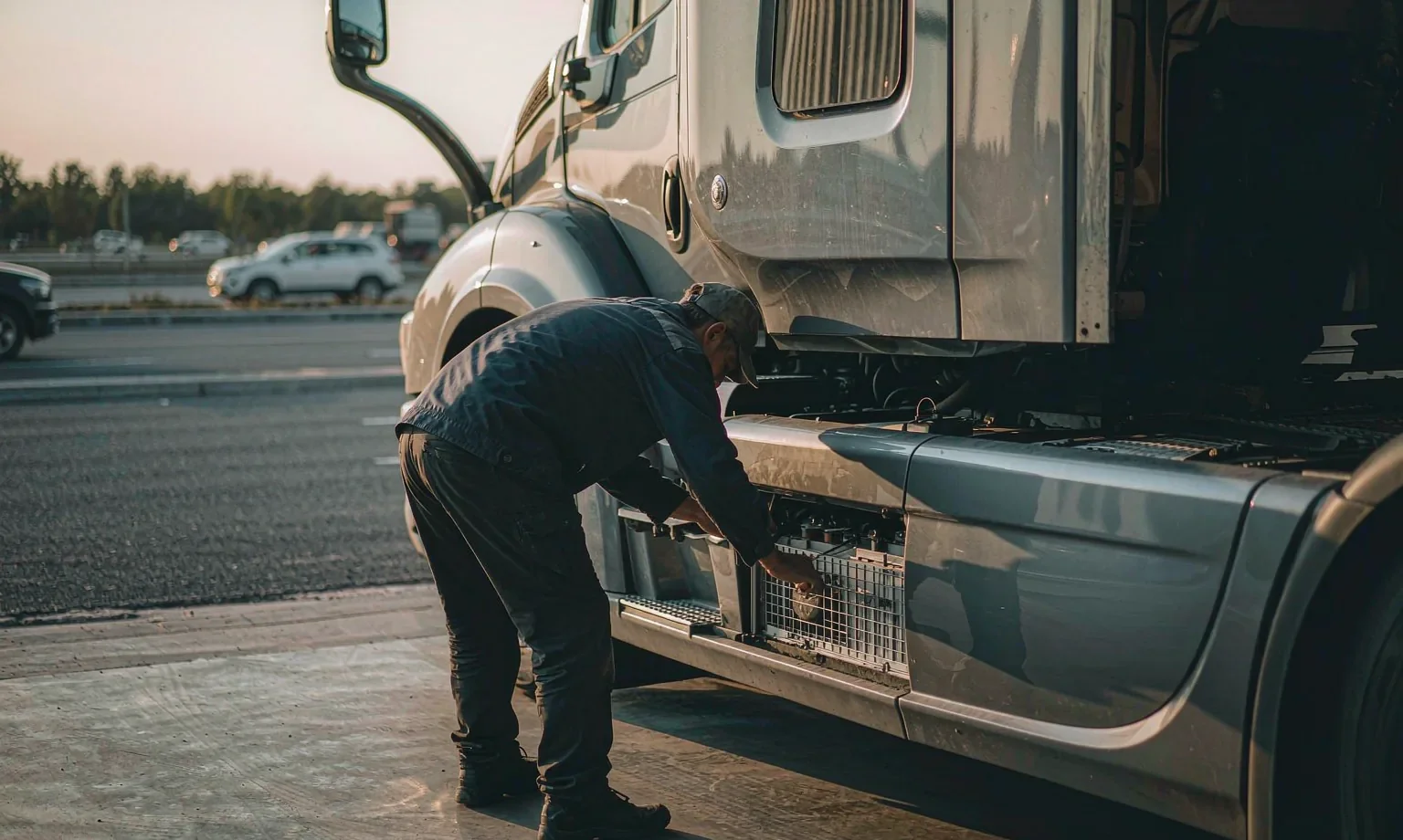
The same kit, installed by a qualified technician: wiring, power-on testing, and a warranty on the installation workmanship itself. The trade-offs are paying for labor and waiting for a scheduling slot. For buyers who are not confident, have a complex vehicle, or cannot afford downtime, this is the safer option.
An honest point: an eAPU has no second engine—no fuel lines, no coolant plumbing, no refrigerant circuits—so installation is genuinely simpler than a diesel APU. That is a real advantage. But "simpler" does not mean "plug and play for beginners": it is still real electrical work on a 24V high-current system, and reversed polarity permanently damages the DC-DC (see Section 4). Whether a self-install is feasible depends on your electrical experience and your tools and workspace—not on whether the unit has an engine.
How to Calculate the Cost (No Fixed Installation Numbers)
What follows is a comparison framework, not a WeVolt quote. Installation labor varies widely with vehicle complexity, regional labor rates, and whether the truck is pre-wired, so any single fixed number would be misleading. This article gives ranges and third-party industry references only, with sources labeled.
Sources for the labor ranges: scienceinsights (electric APU unit $2K–5K plus labor $0.5K–1K; diesel labor $1.5K–3K) and keynnectlogistics (diesel APU professional installation totals $8K–14K). These are third-party industry references that vary by vehicle and region—not WeVolt data. Whether WeVolt will publish an official installation labor reference or a partner-technician network is listed as an open item at the end of this article.
Do not ignore hidden costs: the labor a DIY install saves can be lost to rework and downtime. In one industry case (keynnectlogistics), a DIY installer saved on labor but lost a week of loads to a wiring problem. The factory path includes power-on testing and a warranty on workmanship—value that does not appear in the labor figure. So it cannot simply be said that DIY is always cheaper.
Risks and Boundaries (Read the Two Halves Separately)
DIY risks (incorrect installation)
- Reversed polarity → the Bidirectional DC-DC Quick Start Guide states plainly that it permanently damages the charger. Disconnect vehicle power and all battery circuits before wiring, and verify polarity.
- Wrong wire gauge or fusing → voltage drop, heat, even a cable fire; for the specifics see eAPU Wiring & Fuse Sizing Guide, and always run through the 5-point pre-installation check (polarity, wire gauge, fuse placement, terminal tightness, signal wiring).
Self-installation does not void the warranty—but incorrect installation is excluded (the two halves must stay separate)
This is the easiest point to get wrong. The accurate statement is: self-installation or independent servicing alone does not remove warranty coverage; only faults caused by incorrect installation or connections (reverse polarity, loose terminals, unsuitable cables or fuses, incorrect voltage, loads exceeding ratings, and similar) are excluded. Never compress this into "DIY is fully covered" (an overstatement) or "DIY voids the warranty" (the opposite of the policy). The warranty text reads "DIY installation or independent servicing alone does not remove warranty coverage," and in the same policy lists incorrect installation among the exclusions—both halves must be kept.
Factory-path risks
Higher cost and scheduling requirements. But the workmanship is the technician's responsibility, and warranty claims caused by poor electrical integration are less likely—which points to a key industry signal.
Industry warning: manufacturer data indicates that "poor electrical integration causes 60% of APU warranty claims" (source: rockytransport, manufacturer data). This is risk context—it does not belong to WeVolt specifically and should not be exaggerated. What it shows is that "installed correctly" matters more for long-term reliability than "who installed it," and it explains why WeVolt completes the package with a full accessories kit, manuals, and parts-identification support.
WeVolt's DIY-Friendly Policies (The Differentiator)
- Self-installation does not void the warranty (incorrect installation excluded): contrasted with the diesel APU norm of "professional installation or no warranty," this is the policy difference of the eAPU and the core hook of this article.
- Complete kit + manuals + parts list: the standard three-piece set is included, the accessories kit is complete, and the 6-step wiring walkthrough and troubleshooting table are provided—self-installers get the materials and the reference documentation (C7 / C12).
- Two-way shipping in the first 30 days (covered defects): for covered defects reported within 30 days of delivery, WeVolt pays reasonable standard return and replacement shipping—reducing the downside of DIY trial and error (C12).
- [email protected] for parts identification and compatibility checks: before installing, email your vehicle model and configuration to confirm compatibility and avoid buying or connecting the wrong parts (C12 on-the-road parts support).
The policy in one sentence: if you are willing to do the work yourself, WeVolt does not cancel your warranty for that reason alone; but damage caused by reversed polarity or incorrect wiring falls under "incorrect installation" and is not covered. DIY is encouraged—on the manual's terms.
How to Decide: A Comparison Table
No one is making this decision for you—here is the framework. Compare row by row against your own situation:
Suggested reading of the table: if you can handle 24V systems, have the workspace and tools, and time is not pressing → DIY is realistic. If you are unsure, the vehicle is complex, or the truck cannot stop → use a qualified technician. When in doubt, send your vehicle model and configuration to [email protected] for a compatibility check first—cheaper than forcing it.
Summary and Next Steps
An electric APU is more self-install-friendly than a diesel APU—there is no second engine and the structure is simpler. And WeVolt's policy does not remove coverage because you installed it yourself; only incorrect installation is excluded. But it is real electrical work, and if you are not confident, use a qualified technician—that is the responsible choice. Understanding the cost framework and the risk boundaries is what lets you pick the right path, instead of being steered by a single installation-price number.
Suggested next steps: read eAPU Wiring & Fuse Sizing Guide to confirm the technical preparation, then eAPU Installation, Warranty & Support for the pre-purchase checklist and parts supply; before installing, email your vehicle model and configuration to [email protected] for verification.
Related reading: What Is an Electric APU · eAPU Wiring & Fuse Sizing Guide · eAPU Installation, Warranty & Support · Diesel vs Electric APU · Real-World eAPU Performance
Spec your build and hand it to an installerHow the WeVolt installation-support program works