

After comparing solutions and reading the performance numbers, most buyers are left with three questions right before they commit: who installs it, who stands behind it when something fails, and what happens if a part needs replacing mid-route. Those questions are exactly what the search terms apu installation and apu warranty represent. Installation, warranty, and support are the last psychological gate before a purchase. This article uses WeVolt's published warranty terms, official parts list, and after-sales process to explain all three clearly, and gives you a checklist of what to ask any seller before you buy—boundaries included. The example unit is the WeVolt Apex eAPU, designed and manufactured by WeVolt.
A Complete Kit Out of the Box: What's Missing from an WeVolt Apex eAPU Purchase?
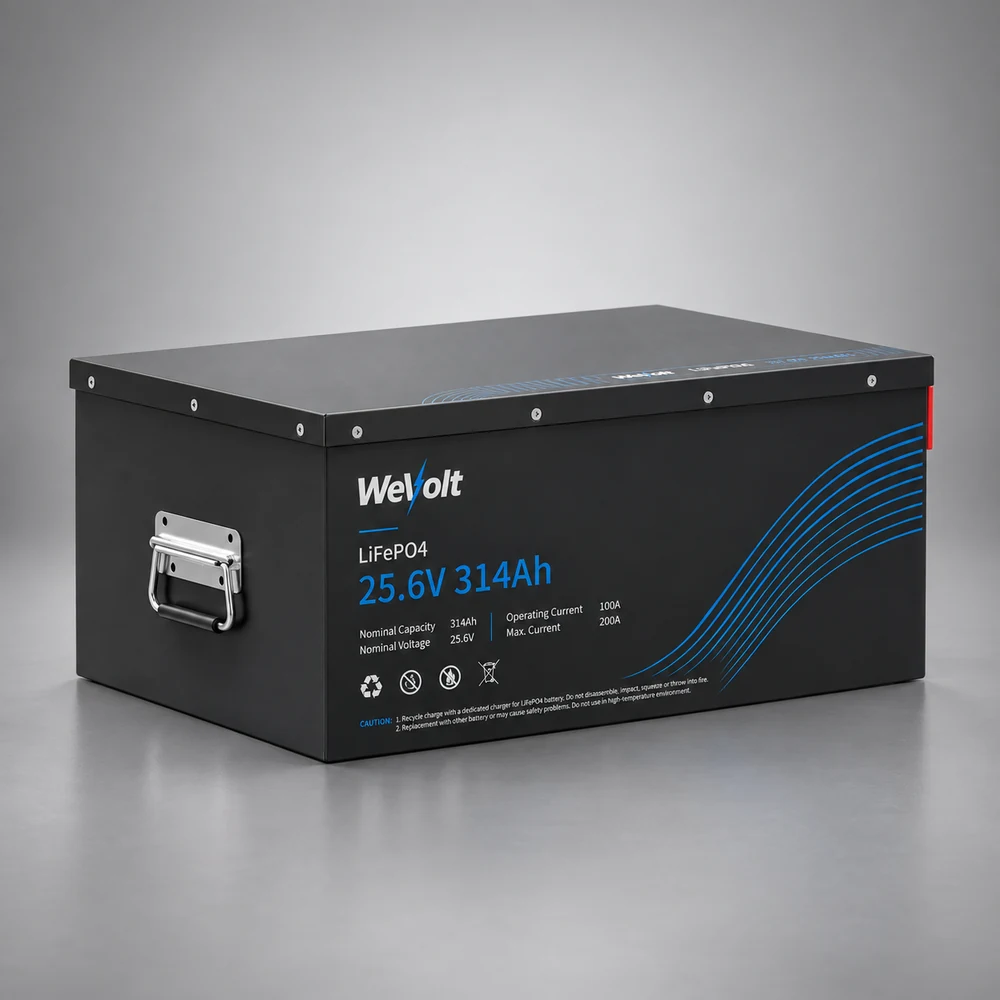
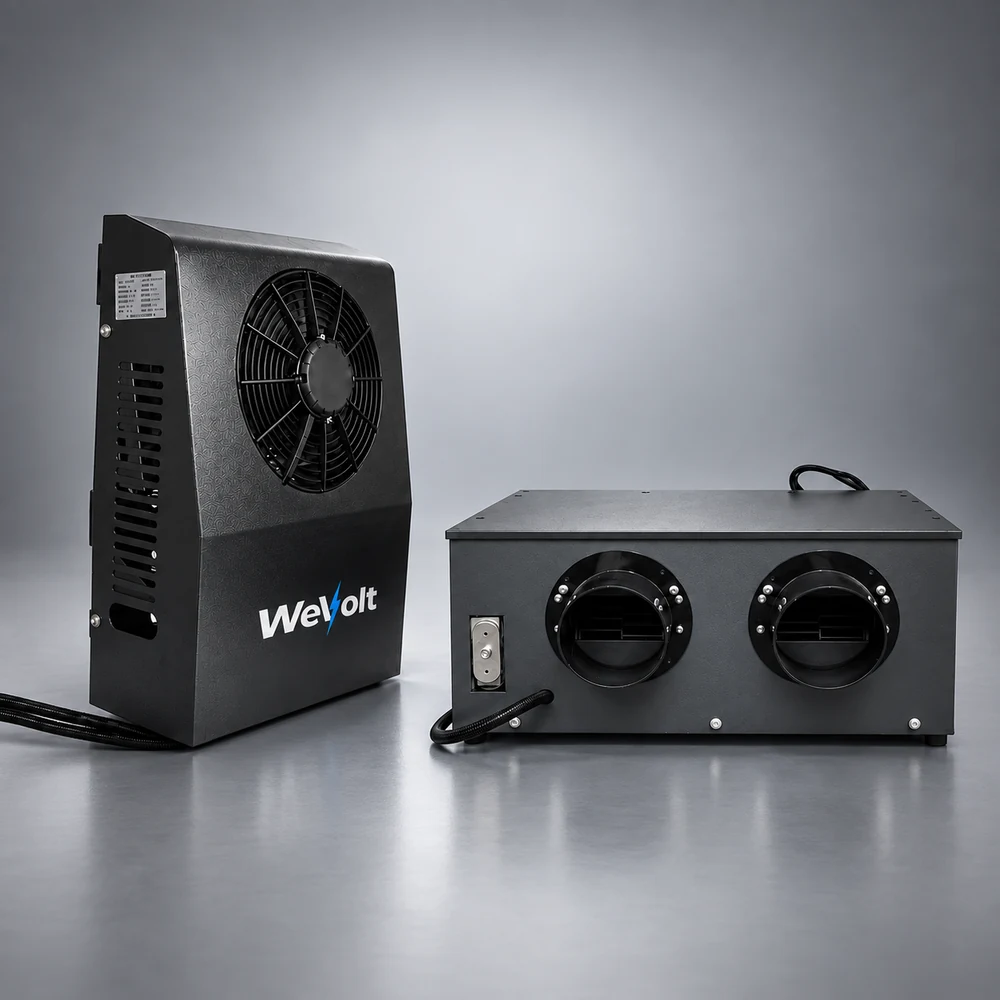
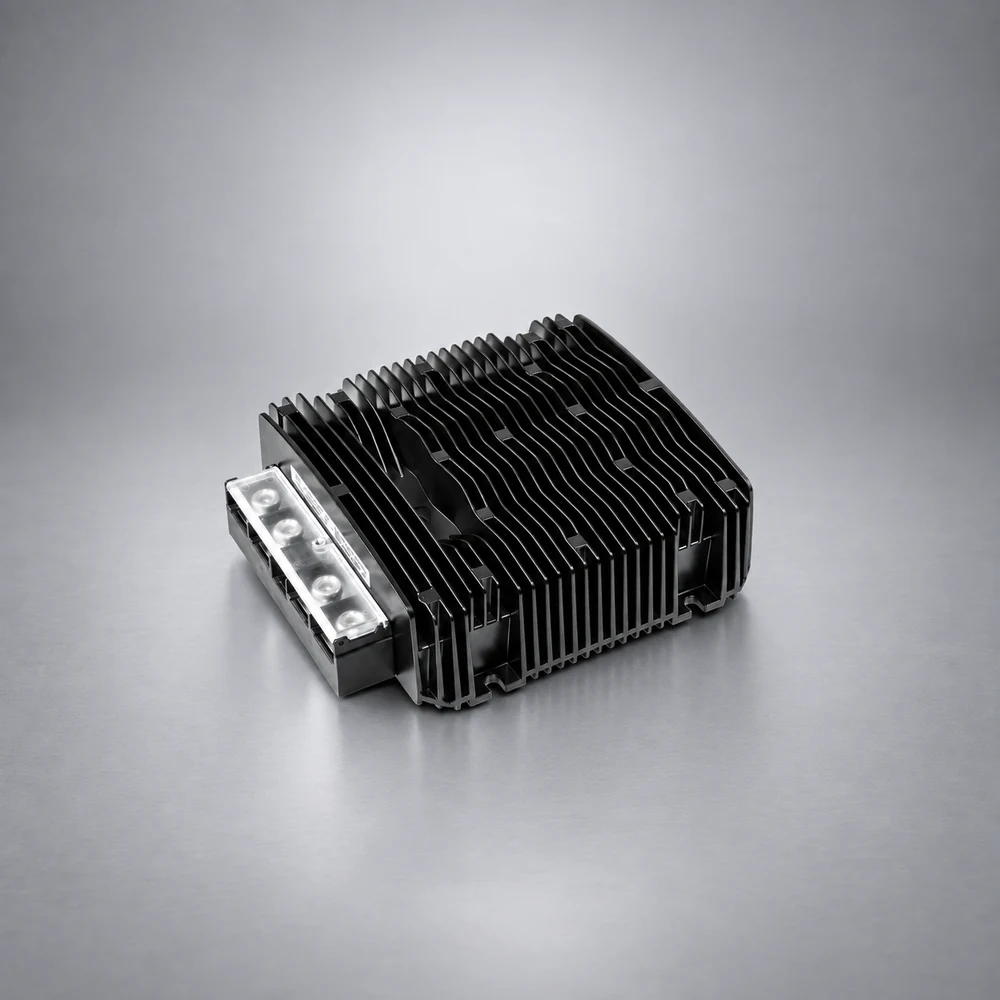
Many people worry that "they'll buy a bare unit and have to scour high and low for parts to install it in their car." That's not the case with WeVolt Apex eAPU—it comes as a complete system kit, including all three standard components, plus a separate set of system-level installation accessories. In short: when you buy an WeVolt Apex eAPU kit, all the wiring and protective components are already included—no need to hunt for them yourself.
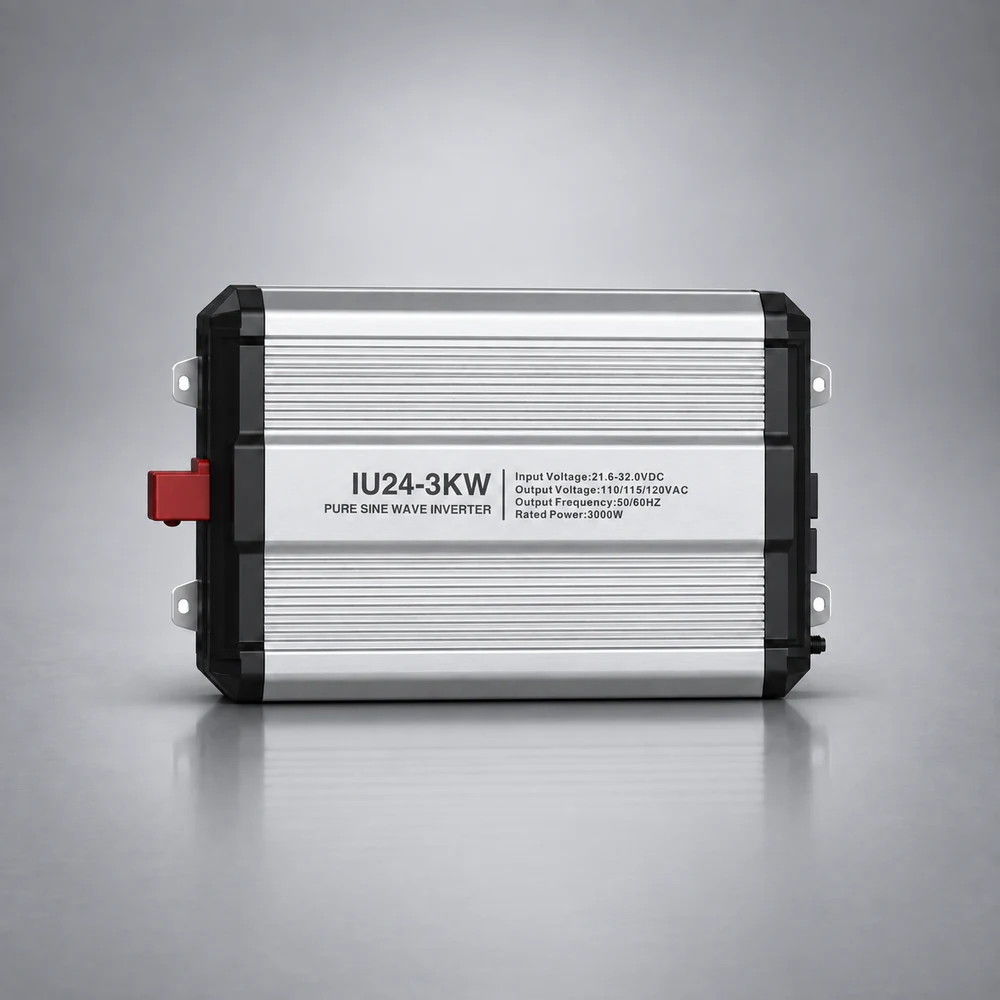
The "standard three-component system" means battery + air conditioner + bidirectional DC-DC, all three included as standard. The inverter and the diesel heater are ordered as options; they are not part of the base kit by default. Battery and air-conditioner details are covered in 24V 314Ah House Battery, the bidirectional DC-DC in Bidirectional DC-DC Charging, and the inverter option in Pure Sine Wave Inverter.
Installation: DIY Is Possible, but Know the Path
WeVolt Apex eAPU ships as a complete kit with manuals, so the installation path is clear. Taking the official quick-start guide for the bidirectional DC-DC as an example, wiring is a 6-step job: connect the auxiliary battery side (Side B) first, then the main battery side (Side A), the yellow ACC wire to the main battery positive, the green RMT wire to the auxiliary battery positive, with the communication cable reserved as needed. The hard wire-gauge requirement is 4 AWG on the main battery side and 6 AWG on the auxiliary side. Before powering up, check polarity and voltage (the main battery side accepts a wide 10–60VDC input, compatible with both 12V and 24V vehicles); on first power-up, watch the LED status, ventilation, and temperature (operating range -40°C to +55°C). The manual also includes a troubleshooting table.
For the whole system, WeVolt publishes an official configuration and power-flow diagram for the WeVolt Apex eAPU. Translated into text, it is five component cards:
Every cable and fuse needed to wire exactly this layout ships in the kit:
The power flow on the diagram comes down to four lines: while driving, the 12V vehicle system charges the 24V auxiliary battery; while parked, the house battery powers the DC HVAC and can reverse-charge the starter battery when needed; for AC appliances, the inverter draws from the same auxiliary battery; and all of it shares one battery limit—157A continuous / 200A max—so simultaneous HVAC and AC loads must be planned within that shared limit. The diagram also carries service notes worth repeating here: HVAC source protection is installer-selected (the 60A / 15A values on the unit cards are factory fuse ratings, not additional source-fuse requirements); the wiring lengths are not to scale; chassis/protective bonding follows the vehicle and product manuals; exact fuse identification and cable/fuse coordination require confirmation against the manuals; and the main switch OFF does not isolate charger power—isolate all sources before service.
An honest note on difficulty: this is a real electrical job, not a "zero-experience, plug-and-play" install. If you are comfortable working on 24V systems, you can self-install; if not, use a qualified technician. We supply the full kit, the manuals, and the parts list—but faults caused by incorrect installation such as reversed polarity, wrong wire gauge, or loads above rating are not covered by the warranty. Self-installation does not void the warranty by itself; faults caused by incorrect installation are not covered. These two halves need to be read separately.
For how to choose wire gauge and fuses, and why 4/6 AWG is a hard requirement, see eAPU Wire Gauge & Fuse Sizing. For the trade-offs between self-install and factory install, see DIY eAPU vs Factory Installation.
Warranty: Broken Down by Component, Not One Blanket "X-Year" Claim
The warranty is presented component by component, not collapsed into a single "X-year whole-unit warranty." The table below lists the coverage period and scope for each WeVolt Apex eAPU component:
Coverage and start date: the warranty applies to the original end-user purchaser of a new unit bought from WeVolt or an authorized channel, and is generally non-transferable (except where required by law). Coverage starts on the date of delivery and requires no product registration—keep your proof of purchase, delivery record, and serial number.
Boundaries that must be stated clearly: (1) The 10-year house battery warranty covers manufacturing defects (cells / BMS / heating). Normal capacity loss from age and cycling is not a defect; where the sales documentation does not state otherwise, no minimum retained capacity is promised—it cannot be written as a "10-year full-capacity guarantee." (2) Exclusions include incorrect installation or wiring (reversed polarity, loose terminals, mismatched fuses, wrong voltage, over-rated loads), use beyond specification, external causes (collision / flooding / lightning), and modifications—but self-installation or third-party repair does not void coverage by itself. (3) Shipping is spelled out precisely: for the first 30 days after delivery, WeVolt covers reasonable standard round-trip shipping for in-warranty defects; after that, the customer pays return shipping and WeVolt pays standard shipping for the replacement or repaired unit back to the original destination country. Local removal/reinstallation, on-site service, and third-party labor are reimbursed only with prior written approval.
Claim process: email [email protected] with your order number / model / serial number, a description of the issue, and photos, video, or error codes. Perform reasonable self-checks first (only those that can be done safely). WeVolt confirms coverage and the service plan; where testing or a return is needed, an RMA and shipping instructions are provided. Repair or replacement is at WeVolt's discretion; in-warranty parts and labor are free (a replacement may be new or tested refurbished), and a repaired or replaced unit carries the remainder of the original warranty or 90 days, whichever is longer.
For how warranty interacts with self-install vs factory install, see DIY eAPU vs Factory Installation; for the complete system, see the system overview page.
Parts and Technical Support on the Road: When Something Fails Mid-Route
The worst case on a long haul is a failure far from home with no parts available. After delivery, WeVolt provides a complete parts list (core components plus installation accessories, with model numbers and specifications) so you or your technician can identify components quickly. The system is built from commonly available commercial components, which can be sourced or ordered locally through US parts stores and specialty suppliers (truck, RV, and electrical). You can also hand the parts list and manuals to a qualified local technician; main components can be tested and replaced individually.
- Not sure which part you need? Email [email protected] with your order number, a photo of the part's label, and a brief description. If you have already found a potential replacement, attach the model number or product link and WeVolt will verify compatibility.
- Verify before installing: confirm the electrical ratings, function, connectors, and physical fit of any replacement part yourself to avoid buying the wrong item.
- Realistic lead times: stock and delivery times vary by supplier and region; same-day availability everywhere is not promised.
The bidirectional DC-DC is a main component and can be replaced individually—see Bidirectional DC-DC Charging; the house battery is covered in 24V 314Ah House Battery. The keyword apu parts is a real, high-volume search term in North America, and the parts-and-support path described here is the direct answer to it.
Once something has actually failed: isolate the power sources, locate the fault by symptom, read the A/C fault codes, identify the part, and choose between local repair and a claimThe Checklist: What to Ask Before You Buy
The points above condense into a before-you-buy checklist, each question paired with WeVolt's answer so you can compare any APU seller side by side:
For installation preparation, see eAPU Wire Gauge & Fuse Sizing; for self-install vs factory install, see DIY eAPU vs Factory Installation; for the complete system and pricing, see the system overview page; for after-sales part identification and claims, contact [email protected].
Summary and Next Steps
Buying an electric APU is about more than the sticker price. Whether the kit is complete, whether the warranty is genuinely itemized by component, and whether parts and technical support are reachable on the road—these three things are what actually protect you. The WeVolt Apex eAPU ships with the standard three-component system and the installation accessories kit complete out of the box, the warranty is itemized (air conditioner 2 years / battery 10 years / bidirectional DC-DC 2 years / inverter 3 years / diesel heater 2 years), self-installation does not void coverage (incorrect installation is excluded), and the complete parts list plus commonly available US components give you a real path to mid-route repairs. Clear boundaries are more credible than a single impressive number.
Suggested next steps: start with installation preparation (C7), then compare self-install vs factory install (C8), then review the system overview page, and finally contact [email protected] to confirm the right configuration for your truck.
Related reading: What Is an Electric APU · Diesel APU vs Electric APU · Truck APU Solutions Compared · eAPU Real-World Performance · 24V 314Ah House Battery · Bidirectional DC-DC Charging · Pure Sine Wave Inverter · eAPU Wire Gauge & Fuse Sizing · DIY eAPU vs Factory Installation