

When you go looking for a truck apu, or what most fleets call an auxiliary power unit for semi trucks, the search turns up a confusing pile of names: diesel APU, electric APU, parking AC, battery-only. Prices run from about $3,000 to $17,000, and it gets hard to tell what does what. They all solve the same problem, but the principle and the cost are completely different. Below is a comparison table and a way to choose by scenario, so you can pick for your own operation and not pay for what you don't need. We use the WeVolt Apex eAPU, a proven 24V electric system, as the worked example and put the real numbers on the table.
Introduction: Four Options, What You Are Actually Comparing
A diesel APU is a small diesel engine from names like Thermo King, Carrier, Comfort Pro, or Green APU. An electric APU runs on batteries. Some drivers fit only a parking AC, or add a lithium bank. They all sit under the "APU" label, but they solve different slices of the same problem.
This guide puts four options on the table: electric APU (eAPU) / diesel APU / parking AC / battery-only. Don't rush to pick a side between diesel and electric. See what each gives you and what it doesn't, then choose by your operation. The detailed cost, fuel, and reliability math for diesel versus electric is covered in a separate article; here you get the overview and the selection method.
For the specs of each component, the end of the article links to the matching write-ups (24V parking battery, 24V truck AC, bidirectional DC-DC charging, pure sine wave inverter).
Four Ways to Power a Parked Truck
One-line definition of each, and what powers it. That base supports every comparison below.
- Diesel APU: a standalone small diesel engine built to run parked HVAC and electrics. The main engine can stay off, but you now carry a combustion engine.
- Electric APU / eAPU (Integrated Electric APU): a pre-engineered battery system that bundles AC, inverter, and charging. After the main engine shuts off, the parked battery runs HVAC and hotel loads, and recharges while driving.
- Parking AC: a standalone DC air conditioner that does cooling only. It draws from the existing or added truck battery. No inverter, no charging.
- Battery-Only: a lithium bank or portable power station for hotel loads like phones, laptops, and small appliances. No air conditioning. For cooling you add a parking AC or an eAPU.
The easiest point to mix up: a parking AC is not an APU. By the definition most APU makers use, fitting a parking AC alone does not count as an APU. It cools only. It does not run an inverter, does not handle charging, and cannot back up the starter battery. This boundary comes up again below.
Side-by-Side Comparison Table
The table compares all four across dimensions. The last row sums up what it means for the driver in one line.
These price ranges are representative and are not a same-bundle comparison (quoted from the WeVolt comparison page: competitor prices are references only and should not be read as one-to-one, same-spec quotes). The truck apu cost for a diesel unit, $12–17K, and the WeVolt Apex eAPU at $3,980 are not the same configuration lined up head to head: the diesel figure includes professional installation and is a complete small diesel engine system, while the electric figure is the starting price of a pre-engineered kit. Final numbers depend on the truck and configuration.
Open the full APU comparison — spec-by-spec table plus a printable checklist.Diesel APU: Long Runtime, But One More Engine to Service
Pros: runs independently, long runtime, proven and reliable. Thermo King (TriPac / Evolution), Carrier, Comfort Pro, and Green APU are established brands. For drivers on very long solo routes who need heat and cooling in extremes, a diesel APU is the safe pick.
Cons: one more diesel engine means one more set of fuel, service, noise, and maintenance. Measured diesel APU fuel use runs about 0.2–0.3 gal/hr, far below main-engine idling but still burning fuel. It solves "the main engine stays off," at the cost of "one more machine on the truck that needs servicing."
The detailed cost, fuel, and reliability math for diesel versus electric is covered in a separate article. This section is the overview.
Electric APU (eAPU): Comfort With the Engine Off, No Second Engine
The logic is simple: main engine OFF leads to the parked battery, which runs HVAC plus inverter. While driving, the bidirectional DC-DC charges the parked battery. While parked, the battery runs the AC and hotel loads, and if needed it can back up the starter battery in reverse. A normal overnight draw does not need a second diesel engine.
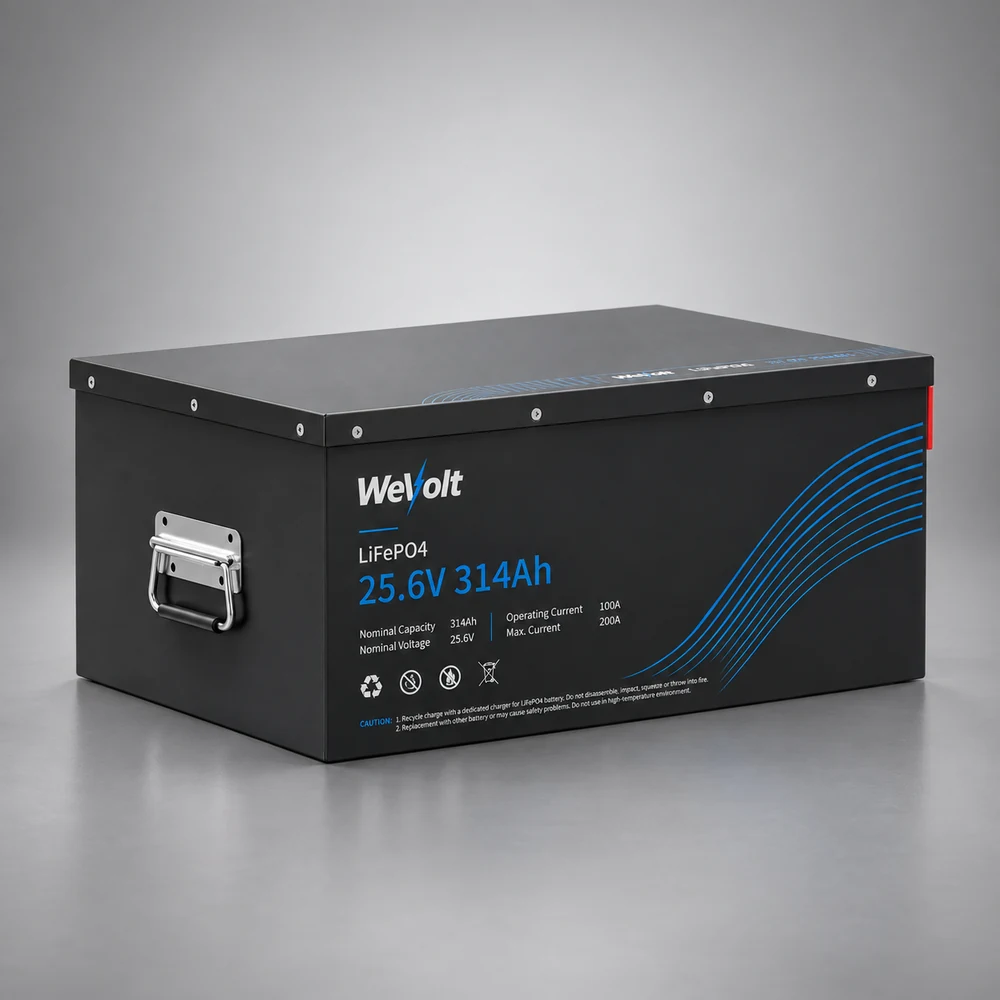
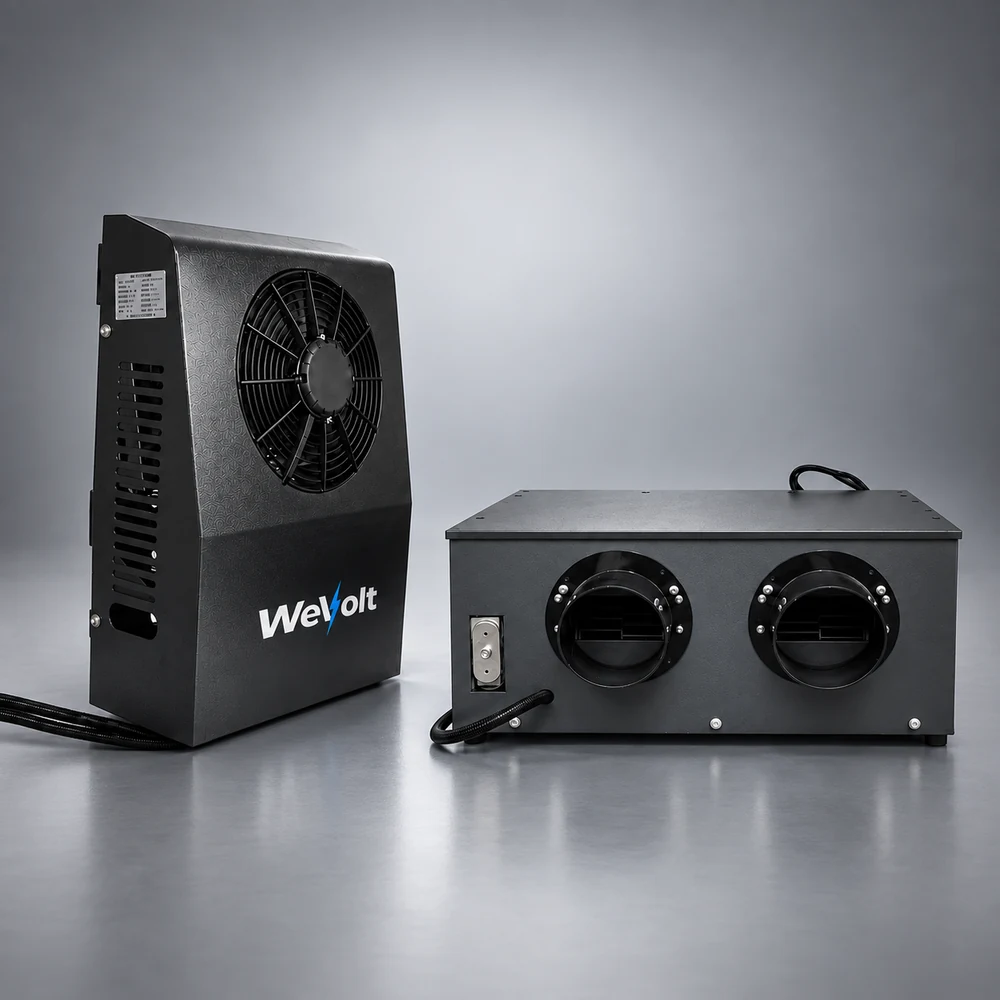
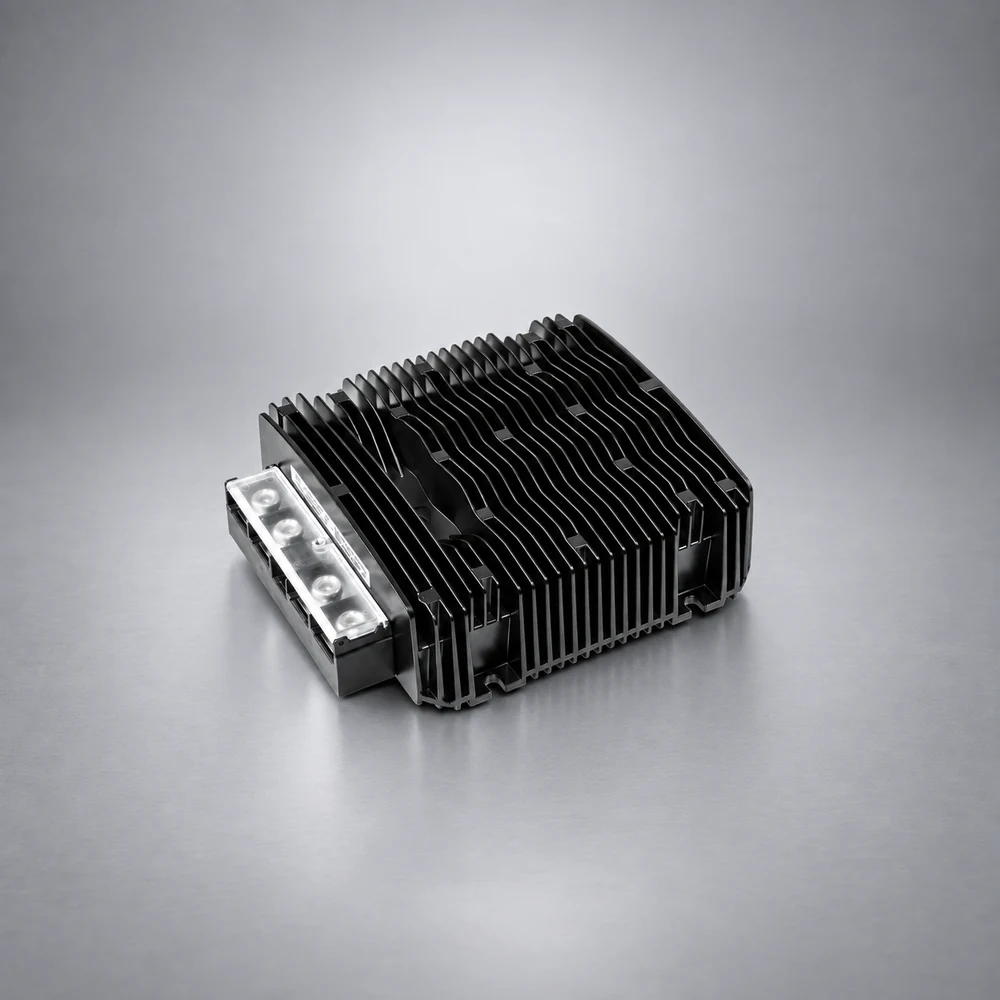
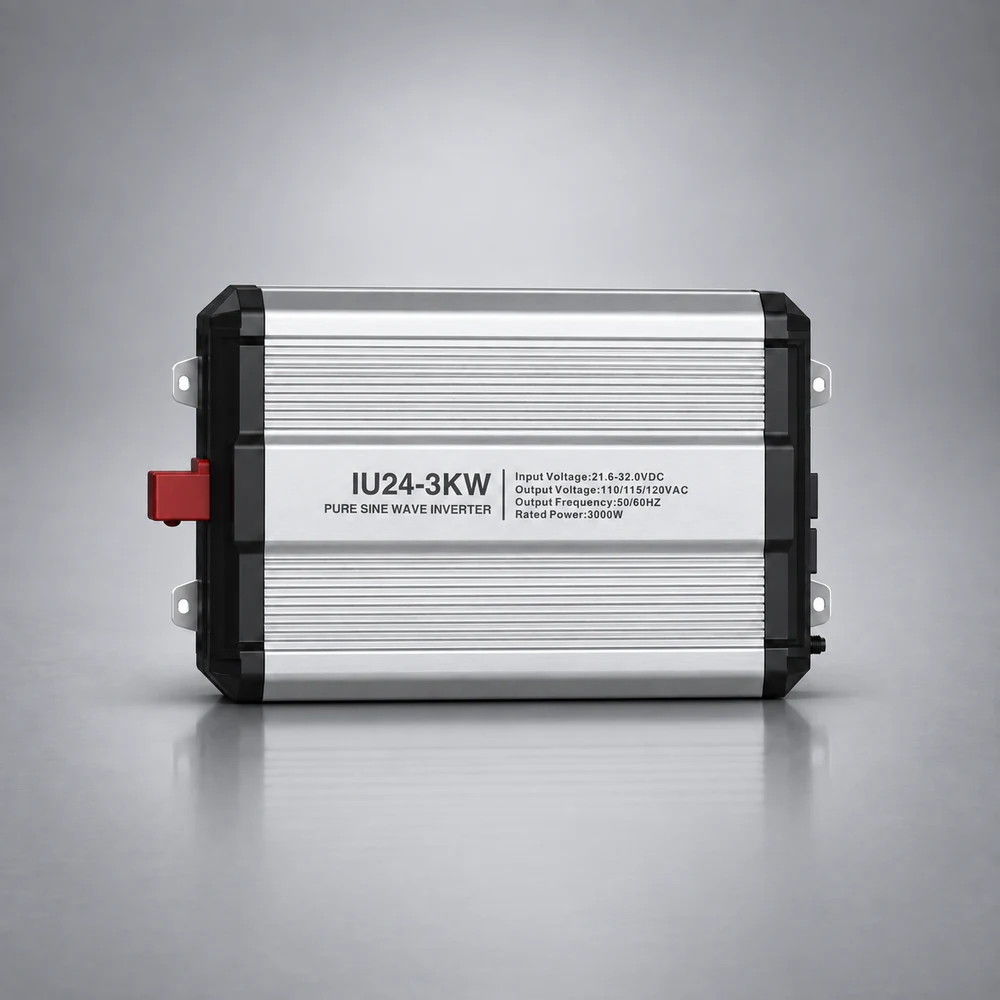
Real specs using the WeVolt Apex eAPU as the example: 8.04 kWh (25.6V / 314Ah LiFePO₄, EV-grade cells, 200A JK BMS, 157A continuous / 200A peak shared limit) / 10,000 BTU cooling plus 5,500 BTU heating (PTC) / 3,000W pure sine wave inverter (IU24-3KW) / WTDC-12-24V-50A bidirectional DC-DC (forward up to 29.2V / 50A, reverse up to 14.4V / 100A, IP65) / Class T fuses / complete install kit / 24V system.
Do the math: main-engine idling burns about 0.8 gal/hr. Times 8 hours a night, 250 nights a year, at $4 a gallon, idle fuel runs about $6,400/year. The electric option, at a conservative 75% net saving, is about $4,800/year, so the $3,980 starting price pays back in roughly 10 months. These are example assumptions (idle hours and diesel price move), and real payback shifts with your operation.
Honest note (extreme cold): the WeVolt Apex eAPU's 5.5K BTU is PTC mid-range heating. In severe cold you rely on an optional dedicated diesel heater as backup. We do not pretend one AC covers the whole year, which is also why northern long-winter routes commonly add diesel heating as a supplement.
Parking AC: Cheapest Cooling Entry, but Cooling Only
What it is: a standalone DC parking AC (like the WTAC-24V-10C form), cooling only, low price. Market reference: a 12V portable AC plus 480Ah lithium runs about $2,500–4,000. For a driver who just wants cheap summer-night cooling and already has or will add a battery, this is the lightest entry point.
Its boundary is hard: cooling only, no inverter, no charging, no reverse backup of the starter battery. It is an air conditioner, not an APU. If you want to run a laptop, make coffee, or back up the starter battery while parked, you move up to an eAPU or a diesel APU.
Battery-Only: Hotel Loads, No Climate
What it is: a lithium bank or portable power station for hotel loads like phones, laptops, and small appliances. No air conditioning. For cooling you add a parking AC or an eAPU.
Capacity is your call (300Ah+ lithium, for example), no fixed price. It solves "power stays on, phone and laptop stay charged while parked," but not climate. Paired with a parking AC it makes a light setup, but neither is a complete APU.
How to Choose: By Scenario
None of the four is absolutely best; each fits a different operation. Check the list:
- Very long solo routes, need heat and cold, budget available leads to Diesel APU: unlimited runtime, all-year, proven and reliable, at the cost of one more engine and its service.
- Parked AC plus inverter, all night, silent and zero fuel leads to Electric APU (eAPU): using the WeVolt Apex eAPU as the example, a proven 24V complete system.
- Cheap summer-night cooling only, with or willing to add a battery leads to Parking AC: lightest cooling entry, but cooling only.
- Hotel loads only, no cooling leads to Battery-only: phone and laptop stay charged, no climate.
One line: for a complete no-idle system pick diesel or electric; for cooling only pick a parking AC; for power only pick a battery.
A Real Example, FAQ, and Wrap-Up
Real example: WeVolt Apex eAPU 24V system
Expanding the eAPU line above: 25.6V / 314Ah / 8.04 kWh battery (LiFePO₄, EV-grade cells, auxiliary battery, not a starter battery) / 24V DC AC 10,000 BTU cooling, 5,500 BTU heating (PTC) / bidirectional DC-DC WTDC-12-24V-50A (forward up to 29.2V / 50A charging the parked battery while driving, reverse up to 14.4V / 100A backing up the starter battery) / 24V pure sine wave inverter 3,000W / Class T fuses / complete install kit. It is a fully assembled, proven 24V system, not loose parts to piece together.
Wrap-Up
The four options each have their weight: diesel runs long but needs service; electric is comfortable with the engine off and no second engine; a parking AC cools only and is cheapest; a battery handles power only. Pick by your operation and don't pay for capacity you won't use. The WeVolt Apex eAPU is a proven 24V complete system for the "parked AC plus inverter plus all night" need. If you are not sure which class fits your truck, email [email protected] with your truck model and parking habits and we will help you decide.
To see the matching components: 24V 314Ah parking battery, 24V truck AC, bidirectional DC-DC charging, pure sine wave inverter.