

Almost every electric APU buyer ends up asking the same questions: how many hours will it actually run? Will it still cool on a scorching day? How long does it take to recharge after a night? Those are the real buyer intents behind the search terms apu runtime and how long does an apu run. Runtime, cooling, and charging are the three hard questions buyers care about most. This article answers each one using WeVolt's published runtime estimate, derivations from the published specifications, and competitors' public test data. The test subject is the WeVolt Apex eAPU, designed and built by WeVolt, benchmarked against publicly available data from RoyPow, Green APU, Idle Free (Phillips Temro), and others. Final on-site title: Real-World eAPU Performance: Runtime, Cooling & Charging Tested.
What "Runtime" Actually Means for an Electric APU
"Range" isn't a fixed number. It varies depending on your load: whether you're running just the AC, the AC plus the refrigerator and TV, cooling or heating, and the outside temperature—the results will all be different. Before discussing specific hours, let's first categorize the load into three levels; all subsequent figures will be based on these three levels.
This "load level" framework applies equally to evaluating any advertised electric apu runtime or apu run time figure—first identify which level the number refers to, then judge whether it means anything for your operation.
WeVolt Apex eAPU Runtime: Manufacturer Estimate vs Derived Lower Bound
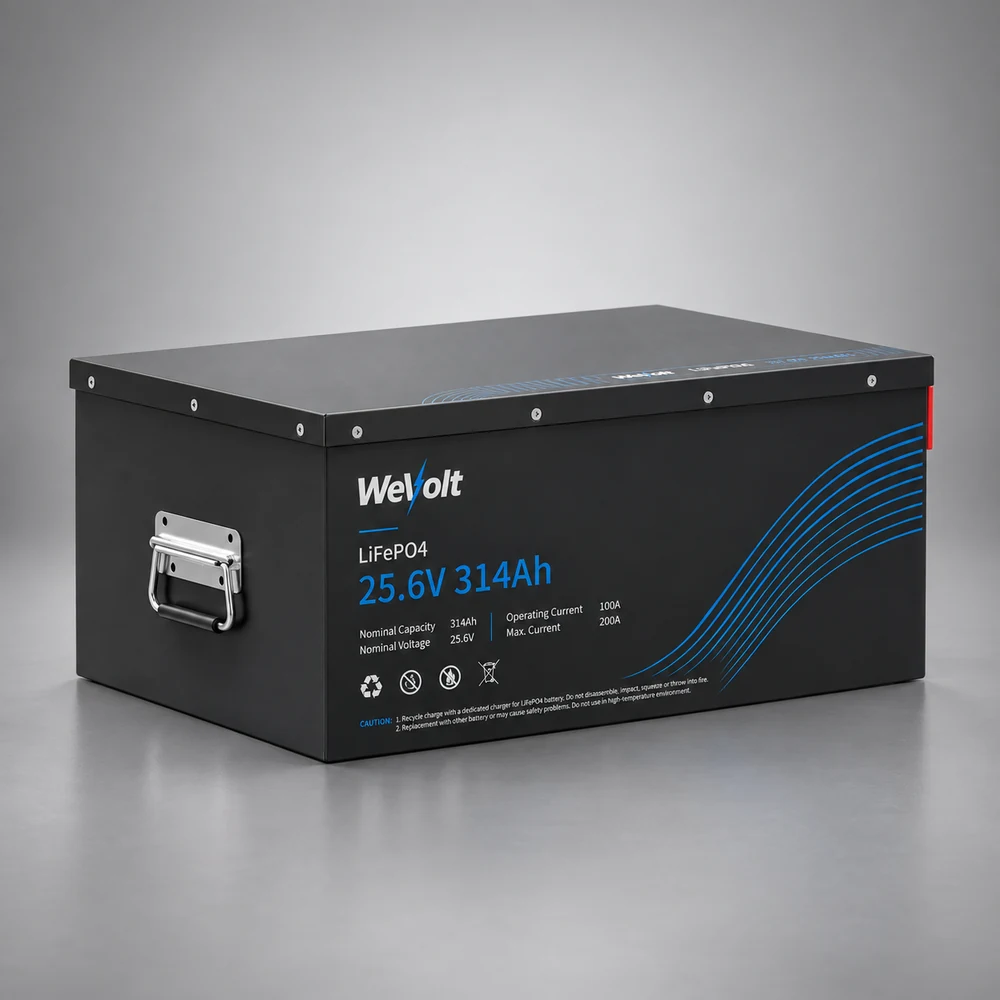
The WeVolt Apex eAPU's stationary battery is a 25.6V / 314Ah LiFePO₄ unit with an effective capacity of 8.04 kWh. Regarding range, the manufacturer has provided a public estimate, and there is also a lower limit derived from the specifications that can be verified; the two are not mutually exclusive.
Runtime (hours) ≈ battery capacity (Ah) ÷ load current (A)
Start with WeVolt's own published basis: the air-conditioning marketing brief states an Estimated Runtime of 8–10 hours (based on the 314Ah battery), and the product-line matrix states "10+ hours of air-conditioning operation." Now the derivation: substituting the HVAC rated parameters (912W cooling ≈ 38A, evaporator fan ≈ 2–8A taken as 5A, PTC heating 66.6A) into the formula yields the conservative lower bounds under continuous full load:
Why is the 8–10 hours specified by the manufacturer actually higher than the lower limit for continuous full-load operation (7.3 hours)? The key lies in the fact that the air conditioner uses a variable-speed compressor, which adjusts output on demand rather than repeatedly turning on and off. In practice, it operates intermittently, so the actual runtime falls within the 8–10-hour range rather than running continuously at full load. The purpose of deriving the lower limit is to provide a "worst-case scenario baseline," not to refute the manufacturer's estimate.
One point that must be stated clearly: Section 3 of the WeVolt website's Terms & Conditions states explicitly that runtime figures are estimates based on stated assumptions and test conditions—not guarantees, and that actual results are affected by fourteen factors, including ambient temperature, cab insulation, set temperature, and battery state of charge. This article therefore presents the manufacturer estimate (8–10 h) alongside the derived conservative lower bound (≈7 h); the two are consistent, but neither is an independently certified third-party test figure.
For the full story behind the battery capacity and component current draws, see 24V 314Ah Truck House Battery: How Capacity Is Calculated; to see how a larger battery stretches runtime at each level, see 12V vs 24V vs 48V eAPU: Which Voltage Is Right.
WeVolt Apex eAPU vs Competitor Runtime: Side-by-Side
Placing WeVolt Apex eAPU's estimates and derived values within the industry context helps clarify where it stands. The competitor data in the table below is sourced from manufacturers' publicly available specifications and third-party lab tests; these are publicly available figures and do not represent direct comparisons of identical packages.
The purpose of this comparison is not to bet on "which one lasts longest," but to show that runtime is determined jointly by capacity and load. RoyPow's 14H+ is a figure from its own data sheet (condition: <88°F / 32°C—not WeVolt); the WeVolt Apex eAPU row presents the manufacturer estimate (8–10 h) alongside the derived lower bound (≈7 h). Deeper reading: Truck APU Solutions Compared · Diesel APU vs Electric APU: Cost, Fuel & Reliability.
Honest boundary: competitor figures are manufacturer/third-party published values collected under different test conditions (temperature, load definitions) and cannot be read as direct like-for-like comparisons; the WeVolt Apex eAPU's 8–10 h is a manufacturer estimate and ≈7 h is a derived lower bound—neither is an independently certified third-party test figure.
Cooling Performance in High Heat
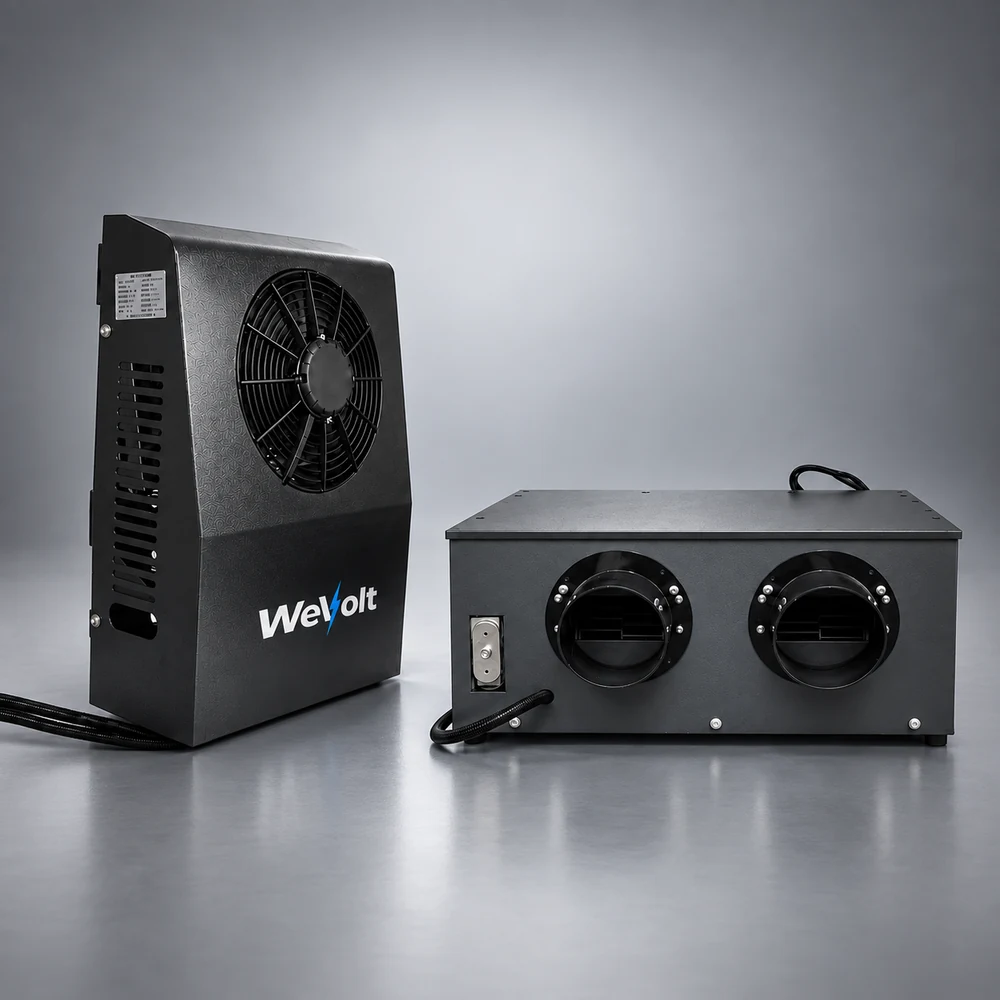
The WeVolt Apex eAPU cooling rating is 10,000 BTU. One piece of physics needs to be stated up front: compressor efficiency falls as ambient temperature rises—this is true of every vapor-compression air conditioner, not a weakness of any one brand. In sustained heat above 35°C (95°F), actual cooling output will sit below the rating, and the time needed to reach the set temperature will be longer.
On high-temperature capability, WeVolt's air-conditioning specifications draw a clear boundary: the HVAC's maximum stated ambient operating temperature is 52°C / 126°F. Within that range the unit operates to specification; beyond it, performance is not guaranteed. There is also a useful third-party industry reference: in the independent TMC 432A lab test, the Idle Free (Phillips Temro) unit logged a maximum apu run time of 620 minutes (10.3 hours) at 100°F (≈38°C) ambient—but that record measures "longest runtime," not "instant pull-down."
About the WeVolt Apex eAPU in high heat: 52°C / 126°F is a published specification limit, not an "untested" gap. That said, we state it honestly: compressor efficiency declining with ambient temperature is physics, so in extreme heat reaching a comfortable cab temperature takes longer—it will not turn the cab into an icebox instantly—and operation beyond the 52°C limit is not guaranteed. WeVolt's website Terms & Conditions §3 likewise lists runtime as an estimate affected by fourteen factors including ambient temperature, not a guarantee.
A sleeper cab is a small-volume space; 10K BTU is sufficient for the overwhelming majority of summer nights, and the competitor cooling range across the industry is roughly 7,500–15,000 BTU. For the practical playbook of running the AC all night on battery alone with the engine off, see Run Truck AC All Night Without Idling.
Recharging While Driving
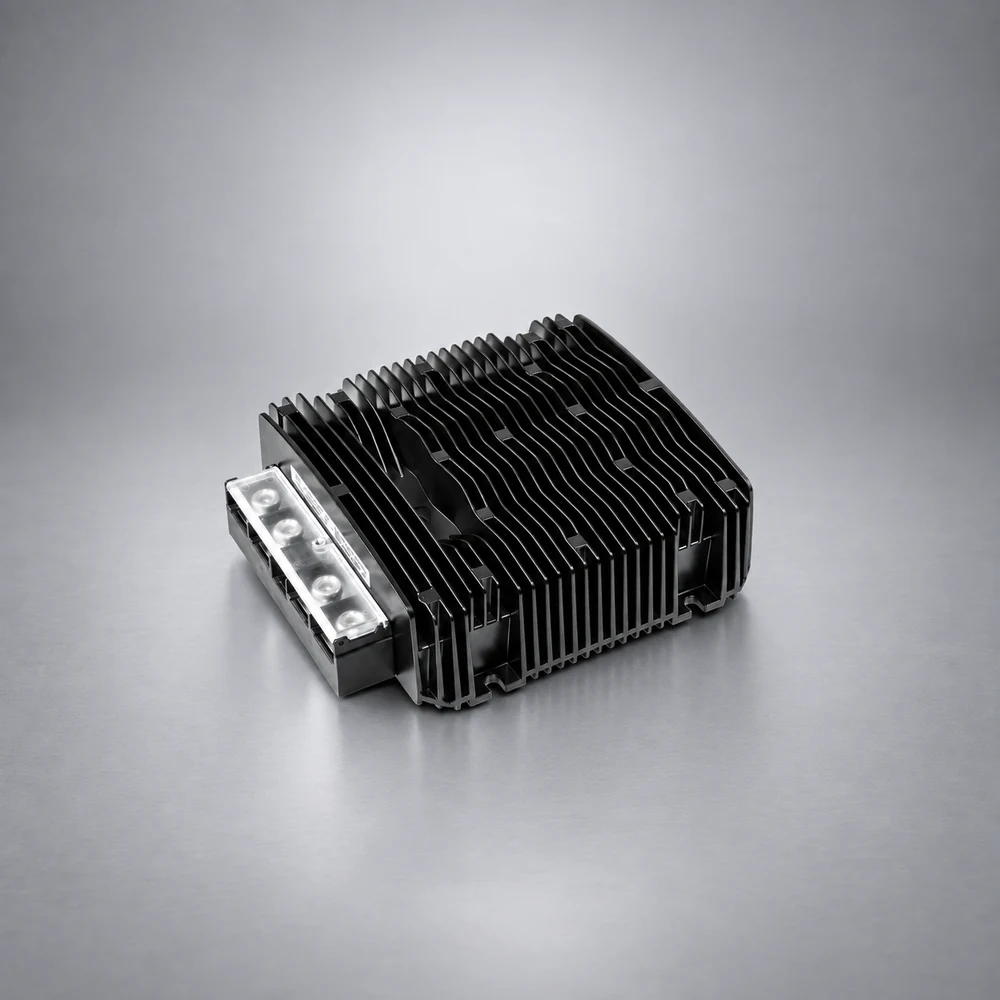
The other half of range anxiety is how fast the battery refills. The WeVolt Apex eAPU's bidirectional DC-DC (model WTDC-12-24V-50A) charges the 24V house battery in the forward direction at 29.2V / 50A while driving, and in reverse supplies 14.4V / 100A to the starter battery while parked, protecting it from depletion.
Estimating by the 50A forward charge rate, a full charge of the 314Ah house battery from empty takes:
314Ah ÷ 50A ≈ 6.3 hours
In real operations you rarely need a "full charge"—a few hours of highway driving is enough to replace one night's air-conditioning and hotel-load consumption. That is the core advantage of an eAPU over a pure battery setup: it recovers charge as you drive, with no external charging station required.
Charging parameters (published specifications): WTDC-12-24V-50A, IP65 protection, ACC+RMT control, rated 38A with a 10–45A operating range; forward 29.2V/50A, reverse 14.4V/100A. Protection is built in for unattended operation.
For the complete logic of house-battery recharge and starter-battery protection, see Bidirectional DC-DC Charger for Trucks · House Battery vs Starter Battery.
The Shared 157A Limit: How to Plan Your Loads
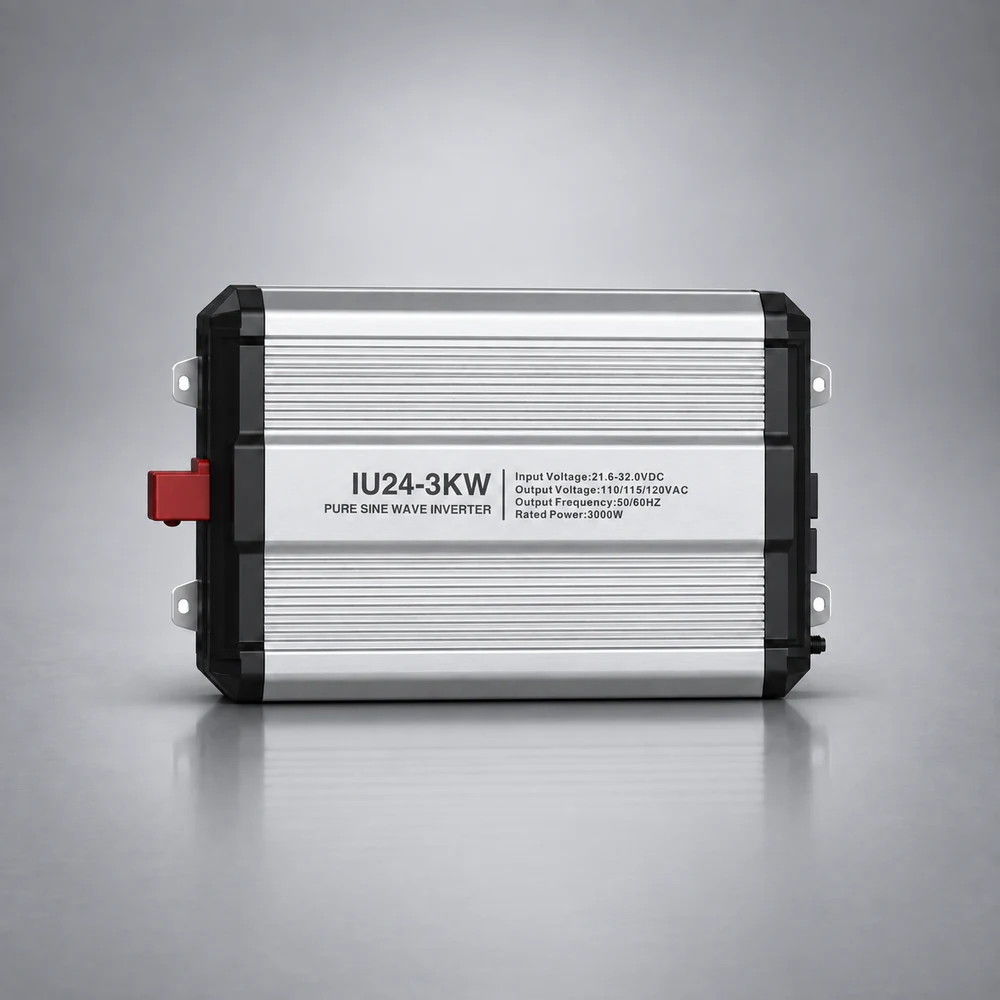
The WeVolt Apex eAPU battery has one design fact that matters: all active loads share a discharge limit of 157A continuous / 200A peak, managed by a 200A JK BMS. This means the air conditioner (≈38–45A cooling / ≈67A heating) and the 3,000W inverter (≈145A at full load) will touch that limit if both are run flat out at the same time.
- Not a defect—the design: the system never promises "full HVAC + full inverter at the same time"; the spec sheet states this honestly as "not rated for simultaneous full load."
- How to use it in practice: let the air conditioner pull the sleeper cab down to a comfortable temperature first, then switch on the fridge, TV, and laptop hotel loads; stagger high-draw appliances (a microwave, for example) and you will not hit the limit.
- Why it matters: stating this limit clearly is more credible than vaguely promising "3kW whenever you want," and it helps you plan electrical use around your real habits.
For wire gauge and fuse selection (F0 250A Class T main circuit, F3 200A battery circuit, and so on), see eAPU Wire Gauge & Fuse Selection; this connects directly to the current planning in Pure Sine Wave Inverter for 24V Truck Systems.
Summary and Next Steps
Runtime is not a single number; it is set jointly by battery capacity, load, and ambient temperature. The WeVolt Apex eAPU's runtime can be verified on two published levels: the manufacturer estimate of 8–10 hours, and a conservative continuous-full-load lower bound of ≈7 hours derived from the published parameters—the two agree because the variable-speed compressor runs intermittently. High-temperature cooling carries a published specification limit of 52°C / 126°F, beyond which operation is not guaranteed; and 50A bidirectional charging while driving lets the battery recover as you roll. Stating the basis clearly is more credible than quoting one fixed number of hours.
Suggested next steps: first understand how the battery capacity is set (B1), then the all-night AC playbook (A2) and the charging-while-driving mechanism (D1), and finally work out the payback (Why Do Electric APUs Cost $8K–$26K? / Is an Electric APU Worth It?).
Related reading: What Is an Electric APU · Diesel APU vs Electric APU: Cost, Fuel & Reliability · Truck APU Solutions Compared · 24V 314Ah Truck House Battery · Run Truck AC All Night Without Idling · Bidirectional DC-DC Charger · Pure Sine Wave Inverter · eAPU Wire Gauge & Fuse Selection · 12V vs 24V vs 48V eAPU
The 24V 314Ah battery behind the runtime figures8.04 kWh house battery: full specs and BMS limit