

Adding a truck eAPU for parked power starts with one decision that is easy to rush and hard to undo: the system voltage. 12V, 24V, or 48V? That single choice sets your wire gauge, your current draw, how much load you can run, and how easy the system is to expand later. This guide explains why voltage matters, compares the tradeoffs of each tier, and gives you a four-point checklist (vehicle, climate, wiring, and actual needs) to decide. Before you compare a semi truck battery or pick an inverter, settle the voltage first.
Intro: set voltage before parts
A parked-power system is built from a few pieces: a storage battery, an air conditioner, an inverter that turns DC into AC, and a charger that tops the battery up while driving. It looks like part shopping, but the first move is picking the voltage, because once voltage is set, everything else follows.
At 12V, the same 3000W load needs cable twice as thick. At 24V the wire gets thinner, runs cooler, and routes easier. At 48V it gets thinner still, which suits larger loads. So do not buy parts before you know which side of 12V, 24V, or 48V you are on. This guide gives you a framework to figure that out.
One formula to know: power = voltage × current
Electrical power follows a simple rule: power (W) = voltage (V) × current (I). To deliver the same power, a lower voltage forces a higher current through the wires.
At the common 3000W park load (ideal DC estimate; real systems need margin for losses):
- 12V: 3000W / 12V = 250A
- 24V: 3000W / 24V = 125A
- 48V: 3000W / 48V = 62.5A
Same 3000W: 24V draws half the current of 12V, and 48V draws a quarter. Lower current means a few concrete things: thinner wire and less copper, smaller terminals and fuses, less voltage drop over distance so power reaches the far end, and less heat from heavy current.
These are ideal DC figures. Real inverters and AC units have conversion losses, and wiring has voltage drop, so actual current runs higher. Whatever tier you choose, build in headroom. That is not optional.
12V systems: easy for small loads, but high current
Pros: parts are cheap and abundant, the DIY community knows it well, and most factory and small devices are already 12V, so wiring feels intuitive. If all you want at park is phone charging, a small fridge, and a few LEDs, 12V is plenty and the least fuss.
Cons: by the formula, current doubles versus 24V at the same load. That brings a chain of problems: thick cables, bulky terminals, noticeable voltage drop over distance, and heat and strain on fuses and switches. Past about 1500W, a 12V system starts to struggle.
Good for: vans, light builds, and minimal park loads that do not include an air conditioner or a large inverter.
Plain talk: a 12V kit, if built, means low voltage, high current, complex wiring, and a smaller battery. This article treats 12V as a framework, not a spec sheet. We do not list exact configurations or capacities here. Check the manufacturer's current offerings before you buy.
24V systems: the sweet spot for truck park power
Pros: at 3000W the current is only 125A, half of 12V, so the wiring is lighter, drop is lower, and routing is easier. That band covers most truck park loads, roughly 1 to 3kW (AC plus inverter plus small appliances), which is exactly where 24V sits best. Commercial trucks and long-haul rigs have settled on 24V as the mainstream voltage for good reason.
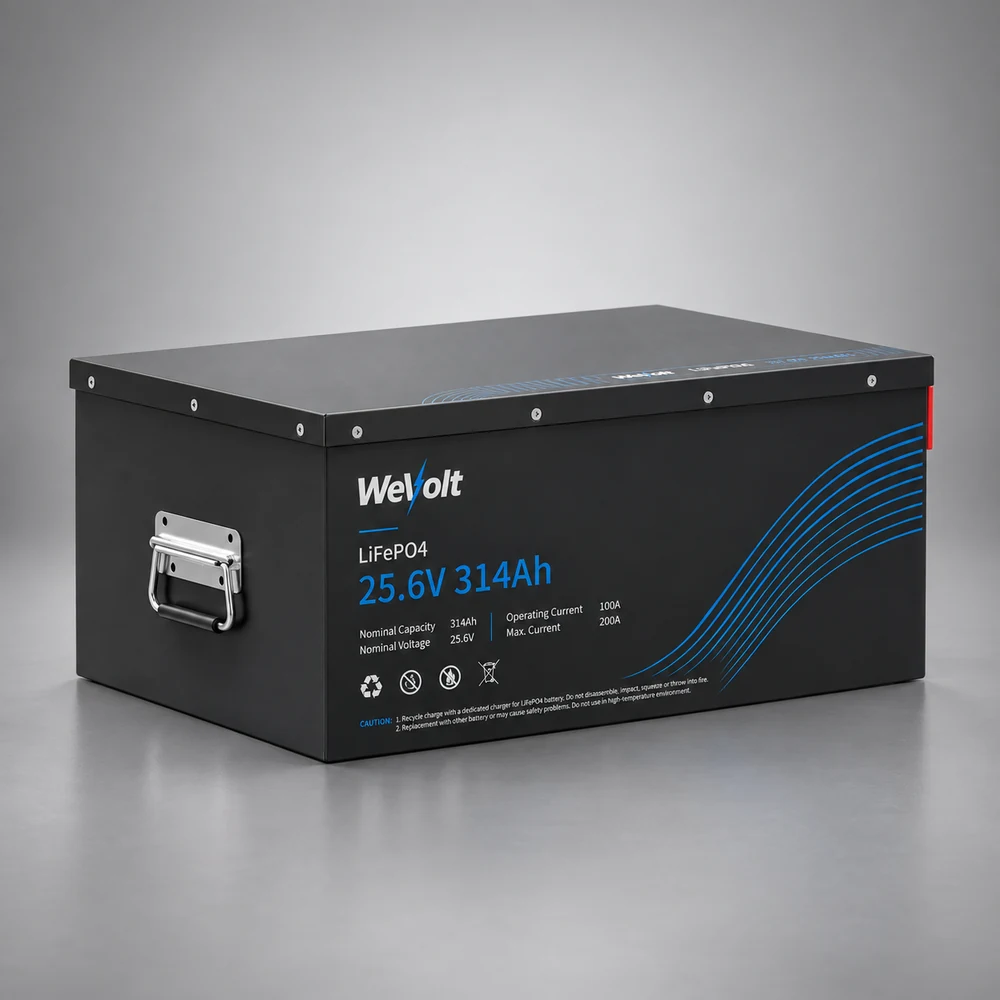
WeVolt side: every current component is built around 24V. The battery is 25.6V, 314Ah, 8.04 kWh. The air conditioner is 24V DC. The charging module is 24V-first. The inverter is 24V. Even the cold-weather backup is a separate 12V diesel heater that stays out of the 24V loop. Put those together and 24V is the best all-around value today.
Good for: long-haul trucks that need park AC plus inverter plus all-night power. That is the home turf of the WeVolt Apex eAPU.
Bottom line: if your need is run the AC, run the inverter, and never drop out overnight, 24V is the calmest choice for most trucks.
48V systems: industrial-grade power, higher bar
Pros: at 3000W the current is only 62.5A, about a quarter of 12V. The bigger the load, the more 48V pays off: thinnest wire, most copper saved, lowest drop and heat in large systems. For construction equipment and big reefer units that run past 3kW, a 48v lithium battery is the right call.
Cons: higher voltage means more cells in series, stricter demands on the BMS, isolation, and balancing, and higher cost and engineering bar. Mature truck e-APU kits in 48V are rare.
Plain talk: a 48v lithium battery setup is technically demanding and mature options are scarce. This article treats 48V as a framework and does not claim a 48V product is for sale, nor does it list specs or capacities. Check the manufacturer's current offerings.
The three tiers at a glance
Here is the same comparison compressed into one table.
The 12V and 48V columns describe the voltage tiers themselves, not WeVolt kits for sale. A 48v lithium battery is the most current-efficient of the three, but mature truck kits are still rare, which is why those columns are a framework, not a product. WeVolt's current, fully documented tier is 24V, mapped to the system below.
Which one fits you: four ways to decide
The voltage alone is not enough. Judge it against your own truck on four dimensions.
Dimension 1: vehicle type
Van, light build, no big load: 12V is enough. Long-haul park use: 24V is the sweet spot. Construction equipment or big reefer that needs sustained high power: that is where 48V earns its place.
Dimension 2: climate
Long parks in hard cold need heating backup. WeVolt's approach is a separate 12V diesel heater that stays out of the 24V loop and handles extreme cold. Pick a 24V main system and add that heater, which is steadier than expecting one air conditioner to fight a whole winter. We do not claim one 24V system covers the entire winter.
Dimension 3: wiring
Long runs from cab to battery, tight routing space: higher voltage saves more wire. 24V already halves the current versus 12V, which is enough for most trucks. You do not need to force 48V just to save cable.
Dimension 4: actual needs
Just charging and small appliances: 12V. Park AC plus inverter plus all-night power: 24V. Sustained 3kW-plus industrial load: 48V. Match against this list:
- phone, LED, small fridge → 12V
- park AC + inverter + all-night power → 24V
- sustained 3kW-plus → 48V
How it maps to the WeVolt Apex eAPU 24V system
If 24V is your call, the WeVolt Apex eAPU is an already-validated 24V system where the parts and the voltage line up:
- Battery: 25.6V, 314Ah, 8.04 kWh (25.6V × 314Ah), LiFePO4, an auxiliary (house) bank, not the starter battery.
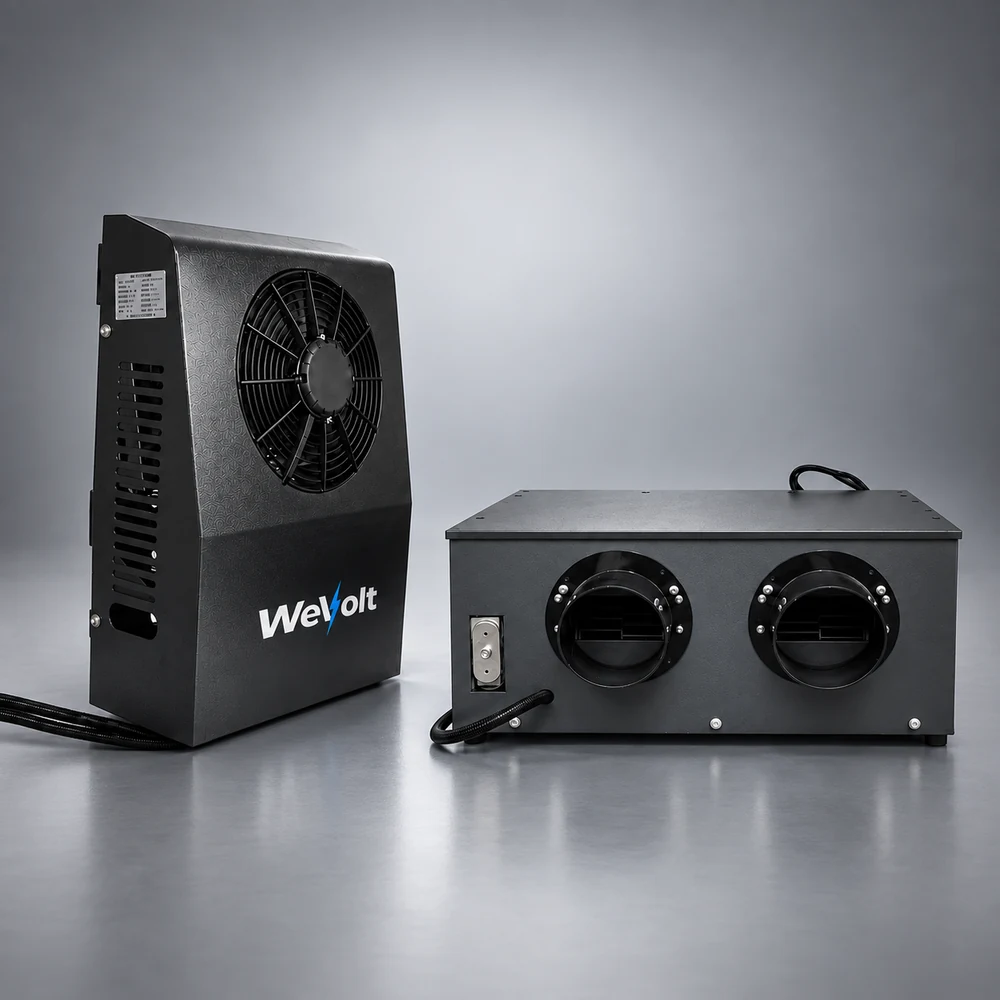
- Air conditioner: 24V DC split unit, about 10,000 BTU cooling (about 3000W) and about 5,500 BTU heating (PTC about 1600W).
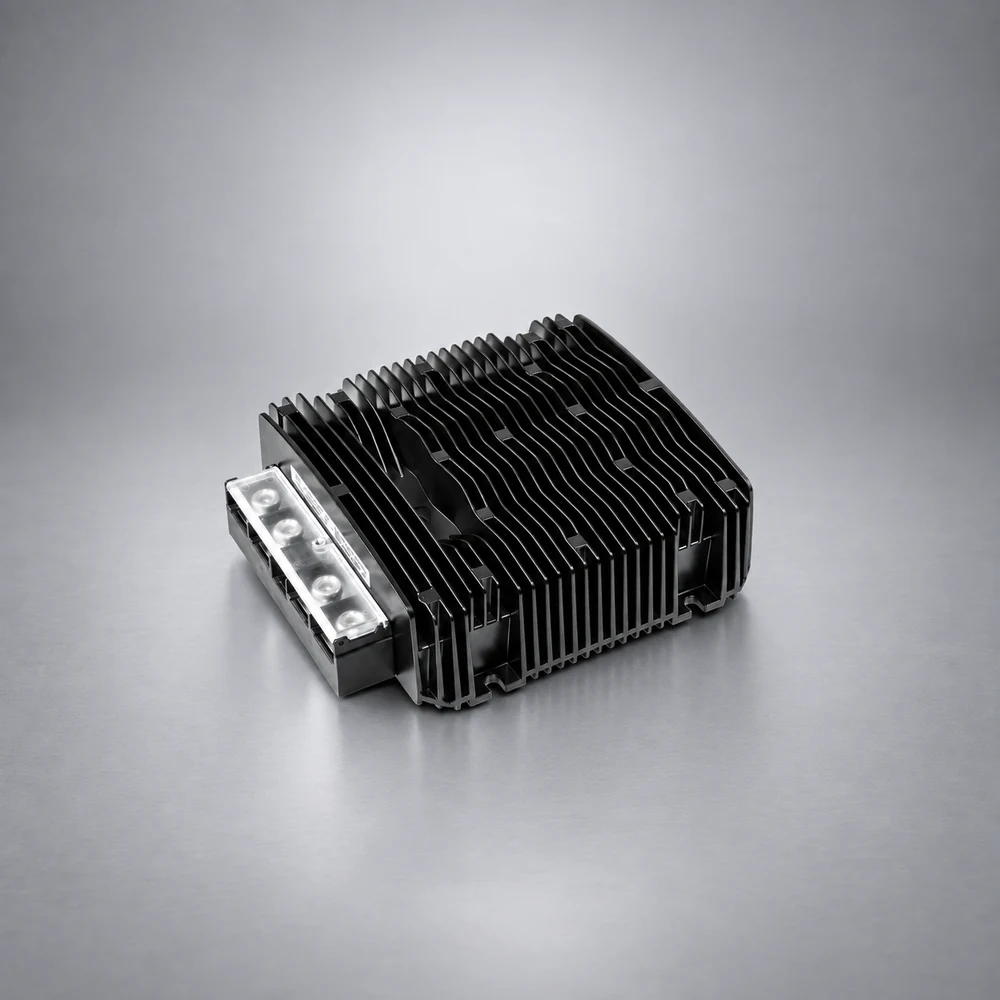
- Charging module: bidirectional DC-DC charger WTDC-12-24V-50A, 24V-first, steps 12V starter power up to 24V for the auxiliary bank while driving (up to 29.2V / 50A), and sends it back to the starter battery at park (up to 14.4V / 100A), so the two banks never drag each other down.
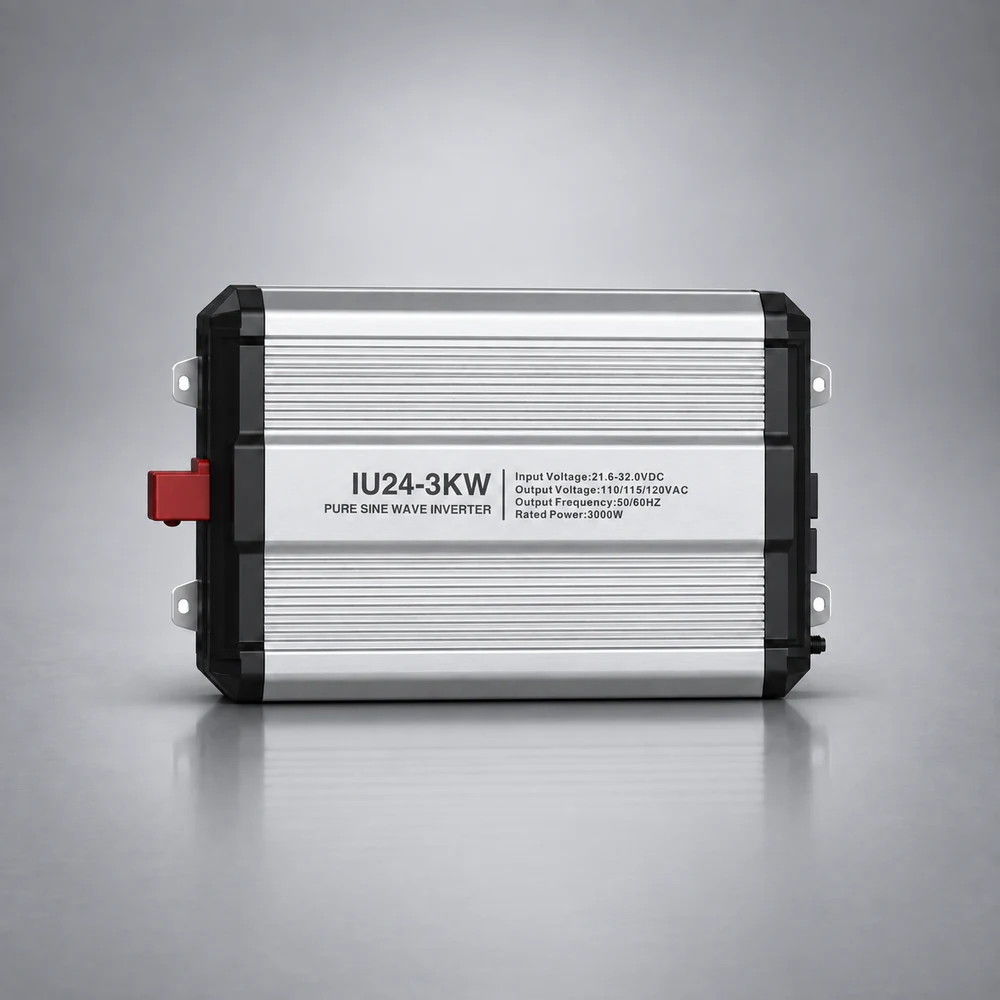
- Inverter: 24V pure sine wave inverter IU24-3KW, 3000W rated, the optional AC module.
One line: choose 24V and this validated set connects without you matching voltages and connectors by hand.
WeVolt's material is all 24V. We describe 12V and 48V only as a framework and do not claim matching kits are for sale. Check current offerings.
For the battery detail, see the 24V 314Ah parking battery page. For the charging module, see the bidirectional DC-DC charger page.
Common mistakes to avoid
Mistake 1: higher voltage means a longer-lasting battery. Not quite. High voltage cuts wiring loss and heat; total energy is still the kWh in the pack, it does not multiply. 48V will not make your battery magically last longer, it just lowers loss under heavy current.
Mistake 2: the truck is 12V, so park everything at 12V. The park system can be its own 24V house bank, isolated and coordinated with the 12V starter through a bidirectional DC-DC. Two banks, two jobs, not mixed.
Mistake 3: 48V is just better than 24V. For most truck park use, 24V is enough; 48V's cost and engineering bar rarely pay off. Reserve 48V for high-power industrial loads where it actually counts.
Mistake 4: mix voltages freely. 12V, 24V, and 48V devices must not be joined directly; they need a DC-DC or a dedicated module. Wrong voltage or reverse connection damages the equipment.
Plain talk: 12V and 48V are framework only
The voltage framework here rests on public electrical logic (power = voltage × current) and industry consensus. The 12V and 48V tiers are described qualitatively only: 12V is friendly for small loads but high-current and wiring-heavy; 48V saves the most wire at high power but is demanding and scarce in mature kits. If you are planning a semi truck battery bank, the voltage tier sets everything else that follows.
Exact configurations, models, capacities, and prices for 12V and 48V follow the manufacturer's current catalog. We do not invent them. WeVolt's current, fully documented tier is 24V, mapped in section 7.
Summary and next step
Set voltage before parts. 12V suits small loads and light builds, 24V is the best all-around sweet spot for truck park power, and 48V is for high-power industrial use. For most long-haul trucks that want AC, inverter, and all-night power, 24V is the stable pick.
The WeVolt Apex eAPU is a validated 24V system where battery, AC, charging module, and inverter all match. If you are unsure which tier fits your truck, email [email protected] with your vehicle and power needs and we will help you decide.
References
- WeVolt Apex eAPU system overview: 24V architecture, 8.04 kWh storage, bidirectional DC-DC, 24V AC and inverter, separate 12V heater.
- WeVolt three-tier kit notes: 24V main, 12V high-current and wiring-heavy, 48V demanding, all material built around 24V.
- WeVolt 24V 314Ah parking battery spec: 25.6V / 314Ah / 8.04 kWh, LiFePO4, auxiliary bank, not the starter battery.
- WeVolt bidirectional DC-DC charger spec: WTDC-12-24V-50A, 24V-first, 12V to 24V bidirectional, up to 29.2V / 50A charging, up to 14.4V / 100A back to starter.
- Public industry material: truck electrical voltage tiers and current logic; multiple vendor guides agree 24V is the commercial truck sweet spot.