
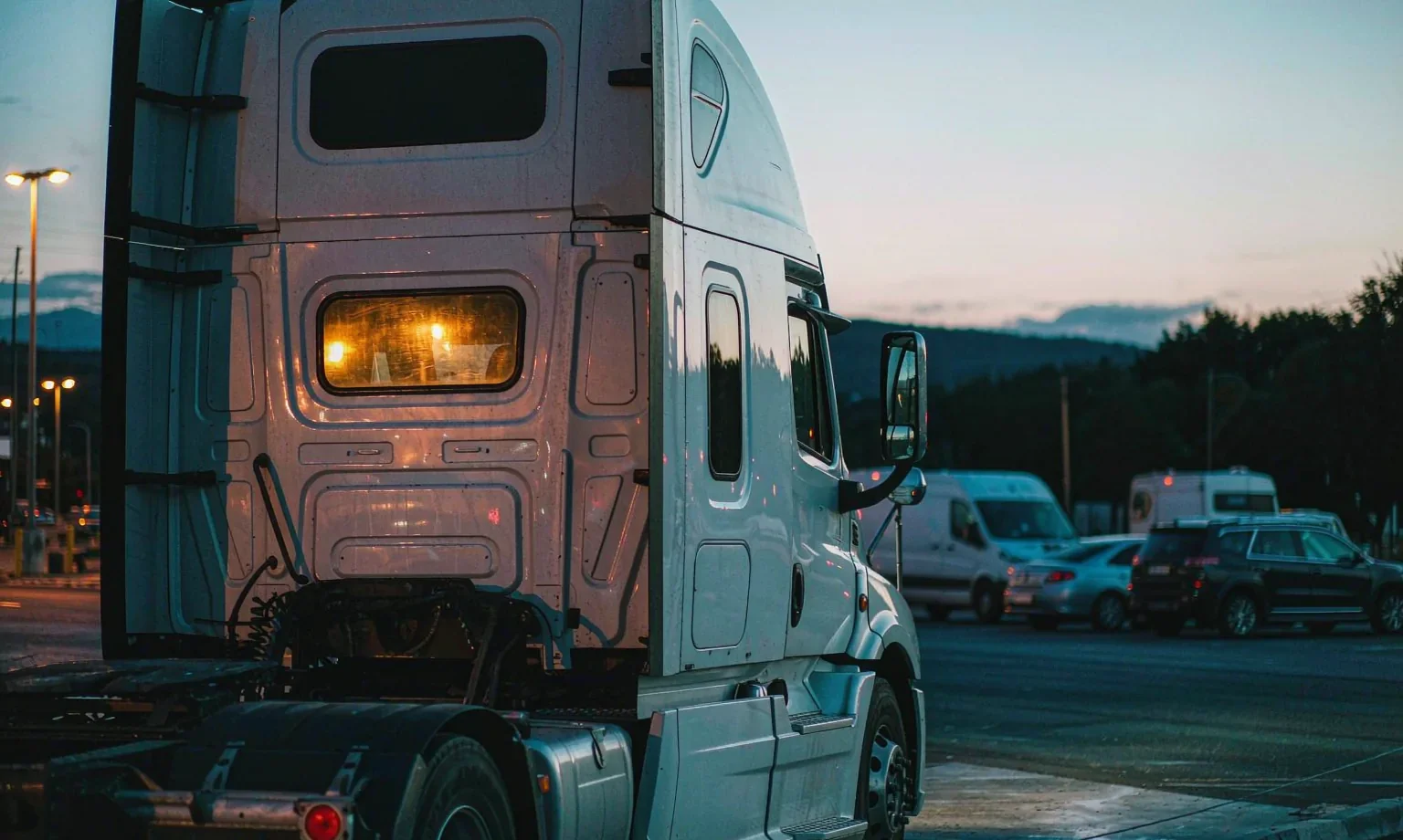
APU stands for Auxiliary Power Unit. On a truck, an APU is the independent system that powers cab cooling, heating, and 120V outlets while the main engine is off. An electric APU (electric apu) is the diesel-free type: it runs cab comfort and onboard power from stored battery energy instead of burning fuel. This guide explains what an APU is, how an electric APU works, how it compares with diesel, and whether it fits your operation. Examples use the WeVolt Apex eAPU system from WeVolt.
Introduction: What Idling Actually Costs
A long-haul truck that idles overnight to run cab HVAC and charge phones and laptops burns about 0.8 gallons of fuel per hour. Over an 8-hour night that is 6.4 gallons, roughly $22 at current prices. Across 250 parked nights a year, idle fuel alone approaches $5,600 (Transport NSW cites about 2 L/hour and roughly 1,800 idle hours per year; oTrucking estimates $5,250–14,000 saved per year). That figure excludes engine wear and idle-related fines.
An APU solves this by running cab comfort and power with the main engine off. Whether the term is apu for trucks, semi truck apu, or simply truck apu, the job is the same: keep the cab livable and the batteries fed without the diesel engine turning. An electric APU is the type that does it without a second diesel engine. The rest of this guide covers what an APU is, how an electric unit works, how it stacks up against diesel, and what it costs. For the head-to-head on diesel vs electric, see Diesel APU vs Electric APU; for the four-way overview, see Truck APU Solutions Compared.
What an APU Is, in Plain Terms
APU stands for Auxiliary Power Unit. The question what is apu, in the truck context, is about the standalone system that supplies cab cooling, heating, and 120V power while the main engine is off. what is an apu on a truck and truck auxiliary power unit both point to this same system.
Why do drivers want one? To avoid idling. Idling carries three costs: fuel expense; idle-time limits in more than 30 U.S. states with fines for exceeding them; and accelerated main-engine wear. NACFE has estimated that one hour of idling causes wear comparable to driving 25–30 miles, and a single diesel particulate filter (DPF) regeneration can cost up to $2,000. An APU lets the main engine stay off, which trims all three.
Honest boundary: the APU described here is the truck's parked auxiliary system, not the starter battery. It uses a separate house battery bank, isolated from the truck's starting battery, and does not start the engine.
Two Types of APUs: Diesel vs Electric
Diesel APU: a small diesel engine mounted to the frame. With fuel, it runs indefinitely and provides both climate control and charging. The trade-off is a second combustion engine to maintain, plus noise and fuel use.
Electric APU (eAPU / EPU): a pre-engineered battery system that integrates batteries, a split air conditioner, an inverter, and bidirectional charging. No fuel, quiet, no exhaust. With the main engine off, the house battery runs HVAC and hotel loads, and recharges while driving.
Some sources list a third "hybrid" type, but most systems reduce to these two. The sections below focus on the electric type; diesel fuel use and reliability are covered in Diesel APU vs Electric APU.
How an Electric APU Works (Four Stages + Voltage)
The Charging Loop
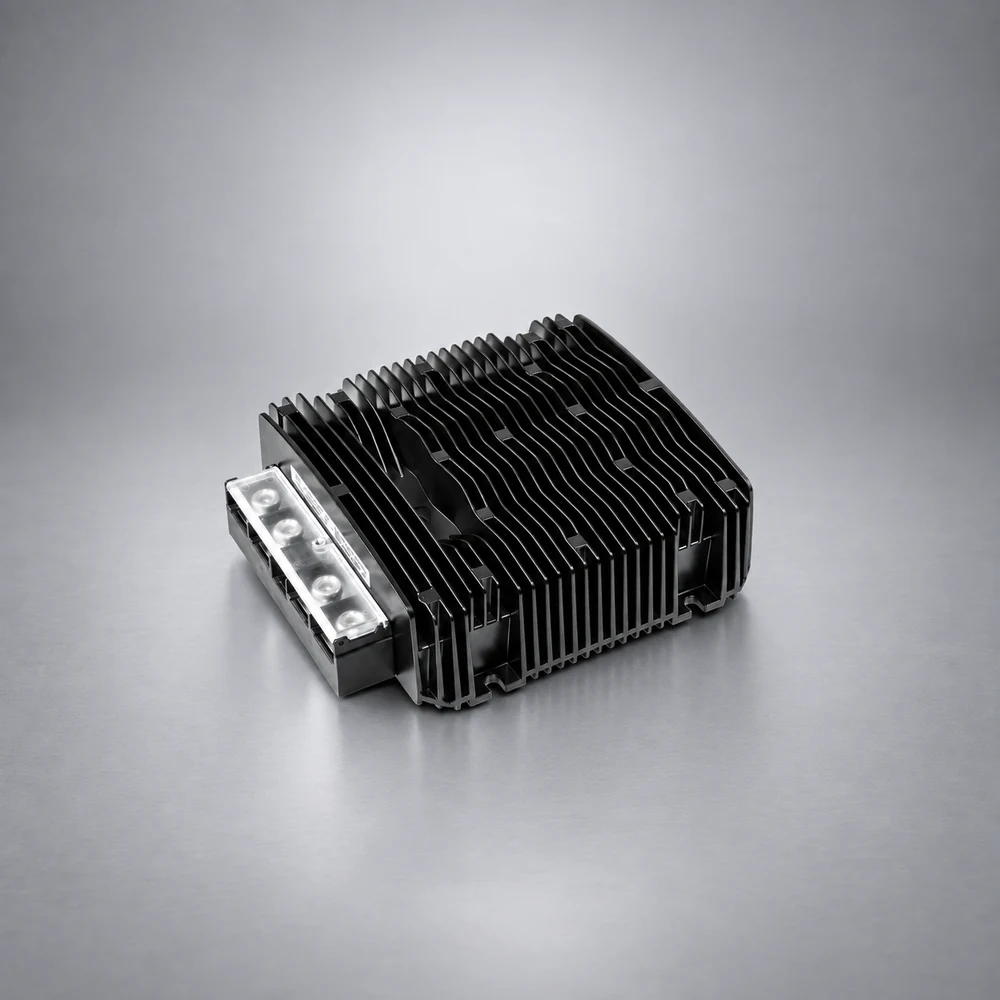
While driving, the 12V vehicle system steps up through a bidirectional DC-DC converter to charge the 24V house battery (up to 50A forward). While parked, that battery can also reverse-charge the starter battery at up to 100A — a bidirectional design from WeVolt; most competitors describe one-way charging only. See Bidirectional DC-DC Charger.
The Battery Bank
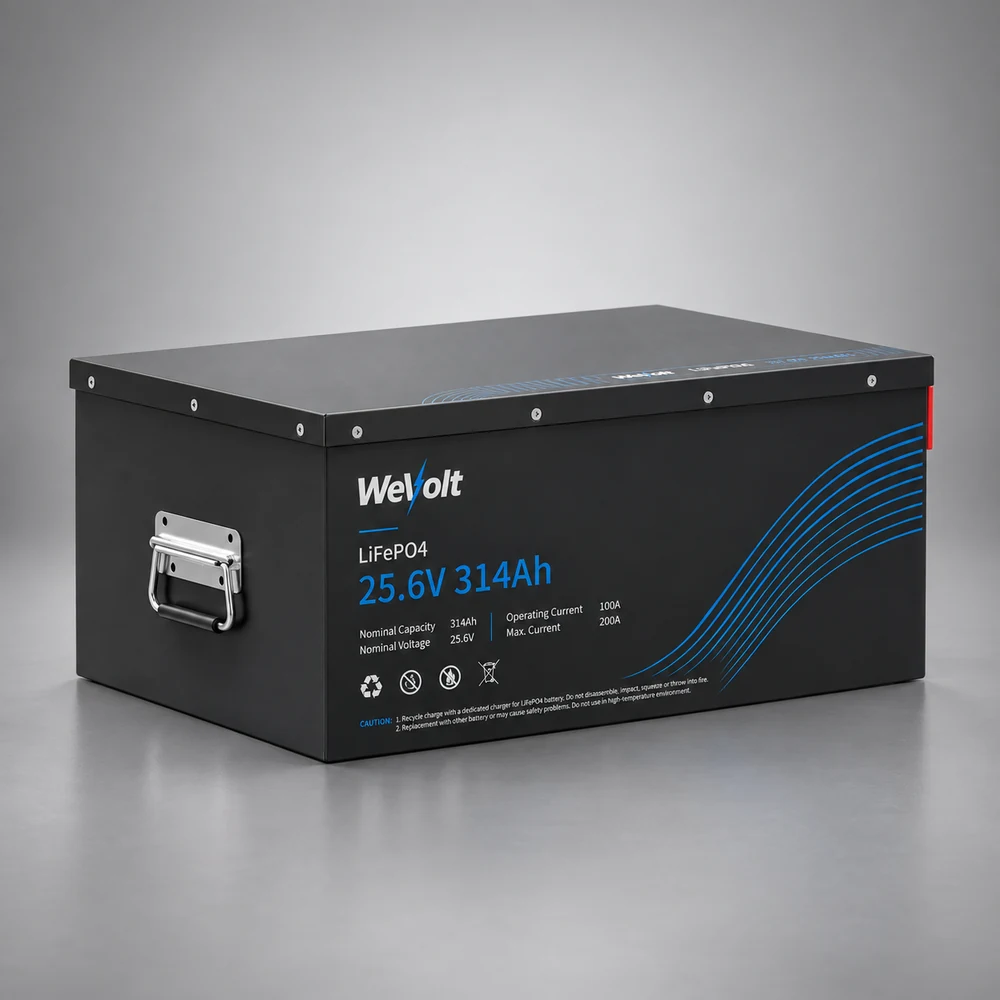
The battery is a house bank, isolated from the starter battery and dedicated to parked loads. In the WeVolt Apex eAPU, that is 25.6V / 314Ah / 8.04kWh LiFePO₄ with EV-grade cells, a 200A JK BMS, and an IP65 steel case — more specific than the vague "12–15kWh" competitors cite. See 24V 314Ah Truck House Battery.
DC to AC
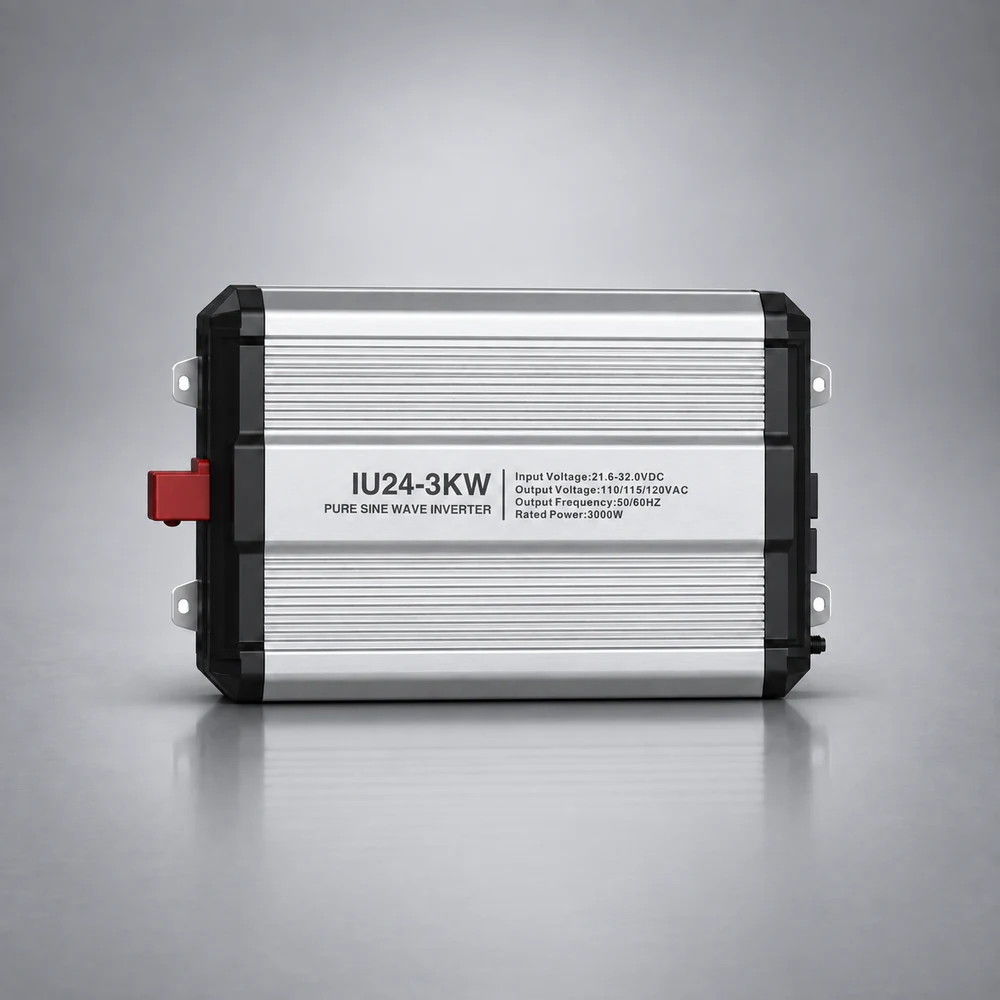
An inverter converts 24V to 120V for microwaves, TVs, and coffee makers. See Pure Sine Wave Inverter.
HVAC
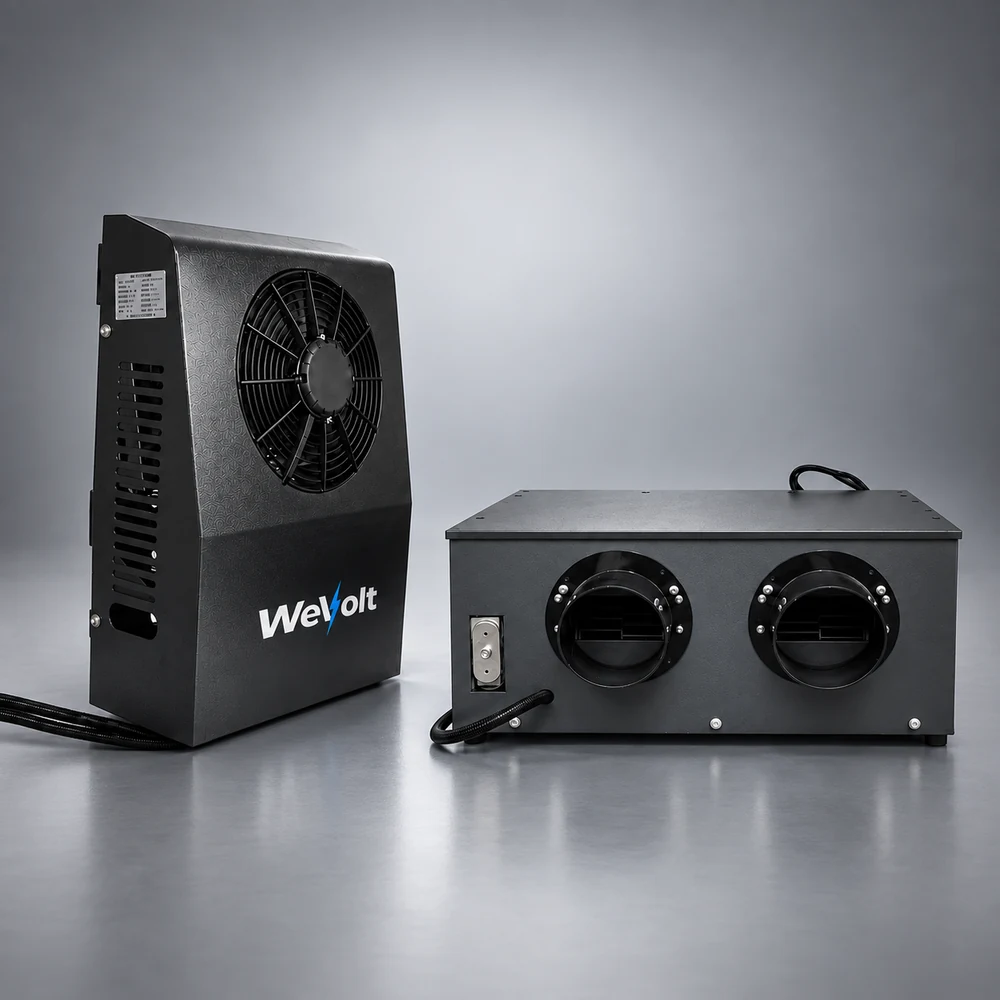
Truck air conditioners are DC units sold in 12V, 24V, and 48V; the voltage follows the house battery, and since the house battery here is 24V, the system pairs it with a 24V unit. Trucks conventionally use a split truck air conditioner because the split layout is easier to install. This air conditioner runs directly on 24V DC through a variable-speed compressor, bypassing the inverter. Cooling is 10,000 BTU; heating is 5,500 BTU (PTC). See 24V Truck Air Conditioner.
One Line on Voltage
Three tiers exist — 12V, 24V, 48V — and 24V is the long-haul sweet spot: at the same power, 24V carries about half the current of 12V, so thinner wire and lower loss. This is a point WeVolt spells out; many competitors only say "12V or 24V" vaguely. See 12V vs 24V vs 48V.
How Long Per Night
The WeVolt Apex eAPU 8.04kWh ÷ 912W ≈ 8.8 hours of cooling — that is the continuous full-load floor. Our headline spec of up to 15 hours assumes the variable-speed compressor cycling down after cooldown. NACFE estimates 10–15 hours for high-density lithium. Real runtime depends on battery size and climate; all-night operation is not guaranteed. A summer 26°C setting and a winter heat setting draw very differently.
Why Electric APUs Are Gaining Ground in 2026
Three forces overlap. Anti-idling rules now cover 30+ states, leaving less room to idle. Lithium costs are down and energy density is up, so the same space holds more energy. Diesel prices stay high, making idle cost more visible. Zero-emission rules such as California's ACT push electric APUs to the easiest compliant path (oTrucking rates it the best route for ACT).
One honest caveat: electric is not universal. It is limited by battery capacity and charging, and cold-weather heating needs a separate solution. The limits are laid out below, then the selection guide.
Electric vs Diesel: An Honest Comparison
Seven dimensions, side by side. Figures are third-party public data (oTrucking, Thermo King, Carrier, Bergstrom); presented objectively, without knocking diesel.
Prices are third-party representative ranges, not WeVolt pricing, and not a one-to-one comparison with any single competitor. The deep comparison (cost / fuel / reliability) is in Diesel APU vs Electric APU.
The Math: What Idling Really Costs You
Main-engine idling runs about 0.8–2.5 gallons/hour; long-haul annual operation is about 1,800 hours and 1,500+ gallons. At $3.50/gallon that is $3,500–8,400 per year in fuel, with idle-reduction saving $3,500–6,000 per year (EPA). A diesel APU itself burns only 0.2–0.4 gallons/hour — far below main-engine idling. Third-party payback estimates run 8–24 months, depending on your idle hours and diesel price. truck apu cost varies by type and configuration; the ranges above are magnitude only.
Price detail and payback: Why Do Electric APUs Cost $8K–$26K and Is an Electric APU Worth It.
Staying Legal: Anti-Idling Laws and APU Exemptions
No single federal idle limit exists; states set their own — California and New York limit to 5 minutes (CARB / NY DEC). The key point: most state rules target the main engine, so running only an APU with the main engine off usually does not count as idling. Many states grant a weight exemption (about 400–550 lb) for APUs or battery HVAC, and CARB-certified equipment is exempt in California.
Rules differ by state; this guide does not list fines. The dedicated article is Anti-Idling Laws.
Is an Electric APU Right for Your Truck?
No decision for you — a set of checks:
- Long-haul with shore power, mild climate, value quiet: electric fits.
- Long cold stays, no shore power: diesel, or electric plus a diesel heater.
- Short urban routes, rarely overnight: you may not need an APU at all.
- Only want cheap summer cooling: a parking air conditioner is enough (see below).
The easiest mistake: a parking AC is not an APU. A parking air conditioner only cools — it does not supply inverter hotel loads, does not handle charging while driving, and does not reverse-charge the starter battery (third-party source cooldrivepro states plainly that "parking AC alone is not an APU"). You still need the main engine or another system for phone, laptop, and microwave power and for starter-battery maintenance. If you want only cooling, a parking AC is enough; for full parked comfort, you need an eAPU or diesel APU. See 24V Truck Air Conditioner / Run Truck AC All Night.
Cold-weather honesty: the WeVolt Apex eAPU 5,500 BTU is PTC mid-range heating; in deep winter efficiency drops and a dedicated diesel heater is the backup (Optional). One HVAC unit does not cover the whole year.
A Real Example: the WeVolt Apex eAPU + FAQ
WeVolt Apex eAPU real specifications (vendor example, not an independent review): 8.04kWh / 24V 314Ah LiFePO₄ (EV-grade cells, 200A JK BMS, 157A continuous / 200A peak); 10,000 BTU cooling / 5,500 BTU PTC heating; 3,000W pure sine wave inverter (IU24-3KW, Optional); WTDC-12-24V-50A bidirectional DC-DC (29.2V/50A forward, 14.4V/100A reverse, IP65); Class T fuse; full install kit (wire / fuse / busbar / terminals / protection). System logic: charge while driving, run HVAC and inverter while parked, reverse-charge the starter battery. Cold heating via dedicated diesel heater (Optional). WeVolt price is not stated here, and we do not write "clone RoyPow" — RoyPow is 48V architecture, WeVolt Apex eAPU is 24V.
An electric APU is the combination of a house battery, bidirectional charging, an inverter, and electric HVAC. Price idle cost first, pick a voltage tier, then choose components — match your operation and don't overpay. Next: 12V vs 24V vs 48V to set voltage, then Installation, Warranty & Support to confirm the pre-purchase checklist, or Truck APU Solutions Compared for the four-way view.
Related reading: Diesel vs Electric APU · Truck APU Solutions Compared · 24V Truck Air Conditioner · 24V 314Ah Truck House Battery · Bidirectional DC-DC Charger · Pure Sine Wave Inverter · 12V vs 24V vs 48V · Anti-Idling Laws · eAPU Wiring & Fuse Sizing · DIY eAPU vs Factory · Installation, Warranty & Support
Real-world eAPU runtime: cooling, charging and uptime testedRun the payback numbers on your own idle hours