
Many drivers think “inverter size” means the box's physical dimensions. In buying, sizing means picking the right continuous wattage, surge rating, DC-side current, and battery capacity. Undersize it and the microwave and AC will not start; oversize it and you waste money and add cable loss. This guide uses a 24V eAPU system as the worked example and breaks “what size inverter” into steps any driver can work through: list the loads, add margin, check surge, match 24V, calculate current, size the battery, pick the wire. The same method applies whether you are choosing an inverter for tractor trailer use, comparing inverters for trucks in general, or pairing a 24V inverter with a LiFePO4 bank.
Introduction: size is not the box, it is wattage and current
The appliances you use while parked are almost all built for a household outlet: microwave, coffee maker, TV, laptop adapter, phone charger. They need 120V AC, but a truck battery delivers 24V DC. The step in between is filled by an inverter, which turns 24V DC into clean 120V AC.
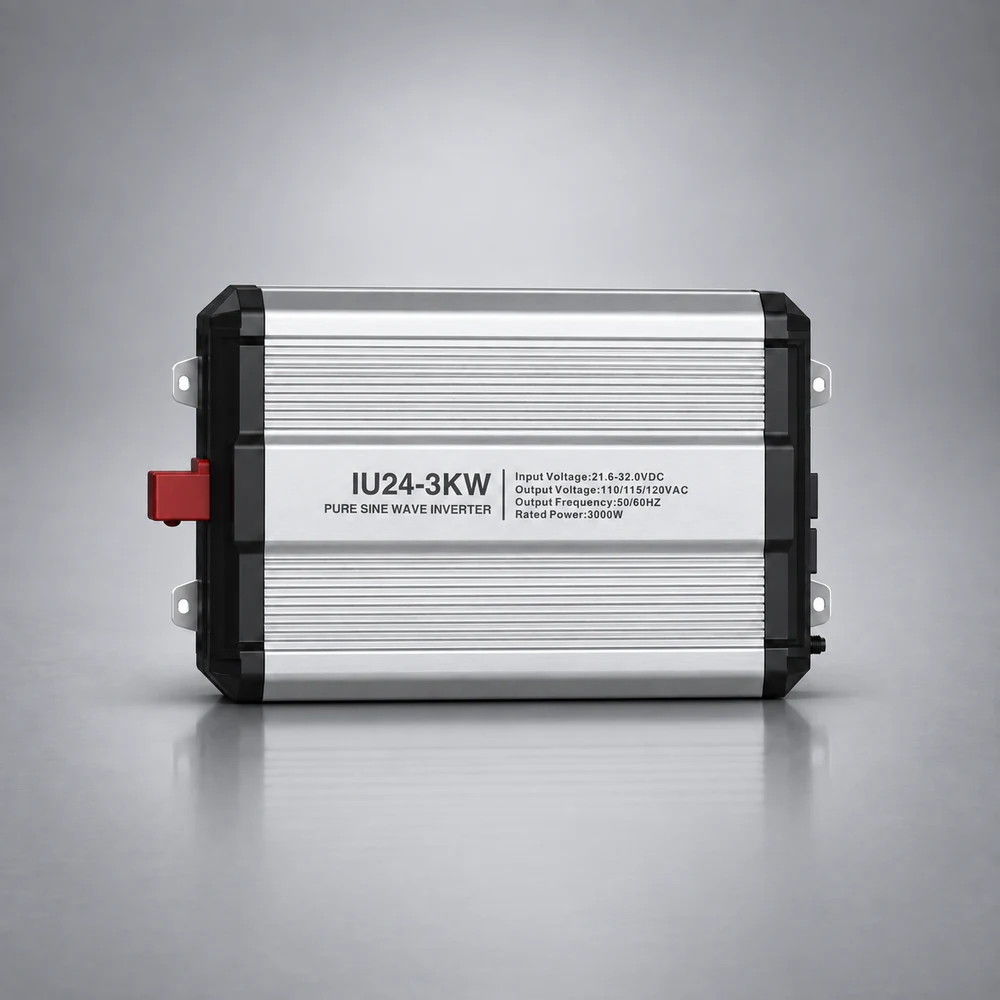
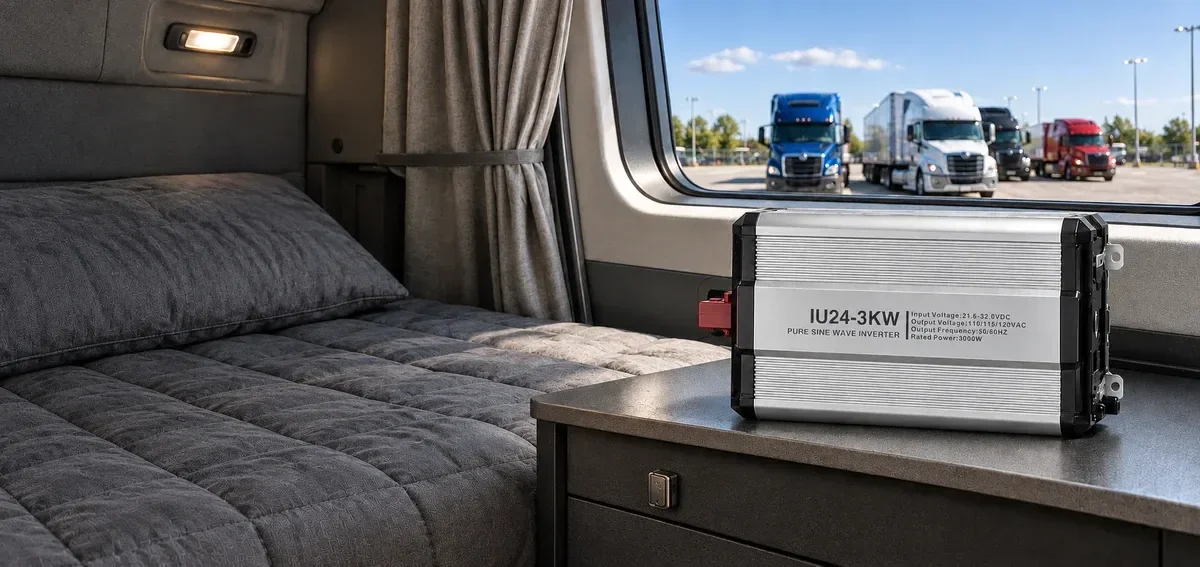
Not just any inverter suits life on the road. A tractor-trailer's parked load has its own character: more than one appliance runs at once, some have motors, and some are sensitive to waveform. How much power you pick decides how much current the battery must supply and how thick the cable has to be. This guide focuses on the WeVolt IU24-3KW, a 3000W pure sine wave inverter with 24V input, and breaks sizing into steps a driver can follow and check.
List the appliances you run together, and sum the continuous wattage
The first step is the simplest and the easiest to skip: list the AC loads you usually run at the same time while parked, and add the rated running watts printed on each unit. Whether you are sizing an inverter for tractor trailer service or a day cab, the method is identical. Below are typical continuous wattages and starting surge for common 120V appliances in a semi sleeper (your appliance nameplate is final):
Add the appliances you usually run together and look at a real combination:
- Microwave 1000W + coffee maker 800W + laptop 65W + CPAP 40W ≈ 1905W continuous. That is the total for a typical sleeper running high-wattage gear at once.
- Light load only (laptop 65W + CPAP 40W + lighting 85W + fridge 150W) ≈ 340W, far from the ceiling.
Copy the running watts, not the peak. Many appliances print their largest number as starting surge, which lasts seconds and cannot be added as continuous power. Motor and compressor loads (fridge, coffee pump) have much higher inrush; this step counts continuous only, surge goes to step 3.
Add 20–25% headroom
The common industry practice is to multiply the total continuous wattage by 1.2–1.25 to get the inverter's minimum rated power. Using the 1905W above:
- 1905W × 1.25 ≈ 2381W → a 2500–3000W 3000w inverter is the safe pick.
- Light load 340W × 1.25 ≈ 425W → even a 1000W unit is plenty.
Headroom is not waste; it leaves room for three things: the inverter's own heat and conversion loss, appliances you may add later, and not running the unit pinned at full rated power all the time. Some vendors suggest keeping the actual load under 80% of rated for longer life.
20–25% is an industry rule of thumb, not a regulation. Size to your largest simultaneous load; we are not picking the unit for you. The margin lands right only if step 1 copied running watts and step 3 counts surge as surge, not continuous.
Check surge: the peak must cover the largest single startup
Loads with motors and compressors (fridge, AC, microwave magnetron) pull 2–5× rated power at the instant they start. The inverter's surge rating must be ≥ the starting surge of your largest single appliance, and hold long enough in milliseconds.
Take the WeVolt IU24-3KW: 3000W continuous, 6000W surge. Back to step 1's combination, microwave inrush ~1200–1500W and fridge compressor ~300–600W both sit inside the 6000W surge, so a single startup will not trip protection.
Surge lasts seconds, not continuous output. The surge rating is a buffer for motor startup, not a promise of “6000W all day.” What it can carry continuously is always the 3000W rated. Do not read peak as capacity.
Match the DC system voltage: 24V halves the current
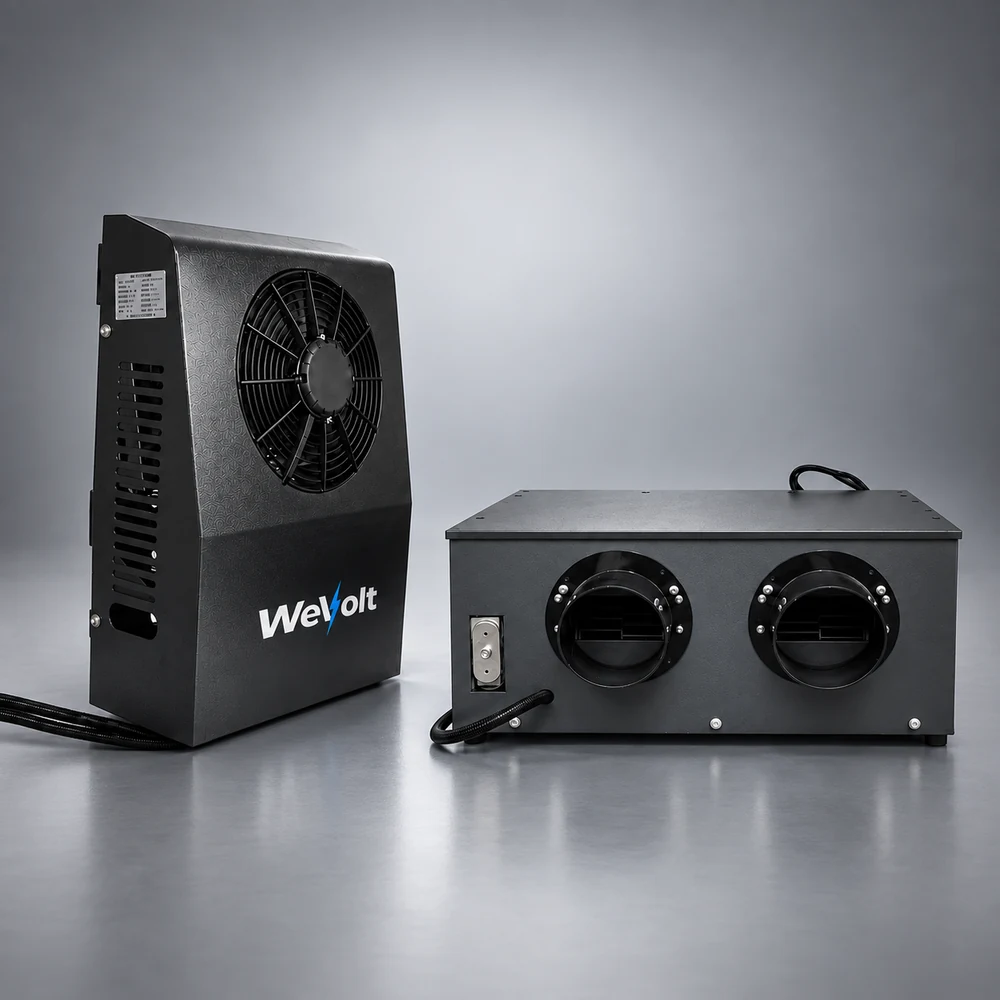
The inverter's DC input voltage must match the vehicle system exactly. Mismatched voltage is the top cause of in-vehicle electronics burning out, so this step comes first. Most truck house batteries are 24V (the eAPU system is 24V LiFePO4); some rigs are 12V. When you match a 24V inverter to a 24V bank, the rest of the math gets easier.
At the same 3000W, a 24V system beats a 12V system on two hard points: the DC-side current is roughly cut in half, and cable loss and heat are lower, so a thinner wire gauge works. That is the engineering reason a 24V eAPU platform is matched as a set, whether the rig is a semi truck or a tractor-trailer.
Stated plainly: the WeVolt IU24-3KW is a 24V-input unit, input range 21.6–32V DC, and cannot connect straight to a 12V battery. The same series has 12V-input models; need 12V in and 120V out, pick the matching input voltage, do not force it. This only states the fact; we are not judging 12V systems.
Work out the DC-side current: amps = watts ÷ volts ÷ efficiency
The most important sizing step turns “AC wattage” into “DC current.” The formula:
DC input current (A) ≈ AC output power (W) ÷ system voltage (V) ÷ inverter efficiency
At the 3000W tier, using 90% efficiency:
- 24V system: 3000W ÷ 24V ÷ 0.90 ≈ 139A continuous; surge 6000W ÷ 24V ÷ 0.90 ≈ 278A.
- 12V system (for comparison): 3000W ÷ 12V ÷ 0.90 ≈ 278A continuous; surge ≈ 556A. A 24V bank halves both the DC current and the required wire gauge.
This step turns “how big” into “how thick the wire”: current sets the cable gauge and fuse rating from battery to inverter. For the exact gauge table, see the wire size and fuse guide. This article explains the principle and points the way; it does not print a full wire-number table here.
Actual current floats with battery voltage (the 24V unit runs 21.6–32V DC), and the formula uses nominal 24V and 90% efficiency. Final install follows the gauge table in the wire guide; do not buy cable off the numbers here.
How big a battery: LiFePO4 capacity and runtime
Once wattage is sized, confirm the battery can hold up. Runtime estimate:
runtime (h) ≈ usable battery energy (Wh) ÷ AC load (W) ÷ inverter efficiency
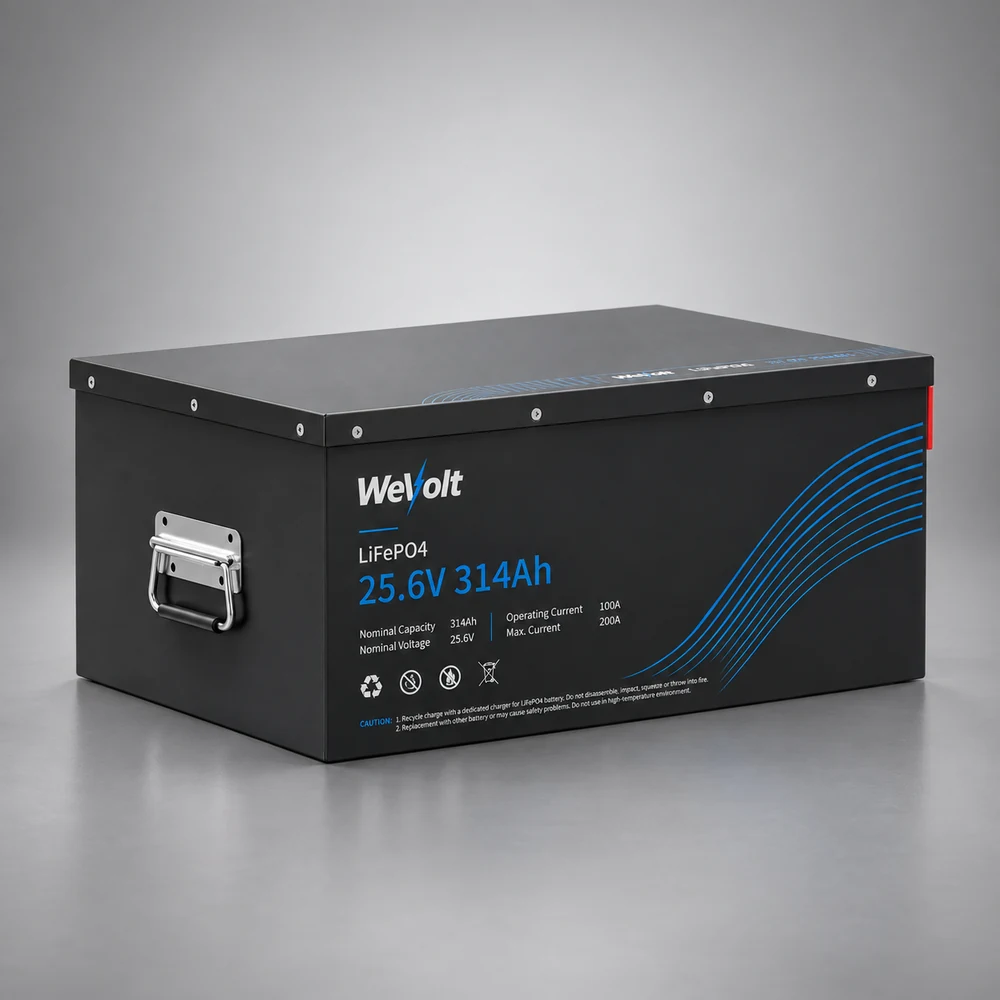
Take the WeVolt Apex eAPU house battery: 25.6V × 314Ah = 8.04 kWh, about 6.43 kWh usable at 80% depth of discharge (DoD). With 90% efficiency, a few real tiers:
The pattern is plain: the more wattage, the bigger the battery. A third-party 24V LiFePO4 sizing matrix gives rough tiers: ~200Ah for 800W, ~350Ah for 1500W, ~450Ah for 2000W, ~600Ah for 3000W. The WeVolt Apex eAPU's 314Ah lands in the 3000W tier and is more than enough for typical sleeper loads rather than continuous max.
Runtime numbers use 80% DoD, 90% efficiency, and nominal 25.6V; they shift with DoD ceiling, temperature, and actual load curve, and shrink in the cold or with age. These are nominal references, not promises. To judge “enough for the night,” fold the 24V-direct AC into the battery budget too; do not look only at the inverter's 3000W.
Wire gauge and fuse: current sets the gauge
The DC amps from step 5 (say 3000W@24V ≈ 139A) directly decide two things: the cable gauge from battery to inverter, and the inline fuse near the battery's positive post.
One hard safety reminder: the inverter's internal overload protection only guards the AC output side. A DC positive short can ignite before the unit's own breaker acts, so the fuse must sit within a few inches of the battery positive post and protect the whole cable run. The gauge is set by current plus cable length; see the wire size and fuse guide. Also, an IP20 enclosure mounts indoors or in an equipment bay, with ventilation around the fan and ground not skipped.
Wire gauge and fuse are hard safety items, not optional. The exact wire number comes from the gauge table in the wire guide; this article will not invent one. Undersize the wire and it heats, drops voltage, even catches fire, so do not cut corners here.
Why the WeVolt IU24-3KW is the right size, and a 3-step checklist
Closing the worked example: a 3000W continuous / 6000W surge pure sine wave inverter covers a typical sleeper's simultaneous load (~1905W continuous plus single-unit startup surge); the 24V input pulls DC current down to about 139A (versus 278A at 12V), so cable loss and heat are lower; pure sine wave THD<4% under a purely resistive load adds no extra waveform loss; paired with the 314Ah / 8.04 kWh battery, typical loads last 3–8 hours. Against a lone generic RV/van 24V unit, the difference is at the system level: the whole set is matched and verified on one 24V platform, not four parts each doing their own thing.
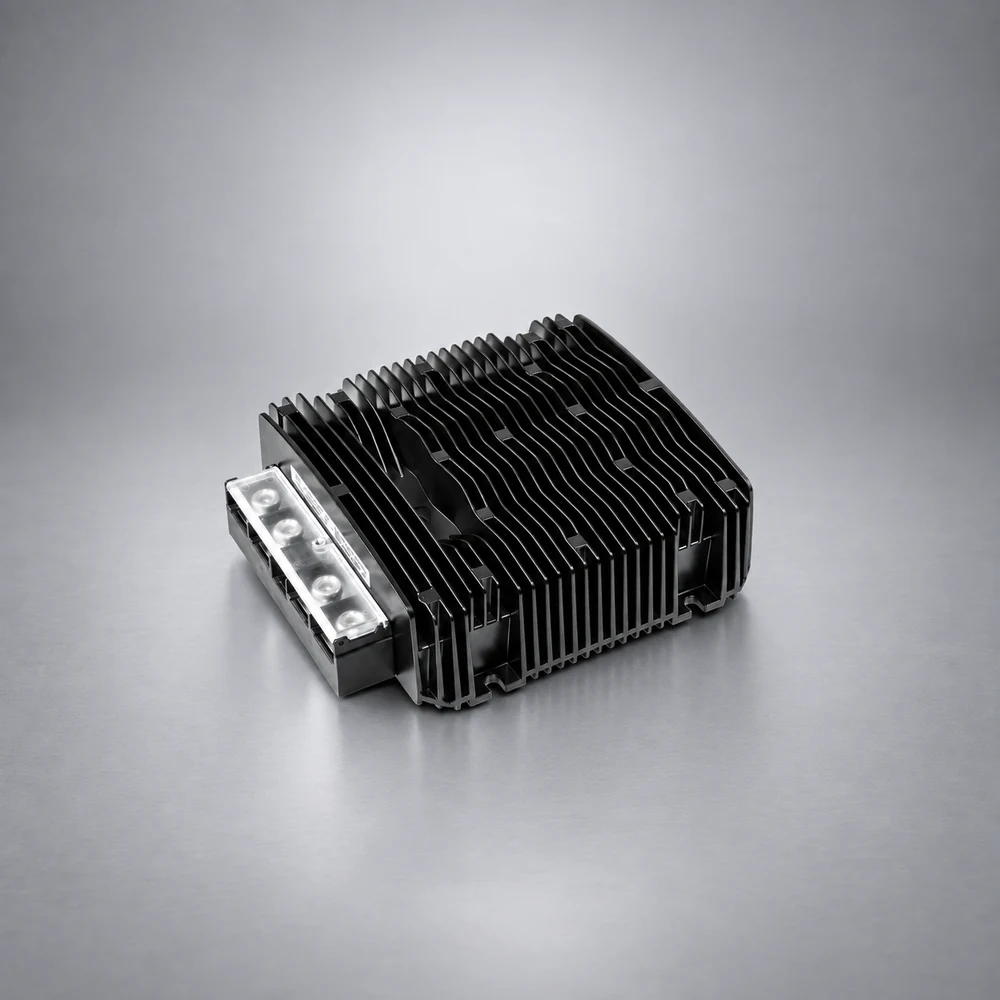
Four hard reminders before you mount it: First, the IU24-3KW is 24V only, not compatible with 12V batteries. Second, the spec plainly states no reverse polarity protection, do not reverse the input; reversing polarity permanently damages it, so disconnect vehicle power and confirm polarity before wiring. Third, enclosure rating IP20, mount indoors or in an equipment bay, not outdoors or in the rain. Fourth, the inverter is one-way (24V DC to 120V AC); charging the battery or moving energy between the 24V and 12V banks is the job of the bidirectional DC-DC charger (WTDC-12-24V-50A), which puts up to 14.4V/100A back into the starter bank. They are not the same.
A practical 3-step checklist for drivers, to run before buying:
- Step 1: list the appliances you run together, add their running watts, then multiply by 1.2–1.25 to set rated power. Example: 1905W → pick a 2500–3000W tier.
- Step 2: confirm the largest single startup surge ≤ surge rating. Example: microwave startup ~1500W, covered by the 3000W unit's 6000W surge.
- Step 3: confirm 24V → calculate DC current ≈ power ÷ 24 ÷ 0.9 → pick wire gauge and fuse by current (see the wire size and fuse guide) → size LiFePO4 by runtime need. Example: 3000W@24V ≈ 139A, paired with 8.04 kWh battery lasts 3–8 hours at typical loads.
Three things to keep: first, pure sine wave THD<4% under a purely resistive load is friendly to microwave control boards, laptops, and TV supplies; second, 3000W is not the whole story, the 24V-specific unit's value is in being verified as a set and halving current; third, no reverse polarity protection is a hard warning, so confirm polarity and mount indoors. To go further:
What a 3000W inverter actually runs in a semi truckWire gauge and fuse sizing for a 24V eAPU12V vs 24V vs 48V: choosing the eAPU system voltageFull IU24-3KW component specsQuotes and fitment questions: [email protected]
How to choose between them: six criteria and the four types of unit on the marketReferences
- WeVolt product data: IU series 1–3kW high-frequency pure sine wave unidirectional inverter spec summary (IU24-3KW: 24V DC, 3000W/6000W surge, 100–120V AC, THD<4%, PF 0.2–1, efficiency >90% / max >93.5%, standby <0.13A / no-load <1.2A, 6.5kg, <60dB, IP20, −20~60°C, CE/ROHS/IEC62109, 14 ports, no-reverse-polarity note, dimensions per manual).
- WeVolt Apex eAPU system overview: IU24-3KW is the system's Optional AC output module; house battery 25.6V × 314Ah = 8.04 kWh.
- WeVolt C-Series component manual: IU24-3KW entry (3000W / 6000W surge / default 120V) consistent with the spec.
- WeVolt Apex eAPU official parts list: IU24-3KW listed as Optional.
- Industry sizing methodology references (public buying guides and vendor data): sum continuous wattage and add 20–25% margin, surge rating covers single-unit startup, 24V system current is roughly half of 12V, LiFePO4 capacity rises with load tier.
This article is a product description and sizing method. Dimensions follow the product manual; efficiency curves, certifications, and install fit follow the formal spec sheet or confirmation from us. Legal entity and registered address are on the official page.