
Whether an electric APU pays for itself does not depend on the spec sheet. It depends on how many hours your truck idles per year and how much fuel those hours burn. This guide gives you a formula you can run with your own numbers instead of a fixed figure. By the end, you will be able to calculate your own payback period and see which savings are most often left out of the equation.
Introduction: The Question Buyers Actually Ask
Reading APU spec sheets leads to a common trap: you compare battery capacity, cooling output, and inverter wattage, and you still cannot place the order. One question keeps blocking the decision: how much does an APU cost to run, and how long does it take to earn that money back?
A spec sheet cannot answer this, because every owner has different idle hours, fuel prices, and routes. Our approach is to give you the formula first, then work through a typical WeVolt scenario as an example. The payback period only means something once you plug in your own numbers. We will not hand you a flattering figure that supposedly fits everyone.
This guide is where the cost questions come together. It follows Diesel APU vs Electric APU and Why Electric APUs Cost $8K–$26K, and it answers the question both of them lead to: is it worth it, and when does it pay off? Compliance fines, wire sizing, and installation support each have their own guides.
First, the Boundary: What This Guide Does and Does Not Count
Replacing main-engine idling with a WeVolt Apex eAPU saves money in two places: the diesel the main engine would have burned, and the engine wear that idling accumulates. The system covers parking air conditioning, hotel load (refrigerator, appliances, charging), and charging while driving.
One item is not counted here: avoiding anti-idling fines. That is a compliance gain, covered in detail in the Anti-Idling Laws guide. One sentence suffices for now: because an electric APU runs with the engine off, it stays clear of idling restrictions by design, which makes fine avoidance a hidden extra benefit.
The limits of this model: every figure below assumes a typical long-haul owner-operator. Your actual payback will vary with idle hours, fuel price, electricity price, and routes. Section 4 gives you an adjustable formula; run it with your own numbers rather than treating it as a return promised by WeVolt.
How Much Fuel Does Idling Really Burn (Primary Evidence)
The payback math only holds up if the fuel baseline is real. Measured data from the U.S. Environmental Protection Agency (EPA) and the Alternative Fuels Data Center (AFDC) tell a consistent story:
- Idle fuel burn: a heavy-duty diesel truck idling in place burns roughly 0.8 gallons per hour.
- Annual idling: long-haul trucks idle for about 1,800 hours and burn about 1,500 gallons per year. Using EPA's figure of 2,400 hours per year, consumption can reach 1,900 gallons annually.
- Typical owner-operator scenario: the model in this guide uses 8 hours per night × 250 nights = 2,000 hours per year, in the same range as the EPA figure, which makes it a reasonable baseline.
- Maintenance cost: the EPA notes that replacing idling with an APU saves more than $300 per year in engine maintenance. The New Mexico Environment Department likewise confirms that extended idling accelerates oil and filter degradation and brings the major overhaul forward.
Sources: EPA, "Idle Reduction"; AFDC, "Long-Haul Truck Idling"; New Mexico Environment Department, "Idling FAQ". Links are listed under References at the end. These are published measurements from federal and state environmental agencies, not manufacturer figures.
The WeVolt Apex eAPU Savings Model
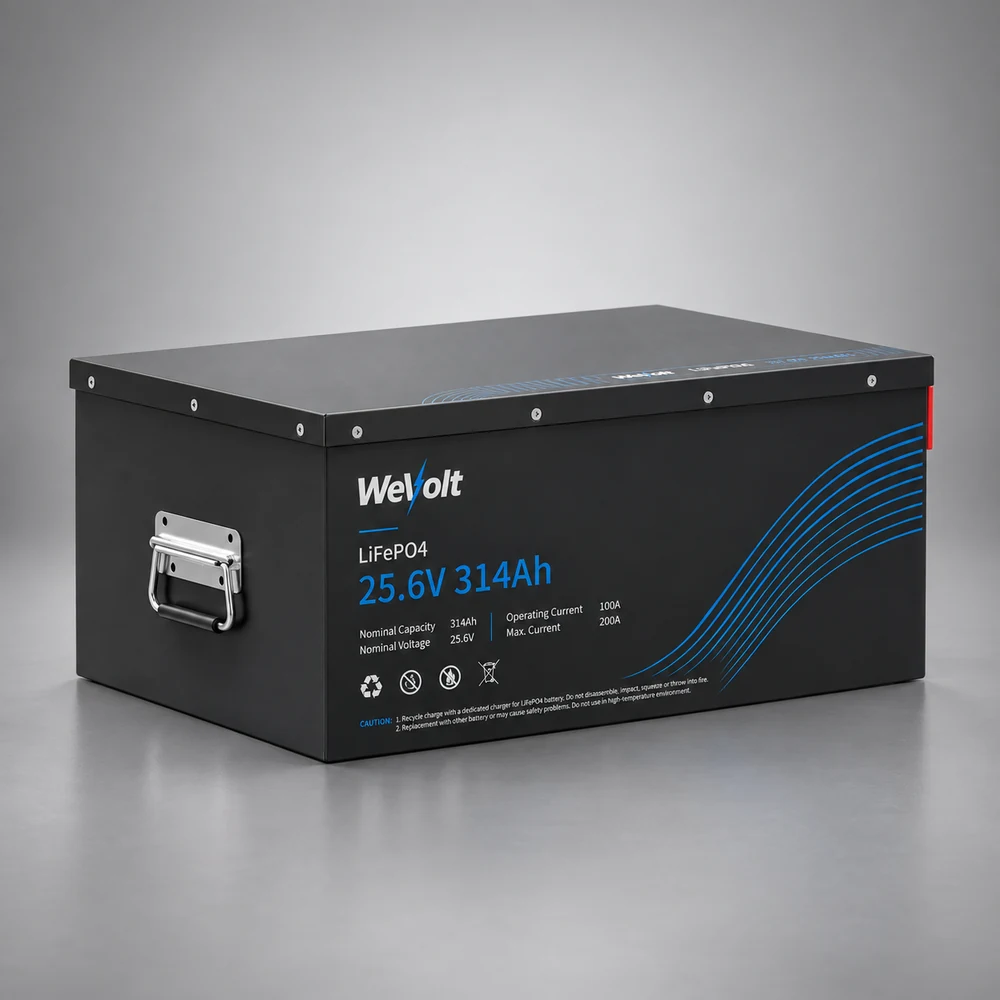
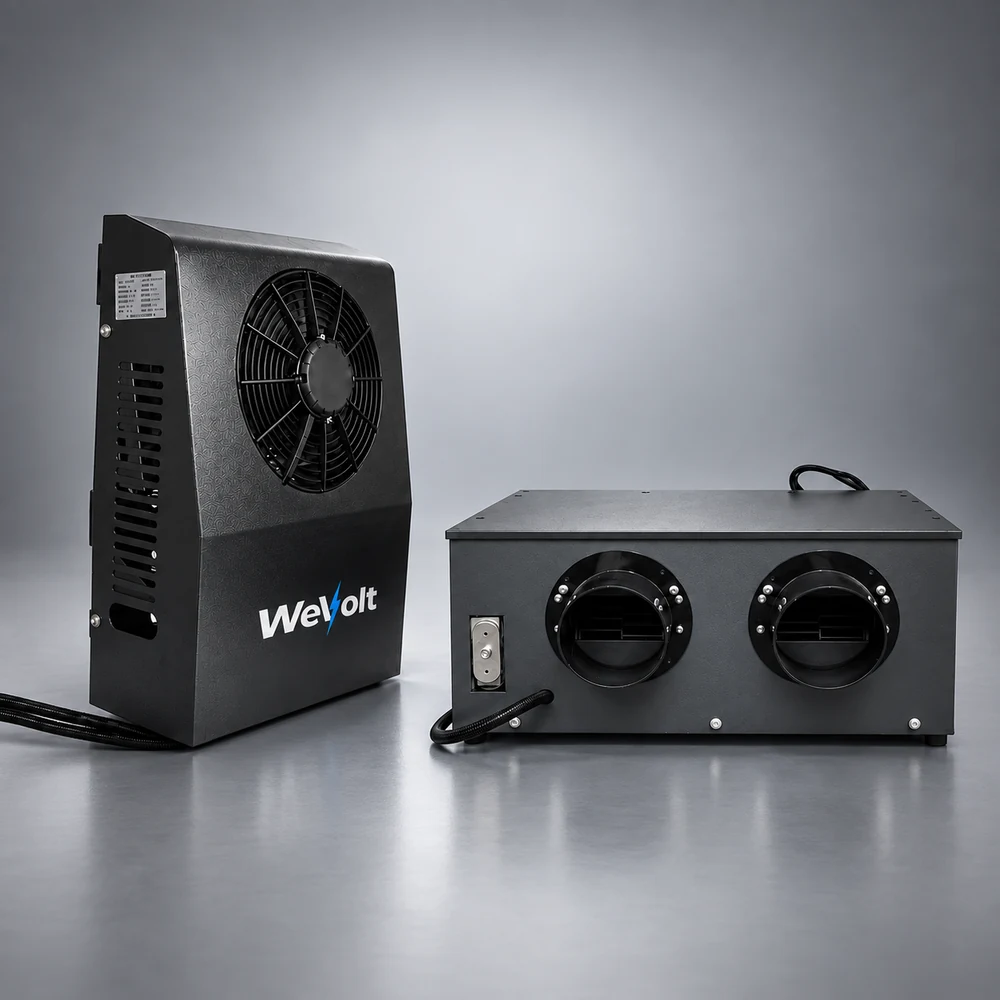
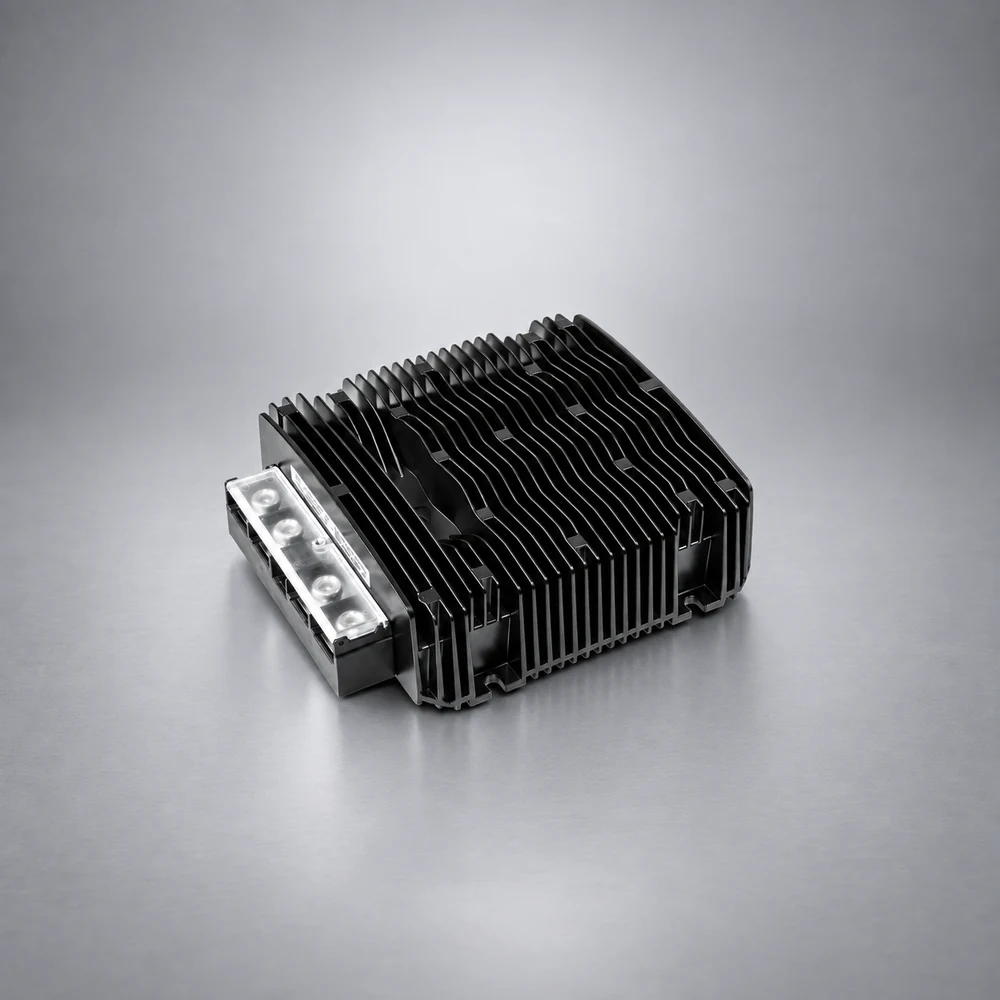
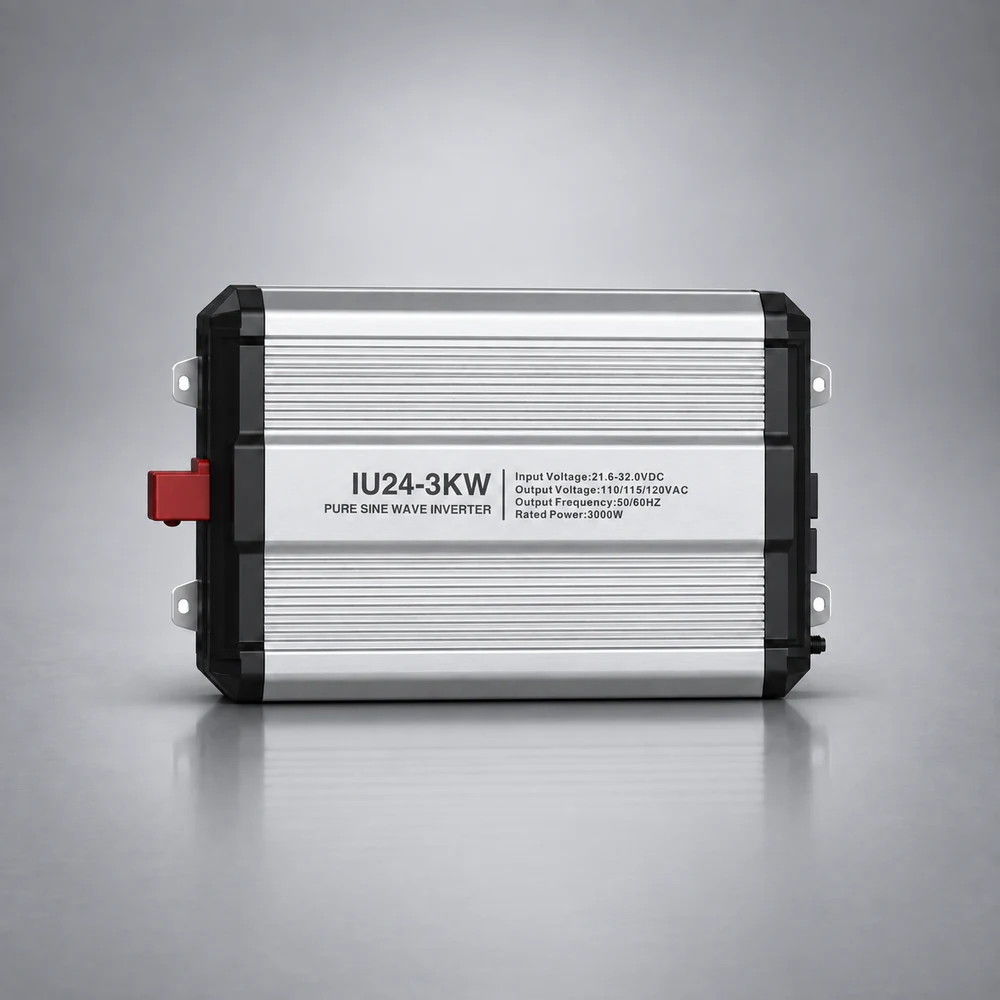
The WeVolt Apex eAPU is an 8.04 kWh (25.6 V × 314 Ah) parking power system. A bidirectional DC-DC converter tops up the battery while driving (up to 29.2 V/50 A forward, up to 14.4 V/100 A in reverse, adjusting automatically with battery voltage). When parked, the battery carries the air conditioner, the inverter, and the hotel load, so the main engine can stay off.
Plugging the Section 2 baseline into the model:
An honest word about the battery: the battery is a consumable, but it carries a 10-year warranty and a design life above 10 years, and no replacement falls inside a 3-year ownership window, so the model includes no battery replacement cost. In extreme cold, an optional diesel-fired auxiliary heater provides backup; we do not claim one system covers the entire winter. Please do not read this as "maintenance-free" either. Every battery has a finite service life.
For how the $3,980 price is put together and what it includes, see Why Electric APUs Cost $8K–$26K. Competitor electric eAPUs typically start around $6,000 (Polar Fox, for example), while diesel APUs run from $9,000 to $17,000 and up, so the electric APU cost picture is different, and so is the payback rhythm.
A Worksheet You Can Fill In with Your Own Numbers
The formula is universal. Swap in your own figures:
Annual net savings ≈ idle hours × 0.8 × fuel price × 75% (electricity and degradation already deducted). Payback in months ≈ equipment price ÷ annual net savings.
The three tiers below are illustrations under the model's assumptions, not quotes. Light, medium, and heavy correspond to different levels of road time:
The net savings in this worksheet are already reduced by 25% (electricity plus battery degradation) but leave out fine avoidance, comfort, and resale value. Use your real fuel price and idle hours. Whether you are comparing truck APU cost quotes across brands or pricing out a single electric unit, the formula works the same, and it will show you which option pays back faster.
Beyond Fuel: Three Savings That Often Go Uncounted
A payback calculation that counts only fuel leaves out three items. They do not necessarily enter the formula, but they shape the final answer to "is it worth it".
- Engine life and maintenance: manufacturers measure warranty and service intervals in operating hours. Less idling means the overhaul arrives later and the warranty period is worth more. The EPA puts the reference at more than $300 per year in engine maintenance, and the long-run effect is larger.
- Avoiding fines: penalties in states and cities that restrict idling range from a few hundred to over ten thousand dollars. An electric APU runs with the engine off and stays clear of them by design. This money never appears on a fuel receipt, yet it is a real gap in spending. The Anti-Idling Laws guide has the details.
- Uptime, resale, and comfort: the electric setup involves no second diesel engine to maintain (a diesel APU burns fuel and needs its own oil changes). At rest there are no exhaust fumes and far less noise, sleep improves, and the truck is more attractive at resale.
When an Electric APU Is Less Worth It
The payback model does not fit everyone. Work through your own numbers first if any of the following apply:
- Few overnight runs: if your truck idles less than a few hundred hours a year, the payback period stretches considerably. Start with the Section 4 formula and your actual hours.
- You only want summer-night cooling: a parking air conditioner (see Truck APU Solutions Compared) cools only and is not a complete APU. Do not benchmark its price against an APU payback; the comparison will mislead you.
- Year-round routes in extreme cold: the optional diesel-fired auxiliary heater is part of the picture, and we do not claim one system covers the entire winter, so the cost structure needs recalculating.
No promise of a 10-month payback for everyone: the roughly 10 months come from a typical long-haul scenario (2,000 hours per year, $4/gal). Owners who run fewer hours or burn cheaper fuel will wait longer. The model is a decision tool, not a guarantee.
Grants Can Cut the Payback Period Further
Federal and state programs fund idle-reduction equipment, and APU-class installations usually qualify. The key figures:
- EPA DERA (Diesel Emissions Reduction Act): for idle-reduction technology on Class 8 long-haul trucks, federal funding covers up to 25% for private fleets (per the singleaudit.org interpretation of provision 66.040); the cap is higher for public fleets.
- Stacking state programs: state-level programs such as Texas TERP and California Carl Moyer can add further funding. Aggregating multiple sources, stacked federal and state funding can cut net cost by another 50–80%.
Grants are not guaranteed: allocations, states, and program years all change; defer to the EPA and your state's official sources. WeVolt does not file applications on your behalf and makes no "guaranteed approval" promises. Before you buy, check the programs currently open in the state where you operate.
Summary and Next Steps
For a typical long-haul owner-operator, the WeVolt Apex eAPU math reads like this: a fuel baseline of about $6,400 per year, net savings of about 75% once electric power replaces burned fuel (about $4,800 per year), a payback of about 10 months on the $3,980 equipment price, and about $10,420 in net savings over three years. Grants can shorten the timeline further. Less idling also extends engine life, keeps you clear of fines, and sleeps better.
Next steps, by decision stage:
- Price structure → Why Electric APUs Cost $8K–$26K
- Wire sizing and fusing → eAPU Wiring & Fuse Sizing Guide
- Compliance savings → Anti-Idling Laws
- Installation support → eAPU Installation, Warranty & Support
- Parts verification and quotes → [email protected]
The short version: "is it worth it" ends at a worksheet. Put in your idle hours and your fuel price, and the payback period comes out on its own.
References
- EPA, "Idle Reduction": 0.8 gal/h idling, 1,800 hours and 1,500 gallons per year, APUs cut fuel use by 75%, alternatives pay back in as little as 6 months.
- AFDC, "Long-Haul Truck Idling": measured idling hours and fuel-consumption ranges for long-haul trucks.
- New Mexico Environment Department, "Idling FAQ": oil and filter degradation from idling; measured 0.82 gal/h for Class-8 engines.
- Heavy Duty Journal (2025): diesel APU payback of 18–36 months ($8,000–10,000); EPA DERA at 25–45% for private and 80% for public fleets; stacked state funding cutting net cost by 50–80%.
- singleaudit.org (66.040 DERA): federal cap of 25% for idle-reduction technology on Class 8 trucks (private fleets).
- WeVolt product documentation: Apex eAPU 8.04 kWh (25.6 V × 314 Ah), WTDC-12-24V-50A bidirectional DC-DC converter (up to 29.2 V/50 A forward, up to 14.4 V/100 A reverse), IU24-3KW 3000 W inverter.
The figures in this guide are based on published measurements and a typical WeVolt scenario model. They do not constitute an investment or return guarantee. Your actual payback depends on your own idle hours, fuel price, and local grant programs.
Put your idle hours and fuel price into the calculatorWhere the $8K–$26K price spread comes from