
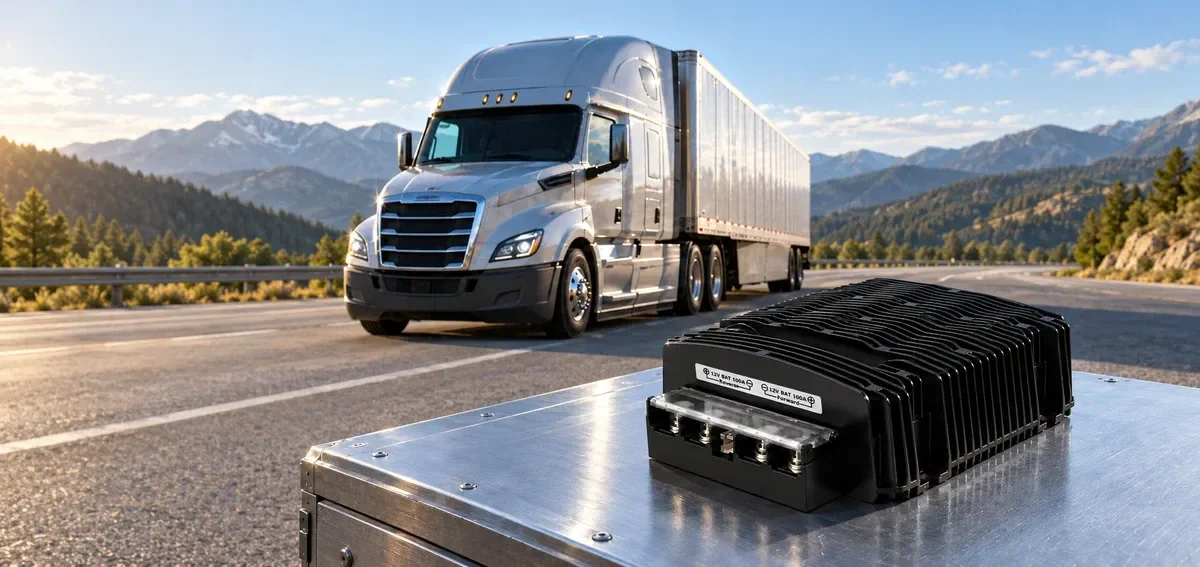
A truck runs on two battery worlds: the starter battery cranks the engine, and the house battery runs the A/C and appliances after you shut down. Cable the two together directly and they drag each other down and kill the starter. This article explains what a 12V to 24V charger with bidirectional flow is, how the two-way energy moves, and why a truck needs bidirectional rather than one-way: the alternator fast-charges the house battery on the road, and the house battery pays the starter back when parked. One unit, two jobs.
Intro: two battery worlds, and why you can't just parallel them
After the engine stops, someone still lives in the cab; the A/C, fridge and appliances keep drawing. That is why a truck cannot avoid two batteries: the starter battery cranks the engine, and the house battery runs the A/C and appliances once you shut down. They differ in both voltage and job.
Some drivers take a shortcut and cable the two batteries straight together with heavy wire. The result is direct: parked loads drain the house battery, and the line drags the starter down with it; a weak starter in turn cannot carry the house battery system. Worse, the next morning it will not crank.
A DC-DC charger is the device that manages energy between the two batteries. This article does not pile up specs; it covers three things: what a bidirectional DC-DC charger is, how the two-way flow works, and why a truck needs “bidirectional” rather than “one-way.”
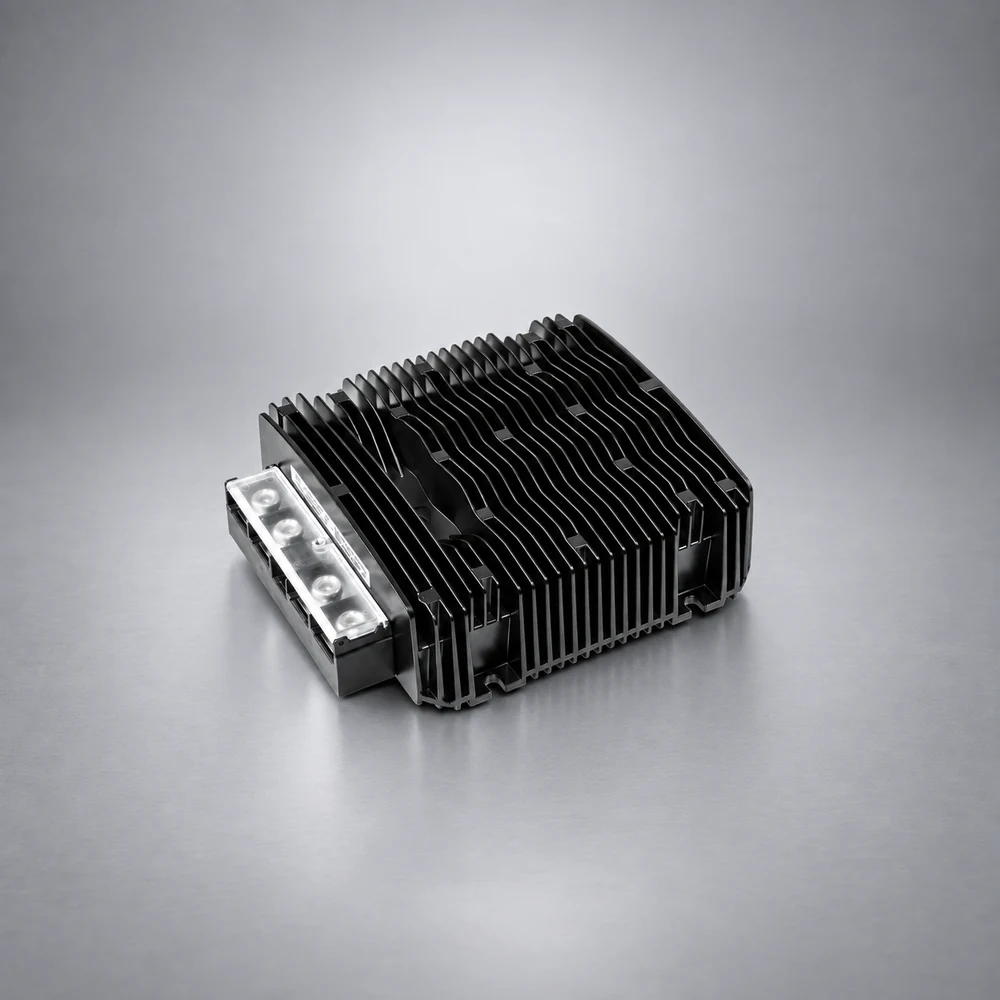
What the unit is: the WTDC-12-24V-50A defined
The WeVolt WTDC-12-24V-50A is a Smart Bi-directional DC-DC Battery Charger. Its application is clear: 12V starter battery ↔ 24V LiFePO₄ house battery. Rated 1500W, up to 96% conversion efficiency, IP65, fanless natural cooling; it auto-switches between ACC (driving, forward) and RMT (parked, reverse) logic.
One-line positioning: it is the charging orchestration module inside the WeVolt Apex eAPU system, moving energy bidirectionally and intelligently between the starter and house batteries. The alternator feeds the house battery while driving, and the house battery pays back the starter while parked, so the starter never dies. Also called a dc dc charger, a dual battery charger, or battery-to-battery (B2B) charger.
Unlike a conventional one-way DC-DC, this unit carries both a step-up and a reverse channel in one box. That is the core of what follows.
How bidirectional works: step-up on the road, payback when parked
Bidirectional means energy flows both ways, not only from the starter side to the house battery side.
- Driving (ACC ON): starter battery / alternator → house battery, 12V stepped up to 24V, forward up to 29.2V / 50A.
- Parked (ACC OFF, RMT ON): house battery → starter battery, 24V stepped down to 12V, reverse up to 14.4V / 100A.
A conventional one-way DC-DC only steps the starter-side voltage up to feed the house battery and disconnects the moment the engine stops. It solves “charge the house battery while driving” but not “protect the starter while parked.” The bidirectional unit folds both into one: forward step-up charges the house battery on the road, reverse pays back the starter when parked, one closed loop.
“One unit, two jobs” is shorthand. Precisely, it integrates two functions, forward step-up charging the house battery and reverse payback protecting the starter, into one device, switched automatically by ACC / RMT logic with no manual switch to flip.
While driving: the alternator fast-charges the house battery
Why the step-up? A 12V starter battery or alternator cannot directly charge a 24V house battery. The 12V to 24V DC to DC charger converts the varying alternator voltage into the CC/CV multi-stage charging profile a 24V house battery actually needs. This matters most for lithium: LiFePO₄ needs its own profile, and raw voltage neither fills it nor treats it well over time.
The rated 1500W fast-charge, on the marketing figure, fills the house battery in about 5 to 6 hours (marked “about”; actual time varies with battery capacity, starting state of charge and drive time). If the system has a solar input, it can stack on top while parked or driving.
For drivers running long-haul and moving all day, charging on the move is the easiest top-up: no shore power, no stopping to wait, the house battery fills as you drive.
While parked: reverse payback protects the starter
Parked is when the starter battery is truly at risk. The A/C and appliances drain the house battery, and the starter self-discharges. By next morning it will not crank.
The reverse channel (up to 14.4V / 100A) pays the starter back from the house battery while parked, holding it at a cranking level. Compare: a one-way DC-DC only steps up, no reverse; a battery isolator only blocks backflow, steps up neither nor pays back. Neither solves the “protect the starter while parked” problem, so the bidirectional unit closes that gap.
State the boundary clearly: reverse payback is “top up to avoid a dead starter,” not a substitute for the starter battery, and it does not claim cold-cranking amps (CCA). It pairs with the A/C side's 21.5V low-voltage cutoff to form a system-level “parked, no harm to the truck's own battery” logic: the house battery cuts the A/C at a threshold, and the reverse channel then tops up the starter from the house battery, so neither side goes flat.
Why bidirectional beats one-way for a truck
The one-way B2B chargers on the market, mostly for RV, van and marine, do one thing: sense the engine running and charge the house battery from the starter side, then disconnect the moment the engine stops, relying on “don't drag the starter down” as the floor. They do not pay back.
A truck is not an RV: long park time, lots of A/C and appliances, high self-discharge plus drag risk on the starter. A one-way unit solves only half the problem.
- Bidirectional = forward step-up charging the house battery + reverse payback protecting the starter, one closed loop with no “parked and nobody minds the starter” gap.
- No isolator manual switch: a traditional dual-battery setup adds an isolator plus a manual switch; the bidirectional unit uses ACC / RMT auto logic, simpler to install and one less step to forget.
For a truck, “never dead” is not a slogan but two channels holding at both ends: charge on the move, pay back when parked.
Efficiency and fast charge: 96% conversion, 1500W
Up to 96% conversion efficiency comes from switching technology, with low loss and low heat. The rated 1500W fast-charge, with the about 5 to 6 hour fill figure, is the backbone of “charge as you drive.”
Cooling is fanless natural cooling, quiet, no heat build-up, no fan to maintain. But tell the difference: “no fan to maintain” is not “maintenance-free.” A DC-DC has wiring and installation rules (reverse polarity causes permanent damage); it is a device that must be installed to spec, not a maintenance-free machine.
Truck-grade durability: IP65, wide temperature, long life
The truck environment is far harsher than an RV or a home: mud, dust, vibration, summer heat by the engine bay. The WTDC-12-24V-50A hard specs:
- IP65 water- and dust-proof, shock-resistant, survives outside the cab.
- Operating temperature −40°C to +55°C, from polar to desert-hot routes.
- MTBF (mean time between failures) ≥200,000 hours, long design life.
- 8 protections: overvoltage, overcurrent, short-circuit, over-temperature, anti-backflow, lithium full-charge cutoff, current soft start, automatic thermal derating.
- Warranty 2 years.
It is not a maintenance-free device. Fanless natural cooling only means “no fan to mind”; wiring and installation still follow the rules (reverse polarity causes permanent damage). Day to day: right cable gauge, right polarity, periodic torque check on the terminals. Calling “no fan” “maintenance-free” is misleading.
Inside the eAPU system: how it works with battery, A/C and inverter
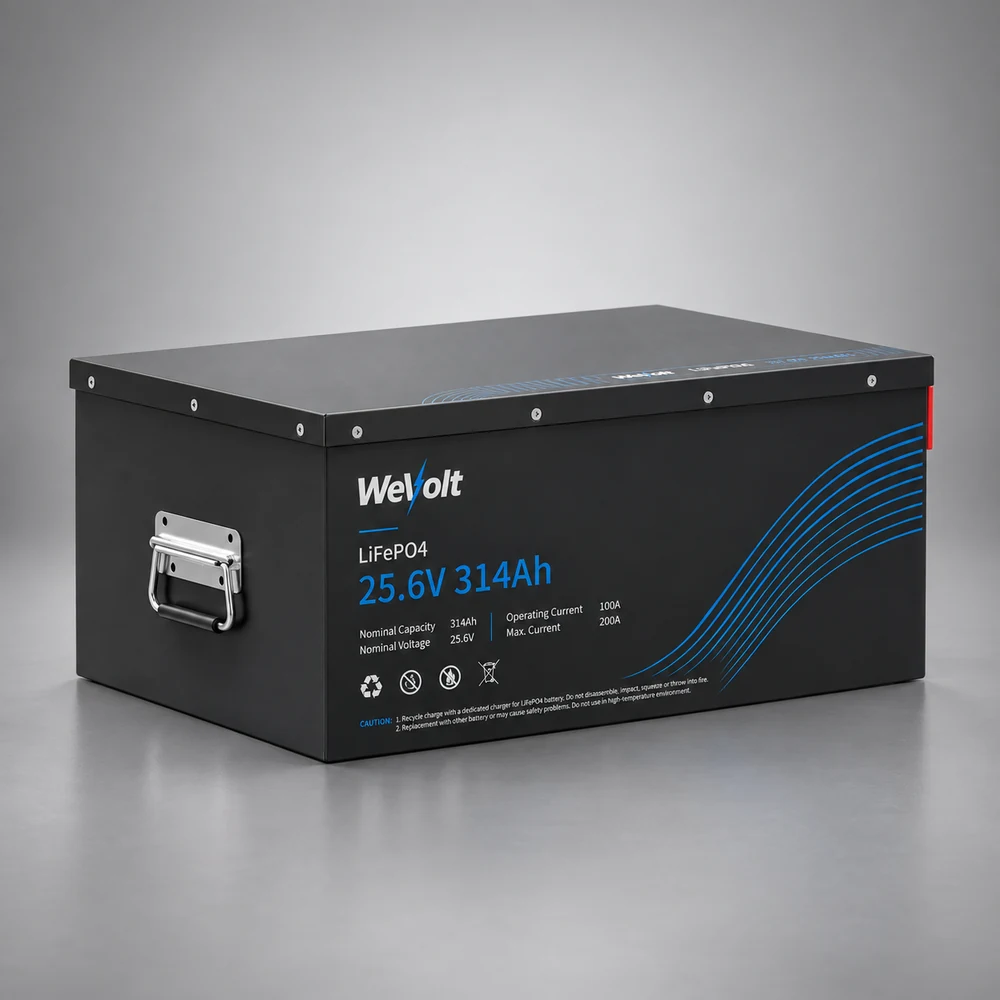
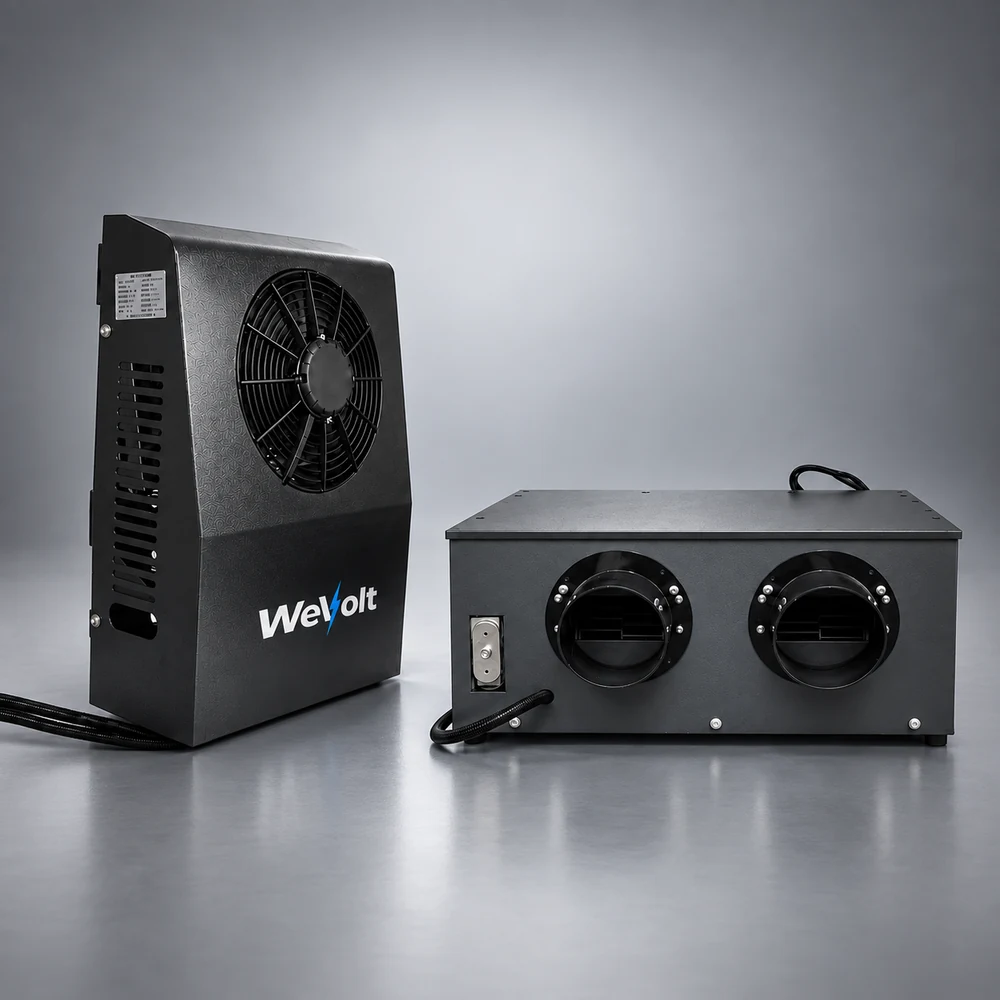
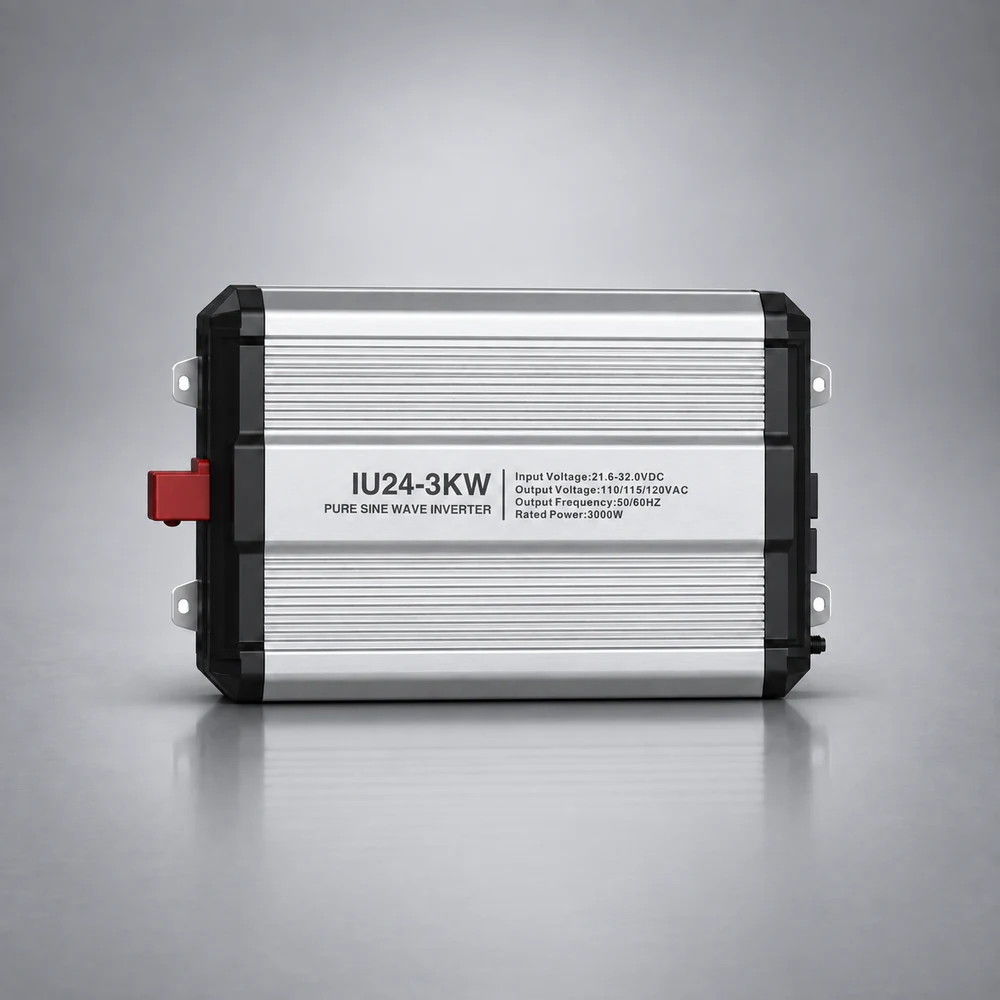
A DC-DC charger is never a standalone box. Inside the WeVolt Apex eAPU system, it is validated as a set with the 24V 314Ah (8.04 kWh) LiFePO₄ house battery, the WTAC-24V-10C-5H A/C and the IU24-3KW inverter:
- With the battery: forward steps the alternator voltage up into the 24V house battery; reverse pays the starter back from the house battery.
- With the A/C: reverse up to 14.4V / 100A pairs with the A/C's 21.5V low-voltage cutoff. The A/C cuts at threshold, then reverse tops up the starter, so neither side goes flat.
- With the inverter: the inverter draws 120V appliances from the 24V house battery; the DC-DC keeps the battery full. All three share one 24V platform.
Against a single RV / van one-way B2B unit sold loose, the difference is a validated set, bidirectional and 24V-specific. It is not a “works in a truck too” generic unit, but one link designed for the 24V truck eAPU system.
Summary and next steps
The WTDC-12-24V-50A is a 12V↔24V bidirectional DC-DC charger: 1500W, up to 96% efficiency, IP65, 2-year warranty. Its value is not the word “charging” but “bidirectional”: forward step-up charges the house battery, reverse payback protects the starter, one unit two jobs, so the truck never drains when parked and never strands you at crank.
If you are building a 24V truck eAPU, this is a validated whole with the battery, A/C and inverter, not a part bought in isolation. For full specs, wiring and install:
Full specs and install: WTDC-12-24V-50A DC-DC chargerThe 8.04 kWh 24V parking batteryWTAC-24V-10C-5H truck parking A/C and low-voltage cutoffHow the IU24-3KW inverter runs household appliances12V / 24V / 48V voltage selection guideWhole system plan: WeVolt Apex eAPUQuote and custom build: [email protected]
References
- WeVolt WTDC-12-24V-50A bidirectional DC-DC charger marketing brief: 6 selling points, full specs (1500W, forward 29.2V/50A, reverse 14.4V/100A, up to 96%, IP65, −40°C to +55°C, fanless, 200×178×60mm, ≤2.7kg, MTBF≥200,000 hours, 2-year warranty).
- WTDC-12-24V-50A full spec sheet (internal cross-validation source): dual-battery state machine (auto / manual / sleep / wake), 8 protections, CC/CV charging algorithm, RS485 / optional Bluetooth.
- WTDC-12-24V-50A quick start guide: 6-step wiring, ACC / RMT control logic, recommended cable (per install manual), reverse-polarity permanent-damage warning.
- WeVolt Apex eAPU system overview: DCDC forward 29.2V/50A, reverse 14.4V/100A, up to 96%; system includes 24V 314Ah (8.04 kWh) LiFePO₄ house battery, WTAC-24V-10C-5H A/C, IU24-3KW inverter.
- Public competitor material (one-way B2B charger structure, DC-DC vs battery isolator) is used only as method reference; this article does not cite specific brand or model figures.
This article is a concept and selection guide for the bidirectional DC-DC charger. Exact cable gauge, install dimensions and protection thresholds follow the formal install manual or our confirmation. Legal entity and registered address follow the official published page.
Wire gauge and fuse sizing for the DC-DC circuits