
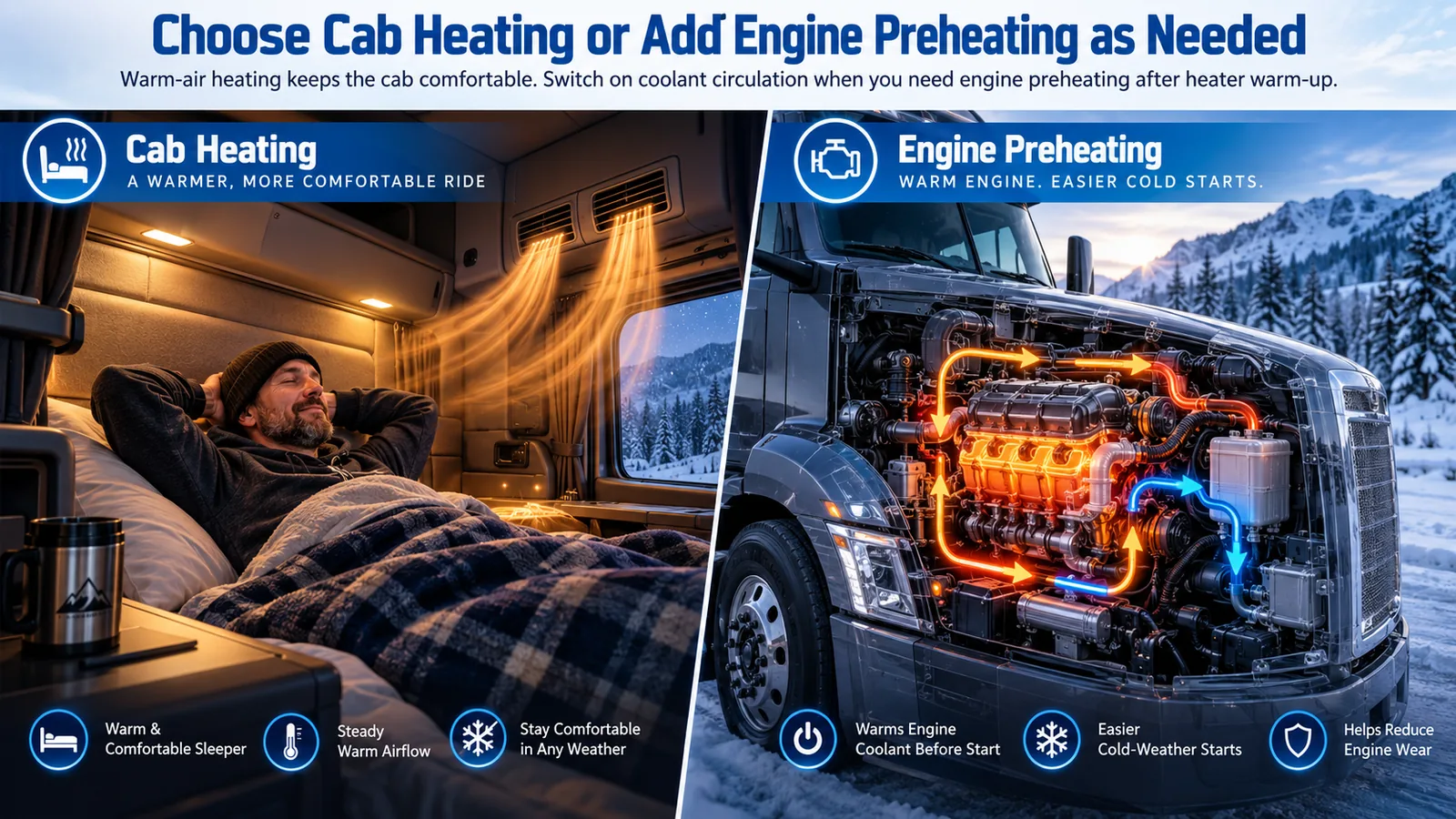
When a long-haul truck shuts its engine down for a mandated rest period, the cab loses the engine's residual heat and needs another source. Two families of equipment answer that need: diesel parking heaters, which make heat by combustion, and electric heating, which converts stored battery energy into heat. Because the two draw on different energy sources and different circuits, and affect house battery runtime in different ways, neither can be called simply better. This article sets the comparison on one tier, works through rated capacity, energy balance and runtime, extreme-cold limits, installation conditions, cost structure, safety and market forms, then closes with the configuration options in the WeVolt Apex eAPU. Specifications are given as rated values and ranges from official documentation, with their conditions of applicability attached.
1. Comparison tiers: heating sources and complete parking systems
Discussions about truck heaters often mix questions that belong to different tiers. Grouping them makes clear what is actually being compared. The first tier is the choice of a complete parking system, diesel APU against electric APU, judged on purchase price, whole-life cost, payback period, reliability and maintenance. The second is the choice of a parked power supply — electric APU, parking air conditioner, battery-only combinations — judged on electrical capacity, cooling output and operating duration. The third is the choice of a heating source, diesel heating against electric heating, judged on heating capacity, energy source, effect on runtime, installation conditions and limits of use. This article stays on the third tier.
Within the heating-source tier, four kinds of device can be compared directly. The first is the auxiliary electric heater built into a parking air conditioner, integrated with the indoor unit and powered by the 24V house battery. The second is a standalone electric heater connected as a separate appliance to the vehicle supply or an inverter output. The third is the diesel air heater, which delivers heat to the sleeper and cab. The fourth is the diesel dual-function heater, which serves the air side and the engine coolant side together. The first two are electric heating, the last two diesel heating, and any specific model should be verified from its specification sheet.
In catalogues, fleet specifications and driver discussions these devices travel under many names: truck cab heater, bunk heater, sleeper heater, semi truck heater, coolant heater, engine preheater and truck parking heater; combustion units add truck diesel parking heater, diesel truck heater and cab diesel heater. An electric truck heater, by contrast, is identified by its supply circuit rather than by a combustion chamber. The names describe location or function, and the model specification sheet remains the reliable basis for comparison.
A heating-capable air conditioner and a standalone diesel heater are not mutually exclusive. The former depends on the air conditioning and house battery circuits; the latter is an independent combustion device. Both can coexist on one truck, serving different purposes — mild-cold heating on the electric side, deep-cold heating and engine preheating on the diesel side. Treating the question as either-or obscures the difference in energy sources and can lead to the engine preheating function being wrongly attributed to the air conditioner.
Conclusions do not transfer between tiers. A cost conclusion about a complete system says nothing about how a heat source performs in extreme cold, and the capacity of a single heat source cannot be used to calculate the payback of a whole system.
2. Energy sources and system position of the two heat sources
The fundamental difference lies in where the heat comes from and where the electrical parts draw their power. Queries phrased as "how do diesel heaters work" usually lead to a description of the combustion sequence, but for deciding between the two paths the more useful distinction is the origin of the heat and of the electricity.
The electric heating side
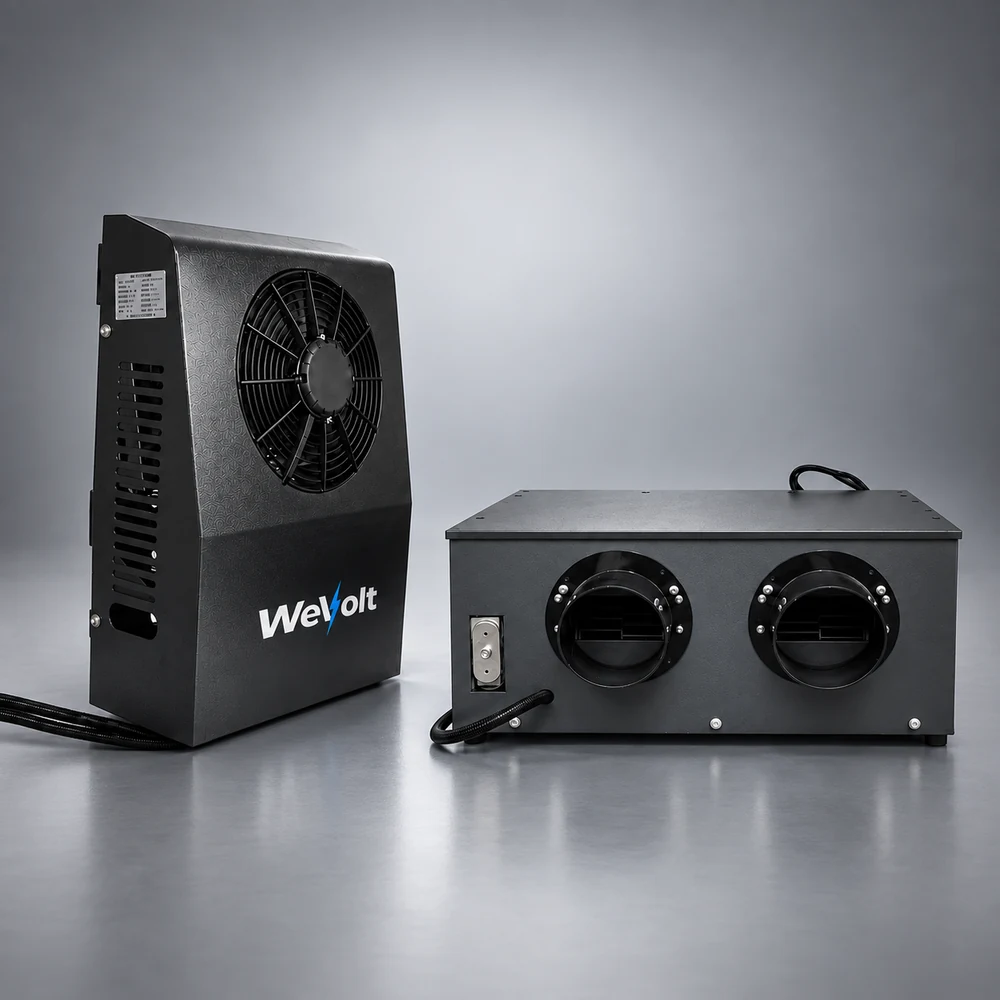
Taking a parking air conditioner with a heating function as the example, the auxiliary electric heater shares the indoor unit and blower with the cooling function and is supplied directly by the 24V DC house battery, without passing through an inverter. A standalone electric fan heater is normally connected as a separate appliance; where it is an AC device it additionally passes through the 3,000W pure sine wave inverter, and its load must be counted in the inverter and wiring capacity. In both forms the heat originates in battery energy, so higher heating power occupies a correspondingly larger share of the battery.
The diesel heating side
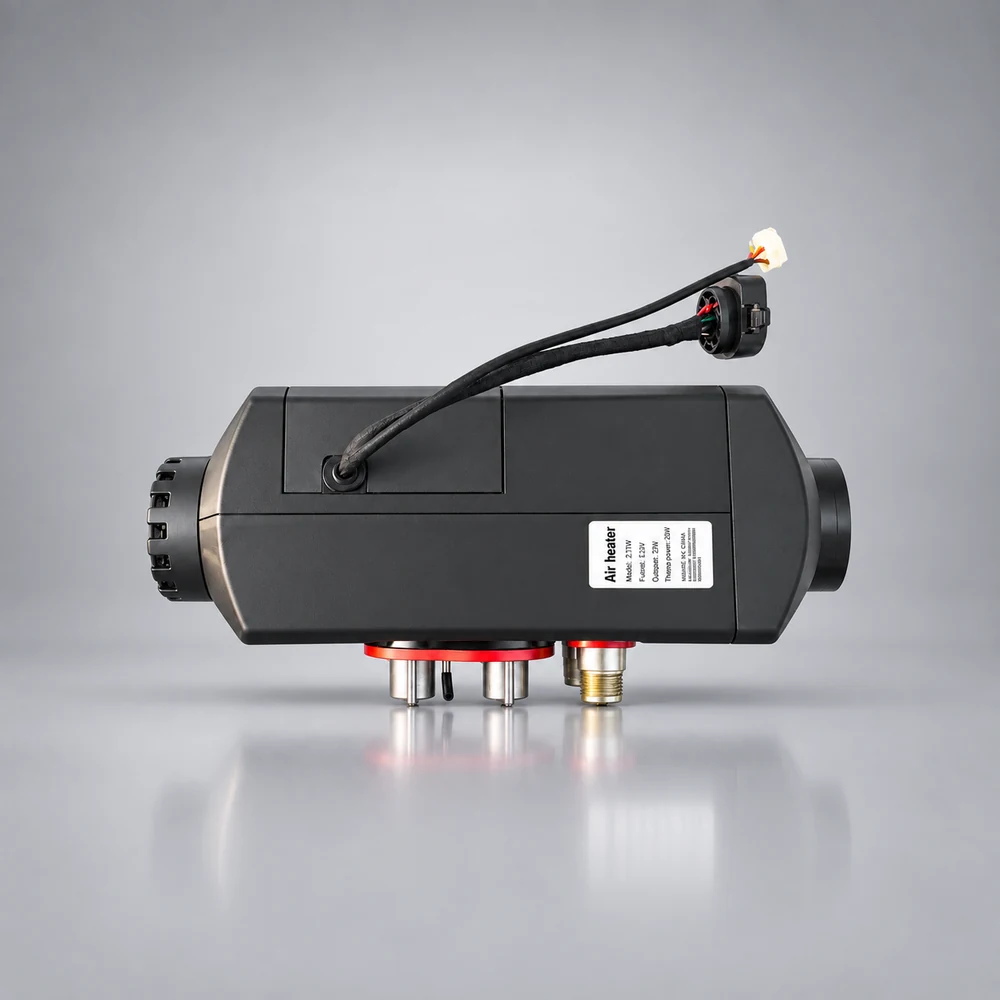
A diesel heater makes its heat by combustion, with electricity used only to drive the controller, glow plug, fuel pump, blower and circulation pump. Its supply circuit is independent of the 24V house battery circuit: neither the heat nor the electricity comes from that battery's stored energy. In the WeVolt Apex eAPU the unit is the WTDH-12V-5KW, a 12V diesel heater with a published operating range of 9–18V, wired to the vehicle low-voltage system rather than to the 24V house battery. The U.S. Department of Energy's Alternative Fuels Data Center lists cab or bunk heaters and coolant heaters as heating equipment independent of the main engine, divided into an air side and a coolant side by the medium that carries the heat.
Verifying the supply specification
Units in the same category are offered at different rated voltages, and heavy trucks themselves use different low-voltage architectures, so the rating of a diesel heater and that of the house battery circuit are not the same thing. A catalogue may list a 12V diesel heater next to other variants, and a 5kW designation does not by itself establish which low-voltage system a truck uses. The rated supply voltage, the vehicle low-voltage system, the power take-off point, cable cross-section and fuse configuration should be checked against the chosen model and confirmed against the manual before installation. Voltage is not a measure of quality; compatibility with the vehicle is the criterion.
The diesel heater's supply circuit is independent of the 24V house battery circuit. Adding one does not increase battery storage and does not consume the energy the parking air conditioner uses; electric heating, by contrast, draws directly on that battery and shortens the time left to the air conditioner and other appliances in the same period.
How a diesel parking heater works: combustion stages, consumption and the 12V supply3. Rated heating capacity and the problem of comparable metrics
Heating capacity is the figure most often placed side by side when the two heat sources are compared, yet the rated values do not sit on the same basis. The respective ratings and where the heat goes are set out below.
The two ratings do not describe the same quantity. The 5kW figure is the rating of the diesel heater as a whole unit, with its heat covering both the air side and the coolant side, and neither separate output is published. The 5,500 BTU/h of the A/C auxiliary heater is a heating capacity delivered entirely to the air inside the cab. Because the objects differ and the diesel heater's split is not published, a 5kW diesel heater and a 5,500 BTU/h electric heater cannot be divided one by the other to produce a multiple, and neither should be described as several times more powerful than the other.
A further difference sits inside the electric heating side itself: heating draws substantially more than cooling. For the heating-capable parking air conditioner, cooling input is about 900W at about 38A, while heating input is about 1,600W at about 66.6A. The same machine therefore loads the battery much harder in heating mode than in cooling mode — which is why runtime estimates derived under cooling conditions cannot be transferred to heating.
Rated values reflect the scale and design conditions of the equipment, not warm-up speed. How fast the cab reaches a set temperature depends on insulation, ambient temperature, duct layout, airflow and the other loads running at the same time. Ratings should be read together with their measurement conditions, and no warm-up time or attainable temperature is promised here for any vehicle.
Rated values are not a ranking. To compare heat actually delivered to the sleeper, the diesel heater's separate air-side output would first have to be published, then set against the A/C heating capacity on the same delivered object.
4. Energy balance and runtime estimates
What each path consumes is the principal basis for deciding how a truck gets through the winter. The two balances are worked through separately, then set side by side.
The energy balance on the electric heating side
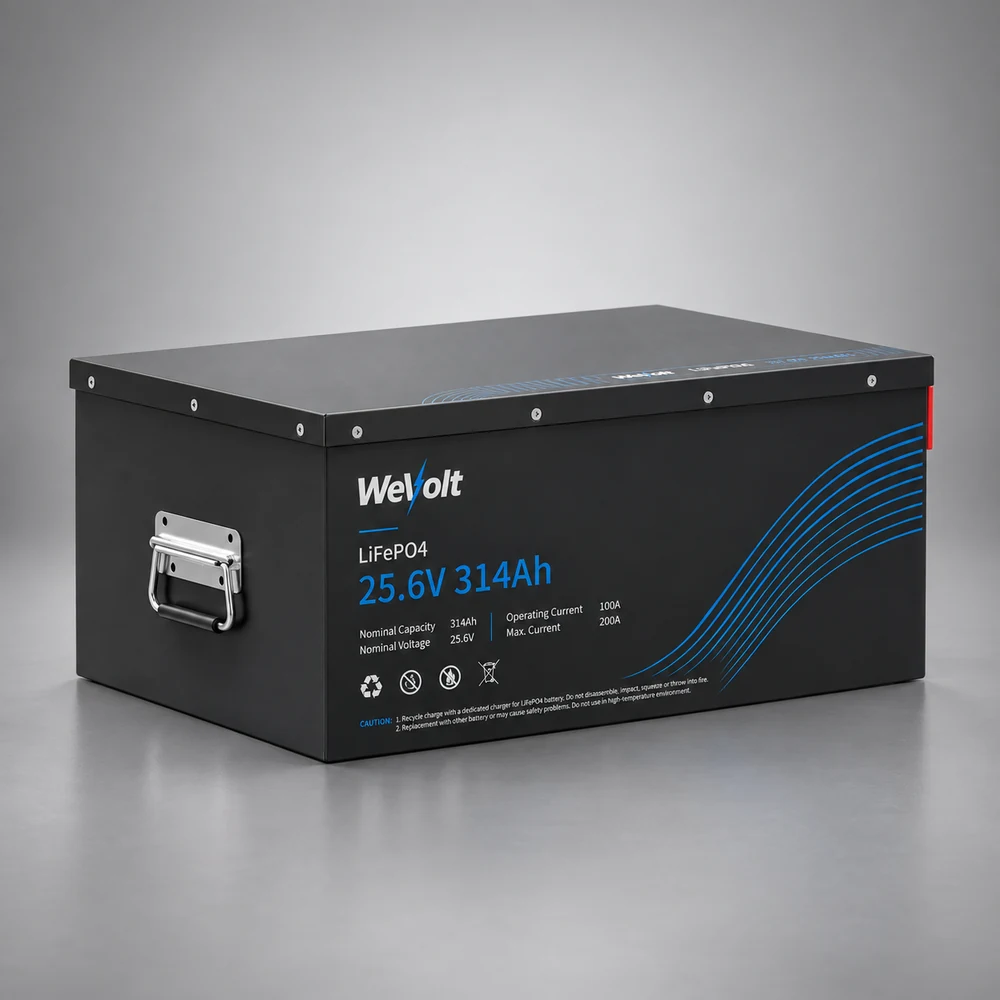
The house battery of the WeVolt Apex eAPU is a 25.6V / 314Ah lithium iron phosphate unit holding 8.04kWh. Against a heating input of about 1,600W, continuous full-load operation with no other loads gives a theoretical upper limit of roughly 5 hours (8.04kWh ÷ 1.6kW ≈ 5.0h). That is a ceiling, not a runtime promise: in service the thermostat cycles the heater, the blower, lighting, charging devices and inverter loads draw at the same time, and low temperature reduces the battery's discharge capability, so the time actually available is shorter and varies with all of these.
The low-temperature effect has a documented engineering background. Reduced battery discharge capability and increased oil viscosity at low ambient temperature are standard reasons for hard diesel cold starts; SAE J300 classifies oils by low-temperature viscosity and pumpability, and the cold-start studies indexed by SAE and TRID likewise identify low-temperature battery performance as a contributing factor. This is why electric heating in cold regions is squeezed by heating capacity and battery runtime at the same time.
The energy balance on the diesel heating side
The verifiable consumption of a 5kW dual-function diesel heater is about 0.15–0.52 L/h of diesel and a rated electrical power of about 30–50W, with the fuel pump at about 18W and, in some documentation, the circulation pump at about 24W listed separately. Fuel consumption moves with the output setting and the ambient heat load and is not a fixed value. Because the electrical parts run from an independent low-voltage circuit rather than the 8.04kWh battery, operating the heater does not consume the stored energy the air conditioner and hotel loads depend on. At parking locations with no external power, that independence is the distinguishing condition.
Cooling runtime estimates cannot be transferred to heating
Published runtime figures for the same air conditioner — an estimate of 8–10 hours, and a headline of up to 15 hours — describe cooling operation, and the two do not agree even with each other; both are estimates under stated conditions. Heating input of 1,600W exceeds cooling input of 900W, and heating current of 66.6A exceeds cooling current of 38A, so for the same battery the time available in heating mode is shorter than any cooling estimate. Reading an overnight cooling figure as evidence that electric heating will run all night substantially overstates what the battery can deliver.
Both the heat and the electricity of electric heating come from the 8.04kWh house battery, so higher heating power directly compresses the time left to every other load on that battery. Diesel heat comes from diesel, with electricity only for ancillary parts on an independent circuit. The runtime difference originates here.
Cooling runtime done properly: the 8–10 hour estimate, the derived lower bound and what loads fit5. Performance limits under extreme cold conditions
Under extreme cold the two heat sources are constrained in different ways. The factors and the limits they produce are set out below.
Limits on the electric heating side
About 5,500 BTU/h from the A/C auxiliary heater is adequate for supplementary cab warmth in mildly cold conditions. As ambient temperature falls further, two constraints tighten together: heat loss per unit time rises, while the high heating input meets a battery whose low-temperature discharge capability is declining. The combination makes it difficult for electric heating alone to carry overnight heating in deep cold — the condition most often raised when operators compare cab heaters for winter routes. Heating-capable air conditioners also carry a manufacturer-stated operating temperature range, which should be read together with the model, the installation and the manufacturer's instructions; no conclusion about extreme-cold heating performance is drawn from it here.
Limits on the diesel heating side
Diesel heat comes from combustion and does not depend on house battery storage, which gives it a clear place in cold regions without external power and on long individual parking periods. Its engine preheating function presupposes a correctly installed coolant loop, and the actual effect depends on the engine model, coolant volume, pipe layout, ambient temperature and altitude. No preheating time or target temperature is given here; heating powers and preheating times in published research vary between systems and cannot be transferred to a specific model.
Low temperature loads the diesel side along three chains: fuel, intake and exhaust, and coolant. Fuel behaviour at low temperature affects supply, the condition of the intake and exhaust affects combustion and exhaust safety, and the coolant circuit decides whether preheating can function at all. These are installation and maintenance conditions, to be checked item by item against the specific vehicle.
Engine coolant preheating is not fuel-line heating. It does not change the conditions governing fuel waxing or gelling, and it is not equivalent to jump starting or to replacing the starter battery. Reading preheating as thermal protection for the fuel system is a common misattribution of function.
Neither approach provides unconditional heating in every climate. No performance is promised for any extreme temperature, altitude or vehicle; the applicable rated conditions, installation requirements and limits of use are those in the product manual and the manufacturer's consistent instructions.
6. Installation, power supply and system conditions compared
Installation conditions often decide feasibility more decisively than the heating figures do. The prerequisites of the two paths sit side by side below.
The electric side involves fewer installation steps, because a heating-capable air conditioner leaves the factory with the heating element already inside the indoor unit and needs no fuel line or exhaust route. Fewer steps do not mean a simpler electrical calculation: heating current of about 66.6A is markedly higher than cooling current of about 38A, so cable cross-section, fuse rating, battery capacity and simultaneous loads must all be rechecked for heating operation. Where a standalone electric fan heater is used, inverter efficiency and voltage drop in the wiring belong in the load calculation too.
What decides a diesel heater installation is the vehicle, not the heater model. Before fitting, establish whether a fuel take-off exists, whether there is room to route the exhaust, whether a coolant connection point is available, whether the electrical capacity suffices, and whether a position under the bunk or in the equipment bay allows secure fixing and ventilation. Original equipment varies widely: some trucks already provide a parking heater mounting position, others require the interfaces and fixing structures to be arranged separately.
No commitment is made here that any vehicle can be fitted directly or within a fixed number of labour hours. The routing of fuel lines, the coolant circuit and the low-voltage supply protection follow the vehicle service documentation and the installation instructions supplied with the unit.
A coolant circuit is necessary only when engine preheating is used. For sleeper heating alone, the air path does not depend on it. Keeping the two functions distinct stops installation conditions being attributed to the wrong path.
Wire and fuse sizing for the 24V side: gauge tables for the battery, charger and inverterCircuit-by-circuit install walkthrough: fuel, intake and exhaust, coolant loop, ducting and acceptance7. Operating cost metrics and common selection errors
Operating-cost comparisons are often reduced to a single figure, although the two paths have different cost structures and both vary with operating conditions.
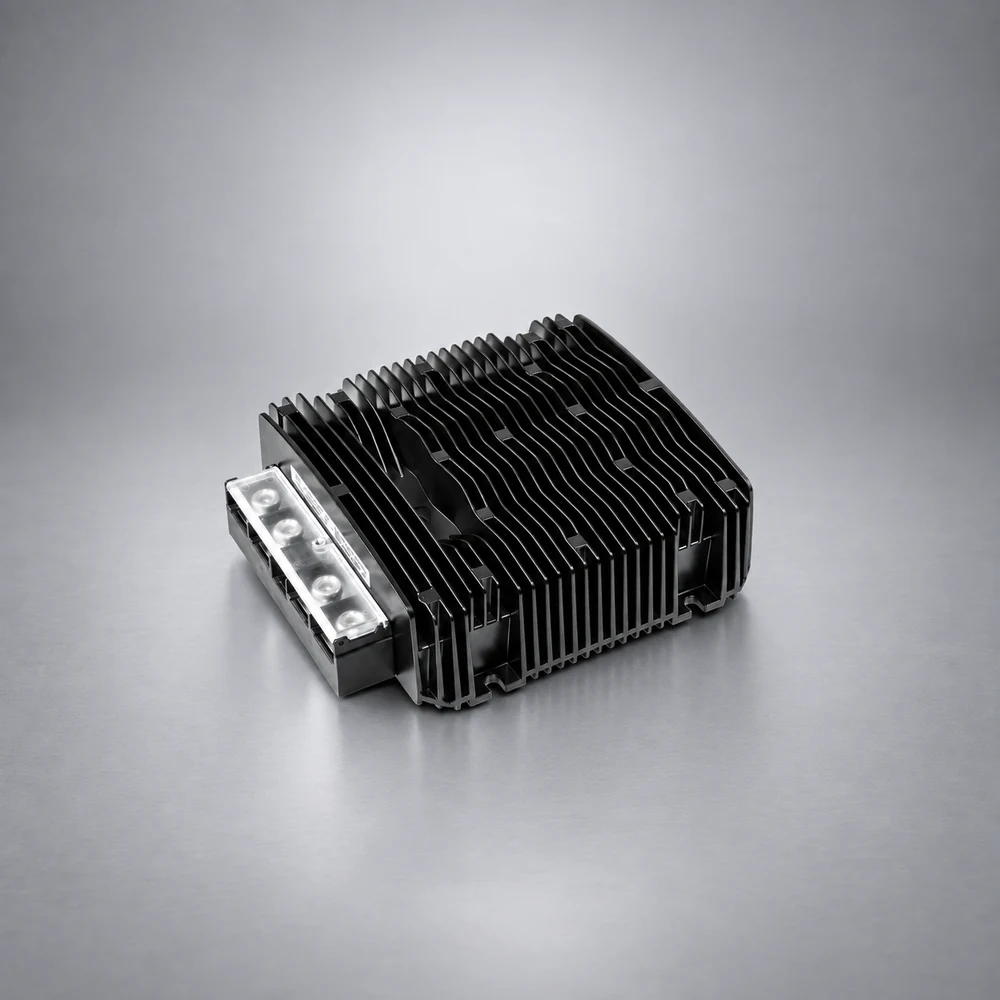
A diesel heater consumes diesel continuously together with a small amount of electricity, with a brief period of higher draw at startup, so it is not zero-cost heating. The electricity for electric heating comes from the house battery, and its cost depends on how that battery is recharged. Charging while driving is handled by the bidirectional DC-DC charger — up to 50A forward at 29.2V, up to 100A reverse at 14.4V, adjusting automatically to battery voltage, both figures maximums. Where an external supply exists at the parking location, the source of electrical energy differs again and should be established for that location.
The familiar calculation that compares either approach with idling builds from roughly 0.8 gallons per hour, eight hours a night and 250 nights a year. It holds only where the main engine would otherwise have run overnight for heat; the actual difference depends on the original idling duration, the diesel price, the ambient temperature, the availability of an external supply and the recharging method. Where another form of heating was used before, the basis of comparison shifts with it. No savings figure is given for a specific vehicle or route, and no claim is made that fitting a heater offsets all idling fuel.
Three common selection errors
The first is selecting on the best case: estimating overnight performance from a manufacturer's most favourable condition, without allowing for low temperatures, simultaneous loads and thermostat cycling, which overstates the time available on the electric side. The second is skipping the electrical capacity calculation: considering heating power alone, without checking cable cross-section, fuses, battery capacity and inverter load, invites undervoltage or protective shutdown at heating currents. The third is considering purchase price alone: installation conditions, diesel and electrical consumption and maintenance requirements differ between the paths, and the equipment price cannot reflect the conditions of subsequent use.
Prices and savings vary with configuration, quotation and operating conditions. Equipment prices, configuration scope and included deliverables are those stated in the official documentation.
8. Safety, noise and maintenance
Because the two paths draw on different energy sources, their safety and maintenance priorities differ as well.
Combustion equipment
A diesel heater involves a fuel line, combustion air intake, exhaust and — where preheating is used — a coolant circuit, all of which must be installed correctly and maintained periodically. Troubleshooting literature identifies blocked intake and exhaust, restricted fuel supply and combustion-chamber carbon deposits as common causes of failure, and recommends checking fuses and supply voltage first, then the intake, exhaust and fuel filter, before reading controller fault codes. Combustion equipment carries a risk from exhaust gases, so the outlet must face outside the vehicle, away from the sleeper and combustible materials, with carbon monoxide protection arranged per local safety regulations.
Whether the sleeper may be occupied while the heater runs is determined by the manufacturer's operating instructions and local safety regulations. No recommendation is given here about overnight use during sleep, and such use is not described as a product function. No claim of zero failures or zero fire risk is made, and no legal conclusion is offered for any jurisdiction.
Electric heating equipment
The electric side produces no combustion exhaust but carries a substantial electrical load. Its priorities are capacity, cable cross-section, fuse rating and battery low-voltage protection. Heating current of about 66.6A exceeds cooling current of about 38A, so wiring and protective devices must be checked against heating operation; where the inverter supplies other appliances at the same time, the total load counts against the same battery. Heating-capable air conditioners normally incorporate low-voltage protection and timer functions, with thresholds and behaviour set out in the model manual.
Noise
The diesel side produces combustion, fuel-pump and blower noise; the electric side mainly blower noise. Manufacturer material quotes noise figures, but the complete measurement conditions are not always published alongside them, so descriptions of a quiet unit should be read against the conditions under which the figures were obtained. No fixed decibel value or ranking of the two paths is given here. Perceived noise is further affected by mounting position, fixing method, duct layout and the vehicle's insulation.
Points common to both
- Use of combustion equipment follows the supplied instructions: whether the sleeper may be occupied with the heater running, and whether a carbon monoxide alarm is required, are decided by the operating manual and local regulations.
- Engine preheating is not fuel-line heating: it acts on the cooling circuit, does not change fuel waxing conditions, and is not a jump start or a battery replacement.
- Preheating depends on a correctly installed coolant loop; no preheating time or target temperature is given, and extreme cold and high altitude must be confirmed against rated conditions.
- No claim of zero failures or zero fire risk is made, and demand-side discussion is not treated as evidence of a failure rate.
Neither path is maintenance-free. Combustion equipment needs attention to fuel, intake and exhaust and the combustion chamber; the electric side needs attention to connections, protective devices and battery condition. Intervals and procedures follow the relevant manual.
9. Market product forms and representative manufacturers
Heaters on the market divide into three forms by function, each with a different heating target and different installation requirements.
At system level, the published configuration lists of manufacturers such as Polar Fox and Electric APU present heaters largely as options or heating packages: some configurations use an HLN air heater option, others Espar or Webasto cab heaters and engine preheaters. Most manufacturers sell the heater as a separately priced or optional addition rather than a default part of a complete parking system. Before comparing specifications, establish whether the product in front of you is a standalone component or an option inside a system.
The form can be identified from three verifiable features: whether an air-outlet duct leads to the sleeper; whether coolant inlet and outlet ports and a circulation pump are present; and whether the supplied manual lists engine preheating as a function. Only the first makes an air heater, the first and second a coolant heater, all three a combined unit. The same product name may cover different structures in different catalogues, so the specification sheet is more reliable than the category name.
Searches for diesel heater reviews or truck heaters return a mixture of catalogue labels for what is often the same underlying architecture: diesel bunk heater, cab diesel heater, diesel heater for truck, diesel heater for cabin. The names help locate products but do not indicate a functional difference. The forms and manufacturers above are taken from public catalogues and product-line classifications and serve only to identify structure; they are not a third-party test or a quality ranking. Kit scope, deliverables and vehicle applicability differ between manufacturers, and specifications, availability and prices are those in their current documentation.
The classification by form identifies product structure and installation requirements, not a ranking. One manufacturer may offer both air and coolant lines, so selection follows the specification sheet of the specific model.
10. Configuration options and scenario decisions for the WeVolt Apex eAPU
The WeVolt Apex eAPU is offered in four systems that share three components: the truck air conditioner, the 24V house battery and the DC-DC charger. The systems differ in whether 120V appliance power is added through the 3,000W pure sine wave inverter, and whether diesel heating and engine preheating are added through the 5kW dual-function diesel heater. The full designations are WeVolt Apex Essential, Apex Power, Apex Heat and Apex Complete.
The 5kW dual-function diesel heater ships with the Apex Heat and Apex Complete systems and is not sold as a standalone retail item. Winter heating in the remaining systems depends on whether the selected air conditioner model includes auxiliary electric heating — which does not mean those systems have no heating capability, nor that all four include a diesel heater as standard. Selection matches functions rather than climbing a price ladder: appliance power points to Apex Power, winter heating and preheating to Apex Heat, both together to Apex Complete. The heater runs on its own 12V supply throughout, outside the 24V loop.
Decision matrix by operating scenario
The choice between the two paths rests on three facts. First, the energy sources differ: electric heating draws on the 8.04kWh house battery, while diesel heating draws mainly on diesel with its electrical parts on an independent circuit, so their effects on battery runtime are entirely different. Second, rated capacities must be compared on the same delivered object — no multiple exists between a 5kW whole-unit rating and 5,500 BTU/h delivered to the cab, and cooling runtime estimates do not apply to heating. Third, the two sources complement rather than exclude each other, and whether both are configured depends on the need for engine preheating, the length of cold-region parking and the installation conditions.
The specific installation requirements for fuel lines, the coolant circuit and low-voltage protection are those in the vehicle service documentation and the instructions supplied with the unit. For system configuration, accessory scope, current quotations and product enquiries, contact [email protected].
Adding a diesel heater does not change house battery capacity and does not replace the cooling or electric heating functions of the air conditioner. The system is chosen by the combination of heating and power functions required.
See the WeVolt Apex eAPU systems with the 5kW diesel heater — from $3,980References
- 1U.S. Department of Energy, Alternative Fuels Data Center: Heavy-Duty Truck Idle Reduction Technologies. Lists auxiliary power units, cab or bunk heaters and coolant heaters among idling reduction technologies, and notes that their economics depend on the amount of idling displaced. afdc.energy.gov
- 2U.S. Department of Energy, Alternative Fuels Data Center: Medium-Duty Vehicle Idle Reduction Strategies. Defines air heaters and coolant heaters and describes their operation, including heat delivered through the cooling circuit and heater core and the resulting reduction in cold-start difficulty. afdc.energy.gov
- 3U.S. Department of Energy, Alternative Fuels Data Center: Idle Reduction Basics. Introduction to idle reduction with an entry point to the savings calculator, including the preconditions for the fuel-saving calculation. afdc.energy.gov
- 4U.S. Department of Energy: Idle Reduction. Covers idle-reduction research, the IdleBase regulatory database and compilations of anti-idling regulations at various levels of government. energy.gov
- 5U.S. Environmental Protection Agency: SmartWay. Maintains a list of verified idling reduction technologies, with the equipment categories that have been confirmed. epa.gov
- 6DieselNet: Emission Standards. Entry point to road-vehicle emissions and idling-related regulations by jurisdiction. dieselnet.com
- 7TRID, Transportation Research International Documentation (Transportation Research Board): Design and Optimization of Diesel Engine Cold Start Heating System under Extreme Cold Conditions, SAE Technical Paper 2026-99-0809. Uses a fuel-fired heater to warm coolant as a preheating approach, with the effect varying by heating power, flow rate and circuit layout. trid.trb.org
- 8SAE International: entry for the same technical paper, concerning low-temperature cold starting and low-temperature battery performance. sae.org
- 9SAE International: J300 Engine Oil Viscosity Classification. Classification by low-temperature viscosity and pumpability, relating to the increase in starting resistance at low temperatures. sae.org
- 10Webasto Group: Heating Solutions. The manufacturer's heating product lines, with the classification of air heaters and coolant heaters. webasto-group.com
- 11Eberspächer (Espar): official product entry, covering both air heating and coolant heating product groups. eberspaecher.com
- 12Heatso: All You Need to Know About Truck Parking Heaters. Synonymous designations for bunk heaters, the selection difference between air and coolant heaters, and four checks covering heating power, fuel, voltage and installation. heatso.com
- 13Lincool: Cold Starts or Cabin Comfort — Where Diesel Parking Heaters Matter. Comparison of the two heating paths, fuel consumption examples by output setting, the dependence of supply voltage on the vehicle electrical system, and steady-state and startup electrical consumption. lkcool.net
- 14ShiftOwt: Keeping warm in the HGV cab on a winter night out. The four installation elements from a driver's perspective — fuel take-off, exhaust, intake, low-voltage supply — and carbon monoxide safety guidance for combustion equipment. shiftowt.com
- 15Hello Portable: Freightliner Cascadia Bunk Heater Not Working — Quick Fix Guide. Controller ignition sequence, low voltage, blocked intake and exhaust, carbon deposits and other common failure causes, with the order of diagnosis. helloportable.com
- 16UNECE UN Regulation No. 122: uniform provisions concerning the type approval of vehicles with regard to combustion heaters and their installation. Retrieved by regulation number and cited in bibliographic form.
- 17Manufacturers' public product catalogues and configuration lists, covering air heaters, coolant heaters and combined forms and the availability of system-level heating options. Specifications, availability and prices are those stated in current manufacturer documentation.
Rated conditions, wiring and requirements for use are those in the product manual and the manufacturer's consistent instructions; the specification ranges and estimated values above carry their conditions of applicability with them.