
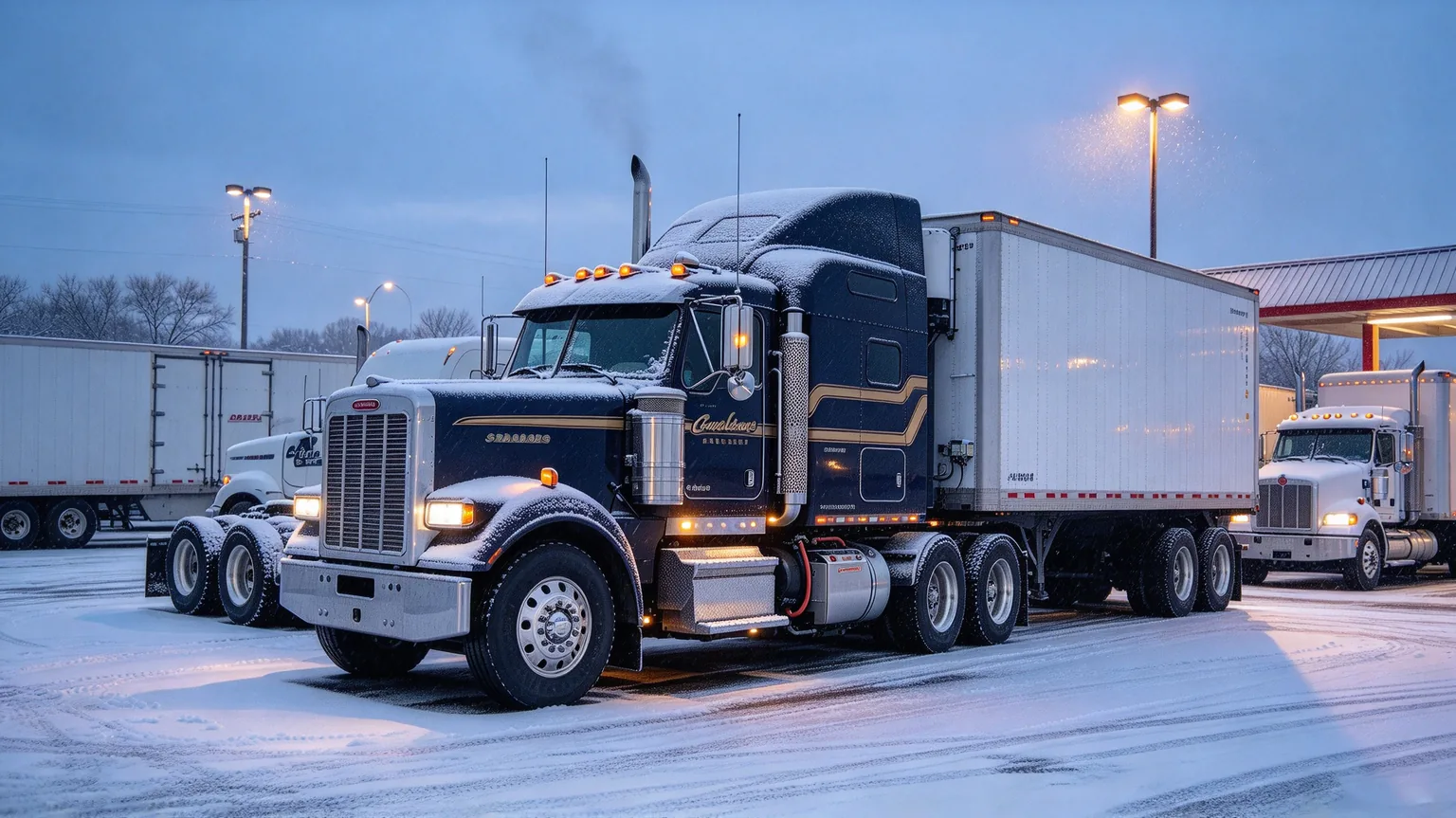
A long-haul truck shuts its engine down for a mandated rest period, and with the engine goes the waste heat that kept the cab comfortable. A diesel parking heater is the equipment that replaces it: a small combustion unit that draws diesel from the truck's own tank and delivers heat to the sleeper, to the engine coolant, or to both, while the main engine stays off. This article covers what the device is and what it is called, the two heating pathways, how it operates and what it consumes, the reasons drivers retrofit one, where its power comes from relative to a 24V house battery circuit, what has to be verified before installation, and the limits that apply to any saving figure. Specifications are given as ranges, and the public sources behind the definitions and operating data are listed at the end.
1. What is a diesel truck heater: definition and nomenclature
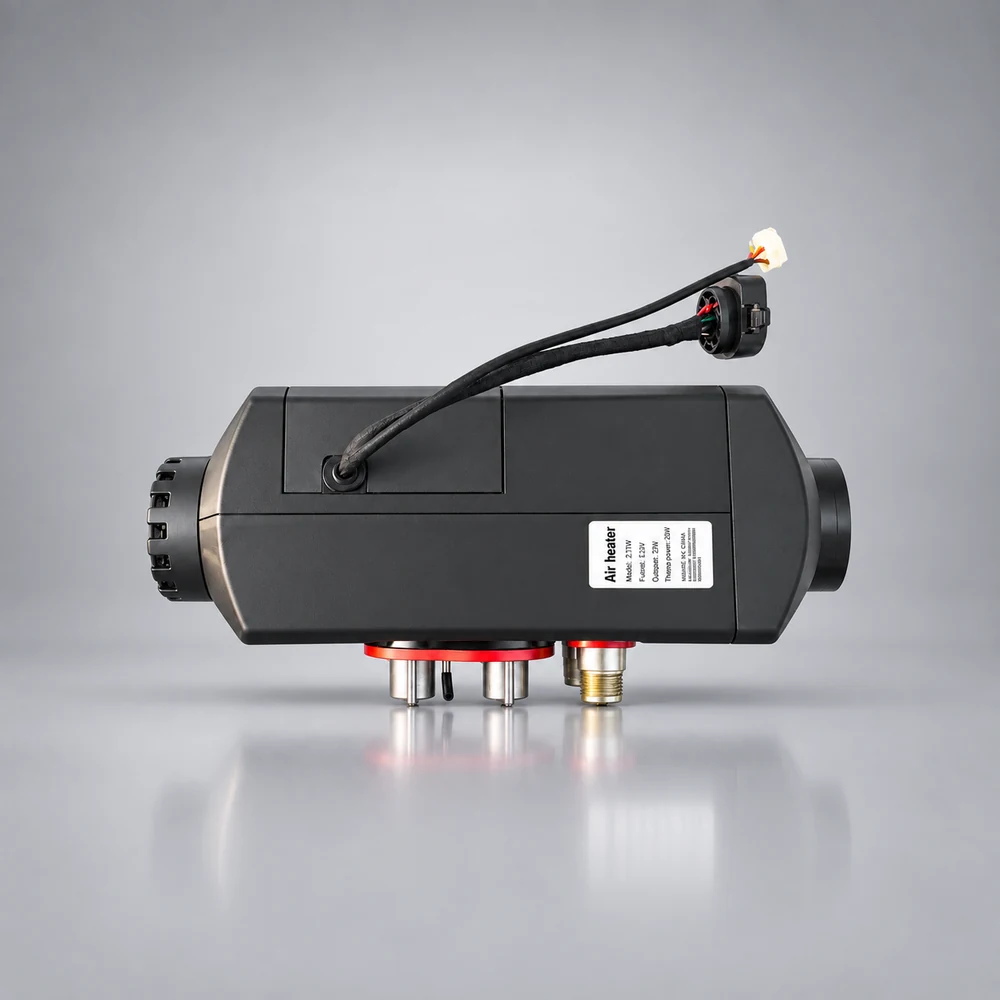
A diesel parking heater is a combustion-based heating device that runs independently of the vehicle's main engine. A small quantity of diesel is drawn from the fuel tank and fed into a sealed combustion chamber, where it burns. The heat passes through a heat exchanger to air or to engine coolant, and a blower or circulation pump distributes it to the sleeper compartment, the cab, or the engine cooling circuit. Throughout, the main engine stays shut off and the electrical parts — controller, glow plugs, fuel pump, blower, circulation pump — run from the vehicle's low-voltage supply. The U.S. Department of Energy's Alternative Fuels Data Center lists cab or bunk heaters and coolant heaters as two distinct categories in its inventory of idling reduction technologies for heavy-duty trucks.
The word parking describes the operating state, not a separate product class: the unit supplies heat while the vehicle is parked and the engine is off. North American trucking uses several established names for the same family, each emphasising a different function, and they should be matched against one another when reading technical literature. Trade listings and owner discussions call it a diesel truck heater, a diesel heater for truck use, a semi truck heater, a bunk heater, or simply a truck heater. The governing rule is to read a specification together with the function it actually describes rather than treating each name as evidence of a different device.
Distinction from three commonly confused arrangements
- Idling the main engine for heat keeps an engine running, with its fuel consumption, emissions and noise continuing throughout; a parking heater lets the engine remain shut off.
- An electric space heater or heated blanket converts electrical energy into heat, so its output is capped by the vehicle supply and battery capacity; a parking heater takes its heat from diesel combustion and uses electricity only to drive auxiliary components.
- Auxiliary electric heating built into a parking air conditioner is supplied by the house battery as part of that unit; a parking heater is a separate device with its own combustion chamber, fuel line and exhaust route.
These distinctions follow from how each arrangement produces heat, not from a ranking between them.
2. Two heating pathways: air heaters and coolant heaters
Parking heaters are classified by the medium that finally carries the heat. That gives air heaters, coolant heaters, and combination units that perform both functions inside one device. The AFDC follows the same distinction in its medium-duty vehicle material: air heaters are self-contained units that deliver warm air directly into the interior, while coolant heaters sit in the engine compartment, use fuel to heat the coolant, and circulate it through the engine, radiator and heater core.
Air heaters
In an air heater, combustion heat passes to air moving over the heat exchanger, and a blower pushes the warmed air through ducting into the sleeper or cab. The arrangement is comparatively self-contained: installation concerns the fuel take-off, combustion air intake, exhaust, low-voltage supply and duct routing, and the unit is not connected to the engine cooling circuit. Output is normally adjustable in stages and drops once the set temperature is reached, which suits direct heating while the engine is off.
Coolant heaters
In a coolant heater the heat goes into the engine coolant, and a circulation pump moves it through the engine block and the heater core. The primary purpose is to reduce the difficulty of cold starting, with windscreen defrosting as a secondary benefit. Where cabin warmth is also wanted through this pathway, the vehicle's heater core and blower do the work and draw additional electrical power. Engine preheating therefore depends on a correctly installed coolant circulation loop before anything else.
Combination dual-function units
A combination unit distributes heat from one source to both the air side and the coolant side, so a single device covers sleeper heating and engine preheating. It is not two independent machines bolted together: whether both functions actually work depends on the internal heat exchanger and on how completely the external circuits were installed. Webasto and Eberspaecher, sold as Espar in North America, each offer separate air heater and coolant heater lines, and combination arrangements exist in some systems; the composition of each range differs.
The split into two pathways explains functional differences and is not a judgement of merit. Selection follows whether the vehicle allows a coolant connection and whether the route needs engine preheating at all.
3. How diesel heaters work: operating principles and consumption
The controller runs a fixed sequence, and knowing it makes the electrical demand at startup understandable, along with where each form of consumption arises during the night.
Taking a 5kW dual-function model as the example, published specification ranges include 5kW of heating capacity, diesel consumption of roughly 0.15–0.52 L/h, a rated electrical power of roughly 30–50 W, and about 18 W for the fuel pump; some sources list the circulation pump separately at roughly 24 W. These are ranges and typical values rather than fixed points, and fuel consumption in particular moves with the output setting and the ambient heat load. Industry data adds consumption tables broken down by output setting, and examples showing an average operating draw of about 42 W with up to about 100 W at startup, which are useful for order-of-magnitude planning.
Set against idling, a 5kW heater of this class burns under a litre of diesel per hour, while a long-haul heavy truck idling its main engine overnight for heat is commonly estimated at about 0.8 gallons per hour. The comparison only shows that the two arrangements draw on different energy sources. It is not a fuel-saving commitment for any particular vehicle: the real difference depends on how much idling would otherwise have taken place, the diesel price, the ambient temperature, and how the vehicle replenishes energy.
Electrical consumption in a combustion heater comes mainly from the controller, glow plugs, fuel pump, blower and circulation pump. The steady-state figure is low but not zero, and startup demand is markedly higher, so the supply circuit and fuse should be checked against startup conditions rather than the running average.
4. Three common reasons for retrofitting a diesel parking heater
Public industry material and operating experience point to three requirements. They are independent of one another, correspond to different functions and rest on different calculations, and a truck may be fitted for only one of them.
First, reducing parked idling
The AFDC cites an Argonne National Laboratory estimate that more than one million long-haul heavy-duty trucks idle during federally required rest periods every day, and notes that the cost-effectiveness of an idling reduction technology depends on how much idling it displaces, which in turn depends partly on the climate the vehicle works in. The Department of Energy maintains IdleBase, which records idling rules for on-road vehicles of every class; the EPA SmartWay programme keeps a list of verified idling reduction technologies; and the American Transportation Research Institute maintains a database of heavy-duty anti-idling laws. Scope, exemptions and penalties differ by jurisdiction, so each state and locality on a route has to be checked separately.
Second, maintaining sleeper temperature and rest conditions
Once the engine stops, the cab stops receiving waste heat and the interior drifts towards ambient. An air heater keeps delivering warm air to the sleeper with the engine off and without depending on shore power, which is what makes it useful at parking locations where no electrical hookup exists. Cab and bunk heaters appear in the AFDC inventory precisely in order to separate the heating requirement from idling the main engine.
Third, reducing the difficulty of low-temperature cold starting
Starting a diesel engine gets harder as temperature falls: oil viscosity rises and cranking resistance with it, fuel atomisation and evaporation deteriorate, and battery discharge capability drops. SAE J300, which classifies engine oils by low-temperature viscosity and pumpability, is one of the engineering references developed for those conditions. A coolant heater improves in-cylinder conditions at the end of compression by raising the temperature of the coolant and the block, and SAE- and TRID-indexed studies treat fuel-operated heaters that warm the coolant as a standard preheating approach. Heating power, ambient temperature and preheating time vary widely between studies, which is the point: preheating performance depends on the specific system and its installation, and cannot be extrapolated from one model to every engine.
A commonly quoted comparison builds idling cost from 0.8 gallons per hour, eight hours a night and 250 nights a year. It holds only where the main engine would otherwise have been idled overnight for heat, and it is not a general saving that follows from fitting a heater.
Anti-idling laws: where engine-off requirements apply and what they mean for parked trucks5. Power supply and system location: separate from the 24V house battery circuit
A parking heater gets its heat from diesel, but its controller, fuel pump, blower, glow plugs and circulation pump are electrical parts that still need a supply. When an electric parking system is discussed as a whole, the source of heat and the electrical circuit therefore have to be described separately, or the two get conflated.
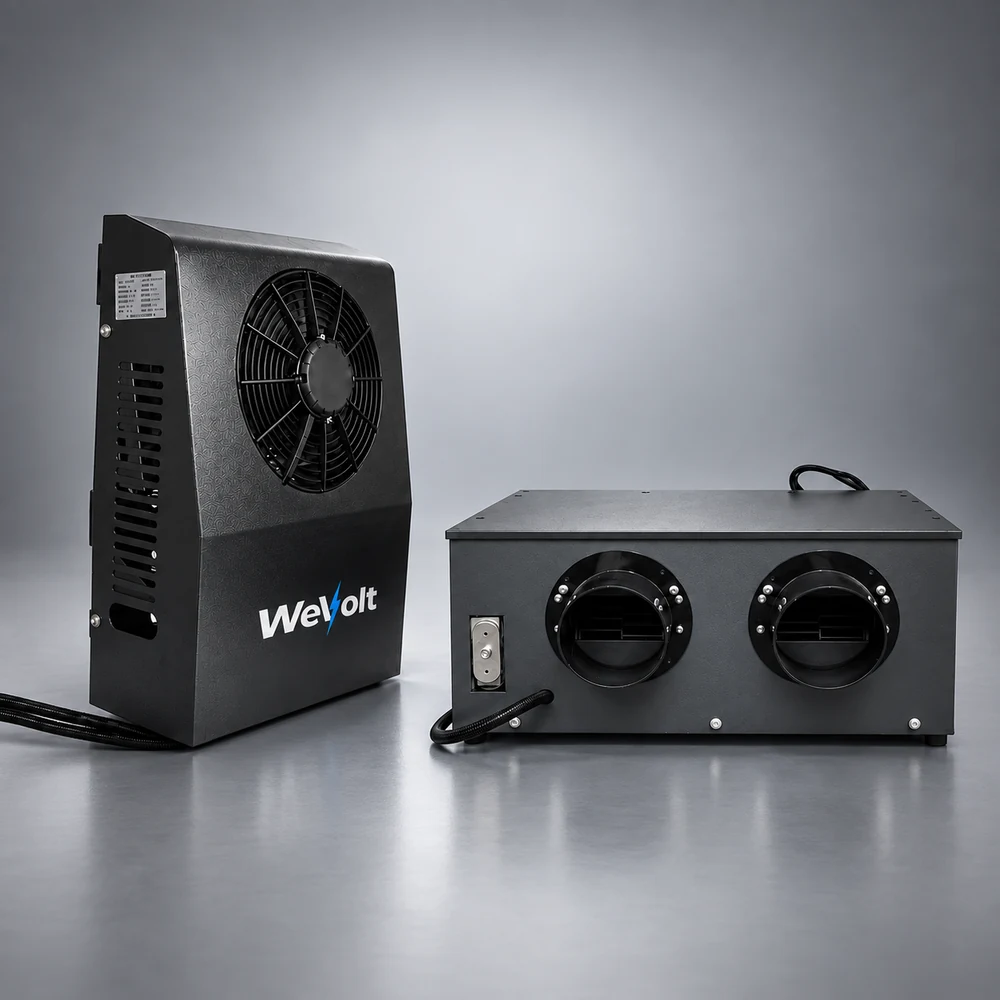
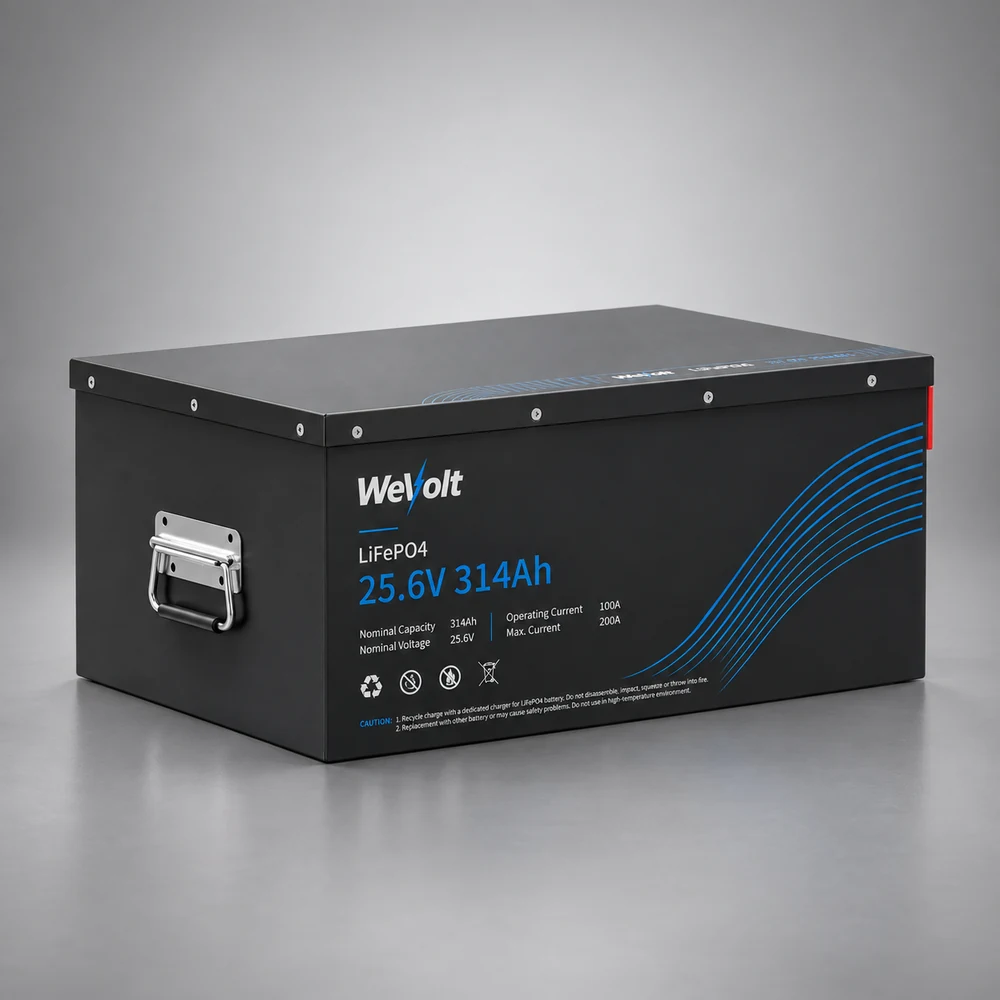
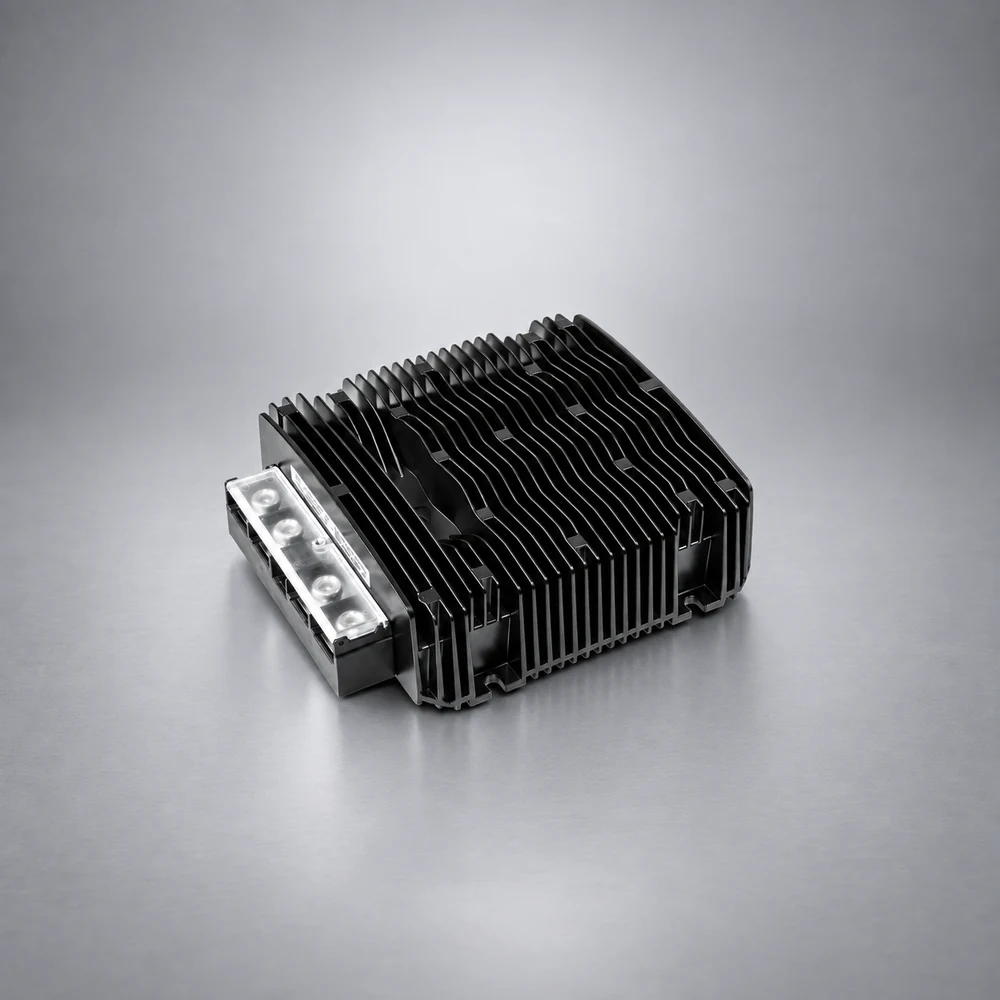
The power circuit of the WeVolt Apex eAPU consists of a 24V house battery, a variable-speed parking air conditioner, a bidirectional DC-DC charger, and an optional 3,000W pure sine wave inverter. The house battery is a 25.6V / 314Ah lithium iron phosphate unit rated at 8.04kWh; the air conditioner is a 24V DC split unit fed directly from it; the DC-DC charger handles charging while driving and starter-battery support while parked, at up to 50A forward and up to 100A in reverse, adjusting current automatically to battery voltage, both figures being maximums.
The heater supply sits outside that circuit. In the Apex system the unit is the WTDH-12V-5KW, a 12V diesel heater with a published operating range of 9–18V, and it is not wired to the 24V house battery. That is also why the heater does not appear as a branch of the 24V power circuit in the system diagram. The division of labour is clean: the 24V circuit handles parked cooling and hotel loads, while the diesel heater handles combustion-based heating and engine preheating.
Variants at different rated voltages coexist in this product category, and heavy trucks themselves use different low-voltage architectures. A 12V heater and a 24V variant share the same combustion principle; what differs is the supply the unit must match. At selection, the rated supply of the chosen model, the vehicle's low-voltage system, and the wiring and protection between them all have to be verified, then confirmed against the manual before installation. Voltage level is not a matter of quality; compatibility is the criterion.
Because the heater and the 24V house battery circuit are separate, fitting one does not increase stored battery capacity and does not consume the energy the parking air conditioner uses. Air conditioner runtime stays governed by the 8.04kWh battery and the loads running at the same time.
Why a 24V house battery and a 12V heater supply coexist in the same truck6. Five prerequisites to verify before diesel heater installation
A combustion heater involves fuel, exhaust and electrical wiring, which is more than most vehicle electrical equipment asks for. Five items should be checked individually before fitting, because missing any one of them affects either whether the function works or whether it is safe to run.
Industry material usually lists heating capacity, fuel type, voltage and installation requirements together as the four checks to make at selection, while driver accounts name fuel take-off, exhaust, combustion air intake and low-voltage supply as the four elements of the installation itself. What these lists share is that each item is decided by the vehicle, not by the heater model alone.
Before fitting, establish whether the truck offers a suitable fuel take-off, room to route the exhaust, a coolant connection point and enough electrical capacity. Original equipment configurations differ considerably between models, and some vehicles already provide a mounting position for a parking heater. This article does not set out a universal installation procedure and does not promise that any vehicle can be fitted directly or within a fixed number of labour hours; the vehicle service documentation and the installation manual govern that.
The coolant loop is required only where engine preheating is used. For sleeper heating alone, the air pathway does not depend on it, and keeping the two functions distinct stops installation conditions being attributed to the wrong pathway.
The 24V side of an eAPU install: gauge and fuse sizing for the battery, charger and inverterThe full install walkthrough: fuel take-off, intake and exhaust, the coolant loop, ducting and first start-up7. Energy consumption estimates and cost basis
Placing a parking heater beside the two other common ways of getting heat makes the energy source, and the effect on the vehicle's electrical supply, visible at a glance.
A parking heater is not a zero-cost heat source. It burns diesel continuously and uses a small amount of electricity, with a short period of higher draw at startup. The fuel difference against idling holds only where the main engine would otherwise have run overnight for heat; where electric heating or another arrangement was used before, the basis of comparison shifts with it.
Because the two circuits are separate, running the heater does not draw down the 24V house battery, and air conditioner runtime stays governed by battery capacity and simultaneous loads. That distinction matters when winter electrical use is being calculated: adding the heater's diesel consumption into a battery runtime figure overstates the burden on one side or understates it on the other.
Every fuel-saving figure depends on how much idling would otherwise have occurred, the diesel price, the ambient temperature, shore power availability and how the truck replenishes energy. What follows is an order-of-magnitude comparison and the calculation behind it, not a saving for a specific truck or route.
8. Applicability limits and safety considerations
Combustion-based heating carries more specific conditions of use than electric heating. The limits that apply to this article, and the conditions to observe in use and maintenance, are set out below.
- Engine preheating is not fuel-line heating. Coolant preheating acts on the engine cooling circuit; it does not change wax formation or gelling in the fuel line, and it is not a substitute for jump starting or for replacing the starter battery.
- Preheating performance depends on a correctly installed coolant loop. No preheating time or target temperature is given here, because actual performance depends on the engine model, coolant volume, pipe layout, ambient temperature and altitude; extreme cold and high altitude must be confirmed separately against rated conditions.
- Fuel, intake and exhaust, and coolant arrangements have to be installed correctly and maintained. Blocked intake or exhaust passages, restricted fuel delivery and carbon deposits in the combustion chamber all disturb operation. Troubleshooting literature names carbon buildup as a common failure cause and recommends periodic high-output running to clear it.
- Manner of use during operation follows the supplied instructions. Because this is combustion equipment, whether the sleeper may be occupied while it runs should be settled from the manufacturer's operating instructions and local safety regulations, with the required intake, exhaust and carbon monoxide protection in place.
- Adding a heater does not increase stored battery capacity, and it is not equivalent to unrestricted heating in every climate.
General patterns of maintenance and failure
Irregularities in parking heaters cluster around combustion and fuel delivery: failure to ignite, shutdown shortly after starting, air without heat, smoke at the exhaust, or a controller in lockout. Troubleshooting material generally starts with the fuse and supply voltage, moves to blocked intake and exhaust passages and restrictions in the fuel filter and line, and then reads the controller fault codes. These are ordinary maintenance matters for this class of equipment, and the specific diagnostic steps and code definitions are the ones in the manual for the model in question.
Regulatory and regional differences
Anti-idling rules, type approval for combustion heaters and installation standards are set separately in each country and region. UN Regulation No. 122 of the UN Economic Commission for Europe, on the approval of combustion heaters and their installation, is one of the general regulations that applies to this class of equipment and can be consulted by regulation number. Idling restrictions in North American states and localities should be checked individually against the routes operated. Nothing here is a legal conclusion for any jurisdiction.
The limits above describe ordinary conditions of use, not an assessment of comparable products. Rated conditions, service intervals and safety requirements for a specific model are the ones in its product manual and installation manual.
9. Diesel heater configuration within the WeVolt Apex eAPU
The WeVolt Apex eAPU comes in four systems that all share three components: a truck air conditioner, a 24V house battery and a DC-DC charger. What separates them is whether 120V appliance power is added through an inverter and whether diesel heating and engine preheating are added through a heater. The full designations are the WeVolt Apex Essential eAPU, Apex Power eAPU, Apex Heat eAPU and Apex Complete eAPU.
The Apex Heat system adds the WTDH-12V-5KW to the three common components, giving the sleeper warm air and the engine a coolant preheat function, while the Apex Complete adds both the inverter and the heater. Selection is a matter of matching functions: appliance power points to Apex Power, winter heating and preheating point to Apex Heat, and both together point to Apex Complete. The order is not a price ladder, and the heater is 12V throughout, supplied outside the 24V loop.
Relationship to auxiliary electric heating in the air conditioner
Some parking air conditioner models include auxiliary electric heating rated at roughly 5,500 BTU/h, about 1,600W, supplied by the 24V house battery and suited to moderately low temperatures; in extreme cold both its heating capacity and the battery runtime behind it are constrained. The diesel heater is a combustion device independent of the air conditioner, and the two follow different pathways. The name Apex Heat means a separate diesel heater has been added to that configuration; it does not mean the other systems have no heating capability at all.
Diesel heater vs electric heating: capacity on the same basis, battery runtime and cold-weather limitsConfiguration and addition
In the official parts list the house battery, parking air conditioner and bidirectional DC-DC charger are standard, while the inverter and the diesel heater are optional. The heater is supplied with the Apex Heat and Apex Complete systems and is not sold as a standalone retail item, so unlike a truck heater bought on its own it arrives as part of a system configuration. Where an inverter or a heater is already fitted, verify its voltage compatibility, load capability and preheating function before deciding which part of the system needs adding. The specific combination, accessory scope and installation conditions are those in the official documentation.
Inside the Apex eAPU the diesel heater performs combustion heating and engine preheating on its own 12V supply, separate from the 24V house battery circuit. Adding it changes neither stored battery capacity nor the cooling function of the air conditioner.
See the complete WeVolt Apex eAPU system with the 5kW diesel heater — from $3,98010. Summary and recommendations
Three points carry the article. A diesel parking heater is a combustion-based device independent of the main engine, classified by the medium that carries the heat into air heaters, coolant heaters and combination units, with electrical parts that still need a vehicle supply. It is usually fitted for one of three reasons — less parked idling, sleeper temperature, or easier cold starting — while consuming diesel and a small amount of electricity continuously, under fuel, exhaust, coolant and low-voltage conditions that have to be met. Inside the WeVolt Apex eAPU the heater sits on its own 12V supply and ships with Apex Heat and Apex Complete, with responsibilities distinct from both the 24V house battery circuit and the air conditioner's electric heating.
Verify these in the order given before deciding whether a heater is needed and which system to select. For configuration questions, accessory scope and quotations, write to [email protected].
References
- 1U.S. Department of Energy, Alternative Fuels Data Center: Heavy-Duty Truck Idle Reduction Technologies. Lists auxiliary power units, cab or bunk heaters, coolant heaters and storage air conditioners among idling reduction technologies, and notes that cost-effectiveness depends on the amount of idling reduced. afdc.energy.gov
- 2U.S. Department of Energy, Alternative Fuels Data Center: Medium-Duty Vehicle Idle Reduction Strategies. Defines air heaters and coolant heaters, describes heat delivery through the cooling circuit and heater core, and the reduction of cold-start impact. afdc.energy.gov
- 3U.S. Department of Energy, Alternative Fuels Data Center: Idle Reduction Basics. Introduction to idling reduction and entry point to the savings calculation tools. afdc.energy.gov
- 4U.S. Department of Energy: Idle Reduction. Describes Transportation Technologies Office research, the IdleBase regulatory database, the American Transportation Research Institute database of heavy-duty anti-idling laws, and state weight exemptions. energy.gov
- 5U.S. Environmental Protection Agency: SmartWay. Maintains the list of verified idling reduction technologies used to compare confirmed equipment categories. epa.gov
- 6DieselNet: Emission Standards. Compilation of on-road vehicle emissions and idling-related regulations by jurisdiction. dieselnet.com
- 7TRID, Transportation Research International Documentation (Transportation Research Board): Design and Optimization of Diesel Engine Cold Start Heating System under Extreme Cold Conditions, SAE Technical Paper 2026-99-0809. Uses a fuel-operated heater to warm coolant and shows preheating performance varying with heating power, flow rate and circuit layout. trid.trb.org
- 8SAE International: record for the same technical paper. sae.org
- 9SAE International: J300 Engine Oil Viscosity Classification. Classifies engine oils by low-temperature viscosity and pumpability, the engineering background for higher cranking resistance in cold conditions. sae.org
- 10Webasto Group: Heating Solutions. Manufacturer heating range, used to verify the distinction between air heaters and coolant heaters. webasto-group.com
- 11Eberspaecher: official product entry, used to verify the division between air heating and coolant heating product lines. eberspaecher.com
- 12Heatso: All You Need to Know About Truck Parking Heaters. Synonymous designations for sleeper heaters, the selection difference between air and coolant heaters, and the four checks of heating capacity, fuel, voltage and installation. heatso.com
- 13Lincool: Cold Starts or Cabin Comfort — Where Diesel Parking Heaters Matter. Comparison of the two heating pathways, fuel consumption examples by output setting, the dependence of 12V or 24V selection on the vehicle electrical system, and steady-state and startup power references. lkcool.net
- 14ShiftOwt: Keeping warm in the HGV cab on a winter night out. A driver account of the four installation elements — fuel take-off, exhaust, intake and low-voltage supply — with notes on 12V supply and carbon monoxide. shiftowt.com
- 15Hello Portable: Freightliner Cascadia Bunk Heater Not Working — Quick Fix Guide. Controller ignition sequence, low voltage, blocked intake and exhaust, carbon buildup, and the order of diagnosis. helloportable.com
- 16UNECE UN Regulation No. 122: uniform provisions concerning the approval of vehicles with regard to combustion heaters and their installation. Cited in bibliographic form.
- 17Research on ultra-low-temperature diesel cold starting and coolant preheating published in journals such as Applied Thermal Engineering, including coupled multi-energy-flow preheating and the thermal characterisation and structural optimisation of coolant preheating systems. Cited to indicate research directions; their numerical values are not used as evidence of product performance.
Specification ranges, applicability limits and safety considerations are stated as they stand. Rated conditions, wiring and operating requirements are governed by the product manuals and the consistent instructions supplied with the unit.