
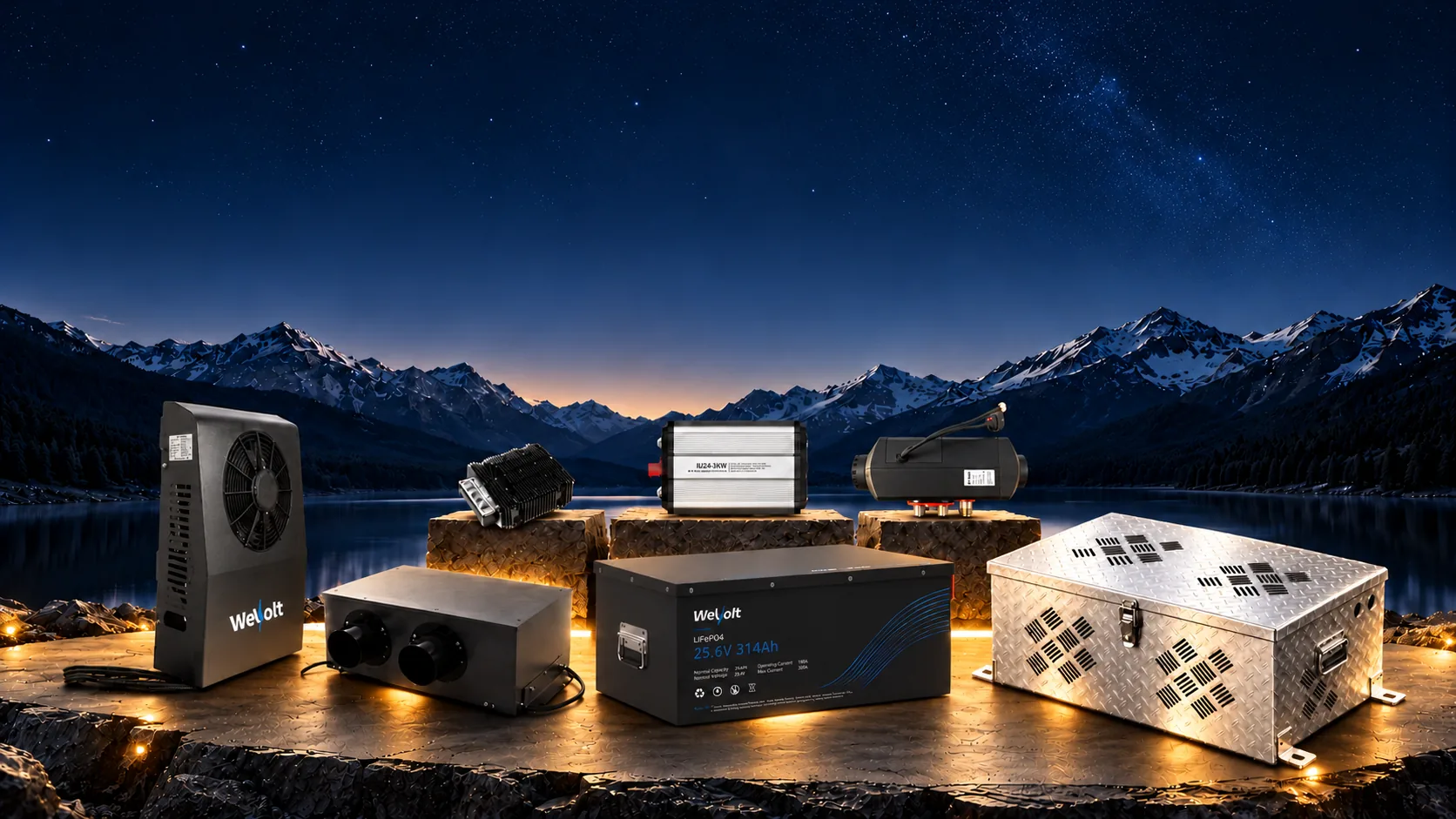
A parked truck is still a place where people work, eat and sleep, which means 120V AC for a laptop, a coffee maker or a sleep-apnea machine. The truck battery stores 24V DC, and the inverter is the part that bridges the two. This guide sets out six criteria for choosing one, compares the four types of unit a buyer is most likely to be offered, then works through power ratings, 24V systems, CPAP power, vibration resistance and installation. Every claim is stated as a verifiable fact and sourced at the end; where a product has a limitation, it is written down rather than left out.
1. Six criteria for selecting a truck inverter
Compare options against these six criteria. Section 2 applies them to the four types of unit on the market, and each point below explains why it decides the outcome.
- Waveform: a pure sine wave, with total harmonic distortion under 4% at a purely resistive load. Mains power is a smooth sine wave and a pure sine inverter reproduces it with low distortion. A modified sine wave steps toward the shape instead, typically at 20%–45% THD, which is hard on anything built around a switching power supply: laptops, CPAP machines, medical devices.
- Continuous power: the rated continuous figure governs, not the peak. Peak power covers inrush at startup, such as a motor spinning up, and cannot be counted as sustained output. A unit may quote 3000W continuous and 6000W peak; the load maths still runs on 3000W.
- System voltage: at the same power, a 24V system carries half the current of a 12V one, which cuts line losses and heat and allows a smaller cable cross-section (section 4). Match the voltage to the vehicle's battery.
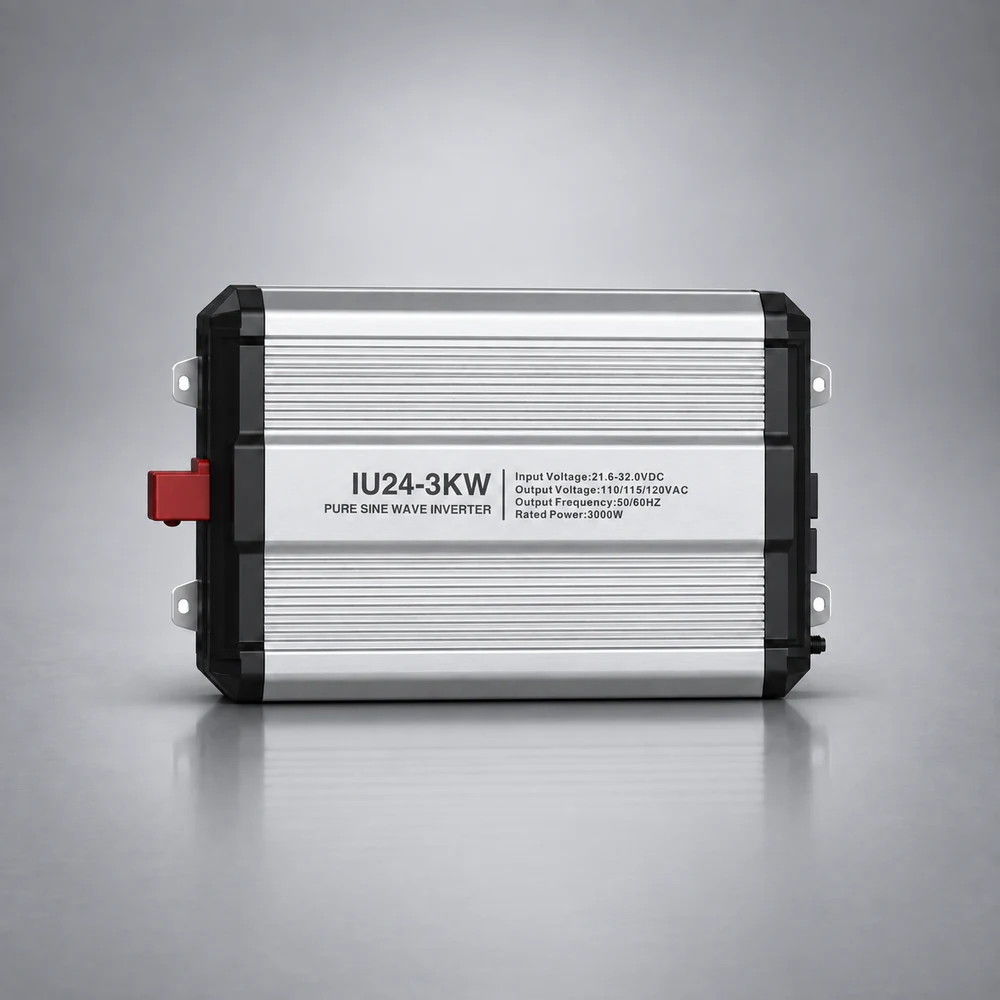
- Efficiency and standby: conversion efficiency decides how much of the stored energy reaches the appliance. When nothing needs power while parked, ECO mode drops standby current to a minimum. On the IU24-3KW, for example, standby draw is under 0.13A and peak efficiency reaches 93.5% at 30% load.
- Protection and safety: battery overvoltage and over-discharge, output overload, short circuit, overtemperature. Check reverse-polarity protection separately: some units include it as standard, while the WeVolt IU24-3KW datasheet states that it does not (section 7).
- Vibration resistance and automotive-grade compliance: a truck shakes and jolts continuously and the unit has to be built for that environment (section 6). Household and indoor units are not necessarily qualified for it, which makes this the criterion most often missing from a quotation.
2. Four common types of solutions on the market
The table compares the four types of unit a buyer is most likely to be offered. Competitor specifications are listed as objective ranges and differ between brands and models. The WeVolt column comes from the official datasheet, including the absence of reverse-polarity protection, which the datasheet states rather than conceals.
The four solutions are positioned as follows.
- Solution A (modified sine wave, 12V general-purpose): the lowest-cost option. The stepped output carries high THD, so it suits resistive loads such as incandescent lamps and simple heaters, and puts laptops and CPAP machines at risk of damage or erratic behaviour.
- Solution B (pure sine wave, 12V general-purpose): the waveform is acceptable, but at 3000W a 12V system pulls around 250A. That means thick cable, greater line losses and more heat to manage (section 4).
- Solution C (pure sine wave, 24V RV / caravan): commonly available 3000W models from VEVOR, Giandel and similar brands, built for leisure parking and usually including reverse-polarity protection. Their vibration validation is oriented toward stationary use and makes no claim of truck-grade continuous vibration.
- Solution D (WeVolt IU24-3KW): 24V input, pure sine wave at THD<4%, efficiency above 90% (93.5% peak), multiple protections and Bluetooth monitoring. It is built as one module of the WeVolt Apex eAPU, with the enclosure and fixed mounting made for a vehicle. The datasheet records that reverse-polarity protection is not provided.
The Solution C entry describes a typical unit in that class, so confirm any figure against the datasheet of the exact brand and model. The full interface list and certification for Solution D, including IEC 62109 safety certification, are in the IU24-3KW specification.
3. Selecting a power rating: what a 3000W inverter can run
Power ratings are easier to judge against real appliances. Using 3000W continuous and 6000W peak as the baseline, here is what the common parked loads draw.
Everything in the table except the parking air conditioner can run off the 3000W output. Running several high-draw appliances at once means adding their ratings together and leaving 20%–30% of margin; the combination-by-combination math, including startup surges, is worked through in the 3000W scenarios.
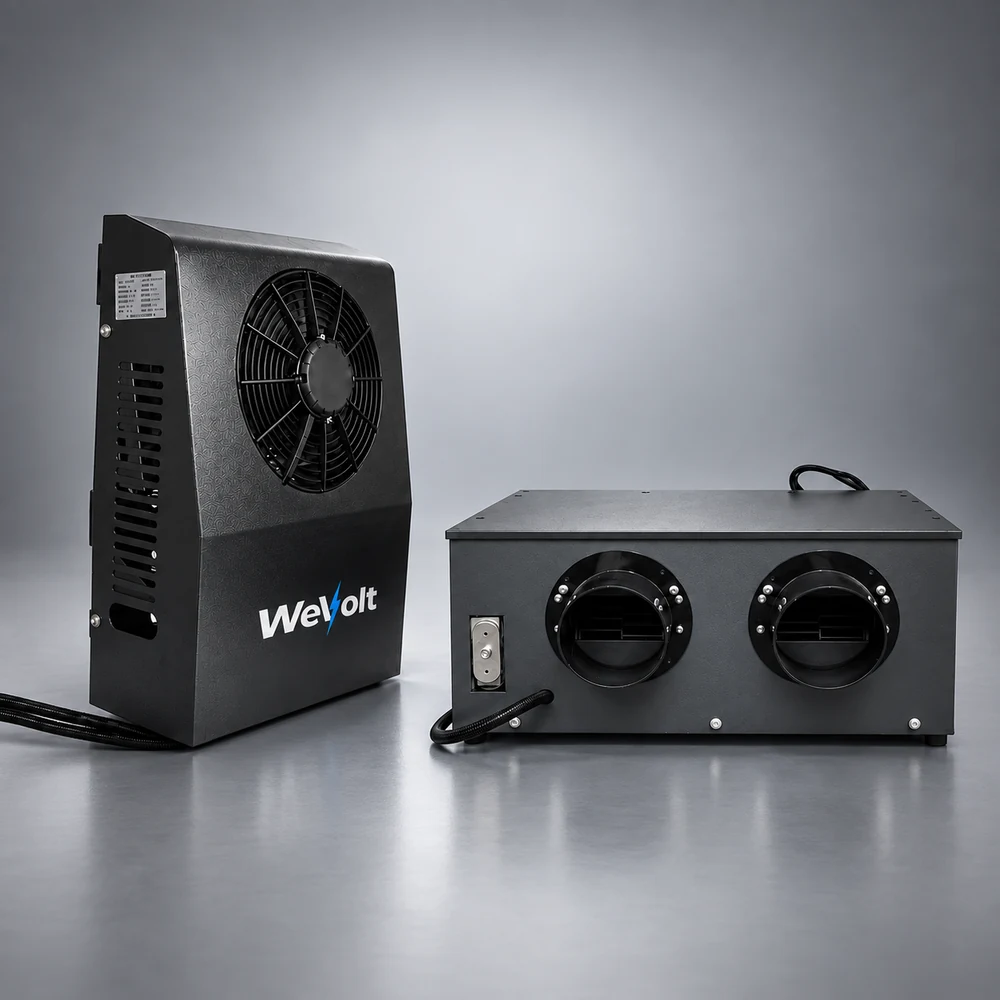
An inverter supplies 120V AC only, and it cannot run the truck's parking air conditioner. The parking A/C is a 24V DC split unit wired to the house battery and never passes through the inverter. They are two independent systems.
What a 3000W unit actually runs at once — appliance combinations and headroom4. Why a 24V system: halved current and lower line losses
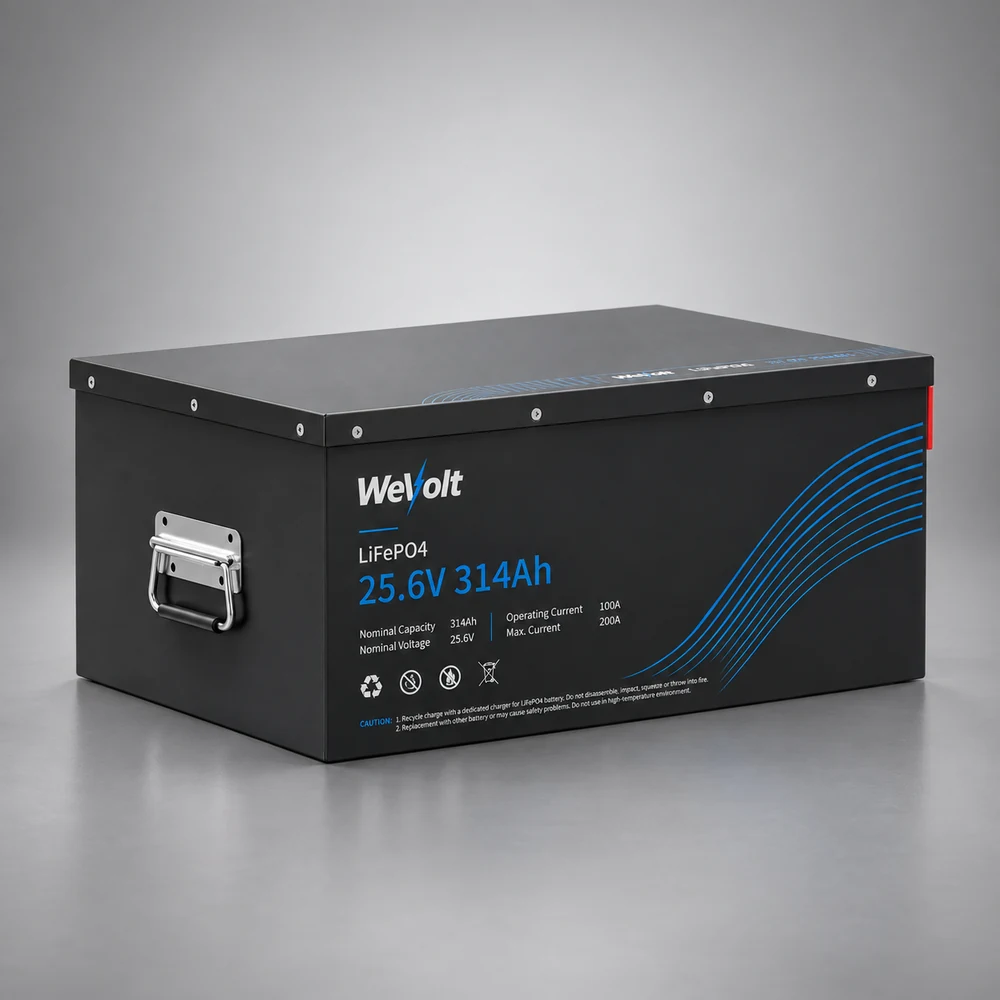
Truck house batteries are mainly 24V; the WeVolt Apex eAPU, for example, uses a 25.6V lithium iron phosphate battery. From P = VI, doubling the voltage at a given power halves the current: a 3000W load draws about 250A at 12V and about 125A at 24V. Half the current buys three things.
- Smaller cable cross-section: for the same voltage-drop target, a 24V system needs roughly a quarter of the copper area, so cable diameter, weight and routing all get easier.
- Lower line losses: conductor loss is P = I²R, so halving the current cuts losses to a quarter and heat generation drops with them.
- More stable voltage: less drop over a long run means appliances at the far end see a voltage closer to nominal, with fewer undervoltage shutdowns.
This section covers the engineering case for 24V only. 12V and 48V each have legitimate applications, and the right choice follows the vehicle rather than a preference for any one class.
Compare 12V, 24V and 48V architectures for a truck eAPU5. Parking power for CPAP machines
CPAP machines run all night, every night. Consumption is modest: a ResMed AirSense 10 or 11 with heated humidification typically draws around 53–56W, and 11–30W without it, so an eight-hour night works out to roughly 0.4–0.45kWh. The setup is a 24V house battery (8.04kWh, 25.6V / 314Ah lithium iron phosphate) feeding a pure sine wave inverter at 120V, with no idling involved. Pure sine at THD under 4% is the steadier choice for a medical device, and equipment makers recommend a pure sine inverter wherever AC power is used.
Estimating from consumption alone: 50–100W over eight hours is 0.4–0.8kWh a night, so an 8.04kWh battery covers several nights. Heated humidification multiplies consumption several times over and shortens runtime to match.
Runtime depends on remaining capacity and on whatever else is running at the same time, and it is not unlimited. In cold weather, heating comes from a separately installed diesel heater; an inverter has no heating function. Where a CPAP model offers a 12V / 24V DC adapter, running DC directly removes the conversion stage and its losses, subject to the equipment maker's guidance.
6. Vibration resistance and automotive-grade compliance
One requirement is easy to leave out of a quotation and hard to argue with later: the environment an inverter lives in decides whether its electronics survive.
What the truck does to equipment
A truck runs on uneven roads all year, crosses speed bumps, and carries engine vibration continuously. Onboard electronics see mechanical vibration and periodic shock across a wide spectrum, from a few hertz up to roughly 10kHz, and the intensity depends heavily on the mounting location, whether bumper, chassis or inside the sleeper. That is a different operating condition from a device that sits still indoors.
How vibration ends an electronic assembly
An inverter depends on solder joints and leaded components. Continuous random vibration produces high-cycle fatigue microcracks in solder joints, works the long leads of electrolytic capacitors at their resonance points, and gradually loosens connectors. The engineering literature is direct about this: vibration loading is one of the principal causes of failure in automotive electronics, with lead-free solder joints showing high-cycle fatigue under random vibration; in a vehicle random-vibration test at 6.27 gRMS, both solder joints and copper traces failed in fatigue; and another study needed only 86 cycles of a vehicle profile to mechanically fail flip-chip devices. Same electronics, different environment, very different service life.
Different applications, different design targets
Household and indoor inverters are designed and validated for a largely static indoor environment, which does not describe a truck. Judging whether a unit suits a truck means asking whether it was designed and validated against the vibration and shock conditions of vehicle electronics. The generally applicable references are random vibration (IEC 60068-2-64, broadband random vibration described by power spectral density and gRMS), mechanical shock (IEC 60068-2-27, shock pulses such as half-sine, final-peak sawtooth and trapezoidal), and the environmental conditions for road-vehicle electronics (the ISO 16750 series, which sets stresses by mounting location). Asking a supplier to confirm design and validation against the vehicle vibration environment is a reasonable line item on a purchase checklist.
Where WeVolt sits
WeVolt treats vibration resistance as a design premise rather than an add-on. Inside the WeVolt Apex eAPU, the IU24-3KW is built for the vibration and shock of a truck rather than a household: a metal enclosure, fixed mounting points that stop the unit shifting and the connections working loose, and structure and cable routing considered for the vehicle. The resistance comes from system-level integration, since the inverter is validated together with the 24V house battery and the bidirectional DC-DC charger under truck operating conditions rather than bought separately and bolted on.
Against the wider market
Market inverters fall into two groups. Household and indoor general-purpose units are designed and validated for a static environment. RV and caravan units are designed for leisure parking, usually stationary, and declare no truck-grade continuous vibration validation. Installed in a truck, both meet vibration loads on solder joints, capacitor leads and connectors that exceed what they were designed for. WeVolt starts from the truck environment, which is the difference that maps onto the failure mechanisms above and the IEC 60068-2-64, IEC 60068-2-27 and ISO 16750 criteria.
Vibration resistance can be checked before purchase: ask whether the product was designed and validated for a vehicle vibration environment, and ask for the test or validation documentation. Most general-purpose and RV units on the market declare no truck-grade validation; WeVolt designs and mounts the Apex inverter for the truck environment, with specific test levels recorded in the product manual and engineering documentation.
This section states design principles, applicable standards and market structure. It does not cite failures by brand, and it does not claim that any particular competitor skipped vibration testing. Vibration also loosens wiring terminals, so secure mounting and correctly sized, fused cabling matter just as much.
Wiring, cable sizing and fuse selection for a 24V eAPU7. Installation and protection: mounting and reverse-polarity
The inverter is IP20, so it mounts indoors or inside an equipment bay, out of the weather. Wiring follows the manual: battery positive and negative, grounding, both AC outputs, and the ON / OFF / ECO modes. Protect the DC side with a fuse on each battery positive cable, close to the terminal, and use a high-interrupting-capacity fuse such as Class T on a high-current lithium system so a short circuit cannot destroy the cable; fit a circuit breaker sized to the load on the AC side. Fix the unit down so it cannot shift or work its connections loose in service, which matters more in a vibrating vehicle (section 6).
The WeVolt IU24-3KW datasheet states that reverse-polarity protection is not provided. Do not reverse the connections: doing so permanently damages the unit. Confirm positive and negative before applying power. Some competing products include reverse-polarity protection as standard; WeVolt records its absence rather than leaving it out. Physical dimensions are not printed in the datasheet, so take them from the product manual.
8. Selecting a power rating for actual needs
These recommendations follow typical usage. The WeVolt inverter is an optional module of the WeVolt Apex eAPU and is not sold separately (section 9).
- Laptops and CPAP charging only: a 1500–2000W pure sine wave inverter is enough, with a light load and plenty of headroom.
- Microwave, coffee machine or several appliances at once: choose the 3000W class, which is the IU24-3KW, and keep room for startup surges.
- An existing WeVolt Apex eAPU that needs AC output: add the inverter module through the Apex Power or Complete configurations, where system compatibility is already validated.
Buying an inverter on its own and adding the module through an eAPU package are two different routes. The combinations and pricing are set out in the official documentation.
The full sizing method: sum the load, add headroom, check surge, then size the battery and wire9. The inverter inside the WeVolt Apex eAPU
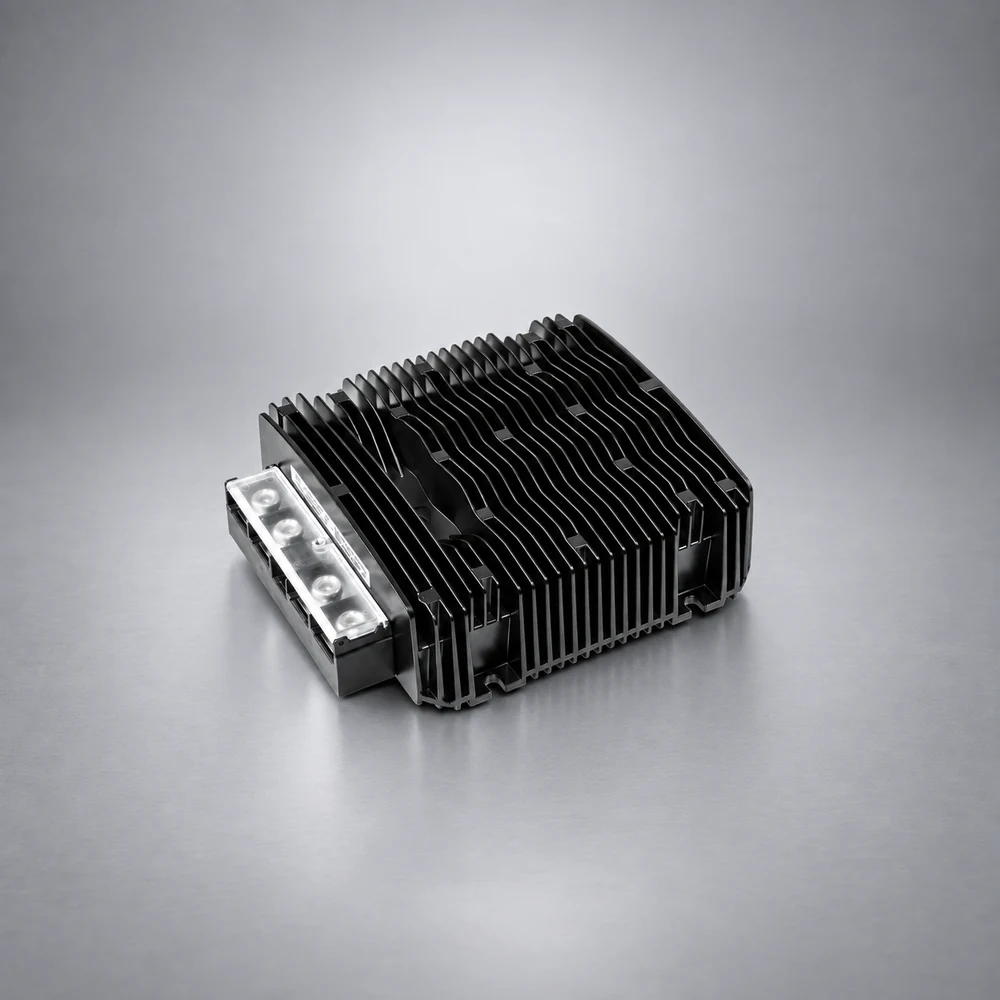
The IU24-3KW is not a standalone device. It ships as part of the WeVolt Apex eAPU alongside the 8.04kWh (25.6V / 314Ah lithium iron phosphate) house battery and the WTDC-12-24V-50A bidirectional DC-DC charger, and is validated with them as a system. The division of labour: the inverter runs one way only, 24V DC to 120V AC, and feeds the AC loads; charging while driving is the DC-DC charger's job, at 29.2V and up to 50A forward, and it can top the starter battery at 14.4V and up to 100A while parked, adjusting current automatically to battery voltage (both figures are maximums). Set against a general-purpose RV inverter bought separately, the difference is validation of the whole system, a dedicated 24V design, integration of the Apex modules and Bluetooth monitoring, and coordination between the battery management system and the charge and discharge path. The inverter itself meets IEC 62109 safety certification.
10. Summary and recommendations
Six factors decide the purchase, summarised below.
The 3000W class covers CPAP machines and small appliances but cannot run a 24V DC parking air conditioner. The WeVolt IU24-3KW is the reference model for a 24V eAPU system: 3000W / 6000W surge / THD<4% / above 90% efficiency / IP20 / Bluetooth, with no reverse-polarity protection to confirm before installation, and vibration resistance designed for the vehicle with the test levels recorded in the manual. On vibration it is built at system level for a truck, which separates it from most general-purpose and RV units that declare no truck-grade validation.
Further reading: pure sine wave inverters, 3000W usage scenarios, voltage selection and the full IU24-3KW specification. For product questions and quotations, write to [email protected].
See the complete WeVolt Apex eAPU system — from $3,980References
- 1IEC 60068-2-64: Environmental testing, Part 2-64: Test Fh — vibration, broadband random and guidance. International Electrotechnical Commission. webstore.iec.ch
- 2IEC 60068-2-27: Environmental testing, Part 2-27: Test Ea and guidance — shock. International Electrotechnical Commission. webstore.iec.ch
- 3ISO 16750-1:2023: Road vehicles — environmental conditions and testing for electrical and electronic equipment, Part 1: General. Sets environmental stresses and test requirements according to the mounting location in the vehicle.
- 4IEC 62109-1 / IEC 62109-2: Safety of power converters for use in photovoltaic power systems, including inverters. International Electrotechnical Commission. iec.ch
- 5Uniz Solar: Pure sinusoidal wave output — why it matters. Pure sine output typically sits below 3% total harmonic distortion, against 10% or more for modified sine; a pure sine wave is recommended for medical devices such as CPAP machines. unizsolar.com
- 6Beijing Zhongke Guangxi Testing Institute: Vibration reliability testing of automotive components. Covers the vibration and shock environment of automotive electronics, gRMS, random versus sine vibration, and failure modes such as solder-joint detachment. bjhgyjs.com
- 7CoPow Battery: How many LiFePO4 cells for a 24V battery. A single LiFePO4 cell is nominally 3.2V; eight in series give 25.6V nominal and about 29.2V fully charged, matching a 24V system. copowbattery.com
- 8Battery Storage HQ: 12V vs 24V RV solar system. A 3000W load draws roughly 250A at 12V and 125A at 24V. batterystoragehq.com
- 9Battery Trail: 12V vs 24V RV batteries. By P = I²R, a 24V system reduces line losses to a quarter and lowers heat generation significantly. batterytrail.com
- 10Honle New Energy: Modified vs pure sine wave inverter. Modified sine wave THD of 20%–45% against under 3% for pure sine; CPAP machines require a pure sine wave. honlenergy.com
- 11CampPowerCalc: CPAP camping battery runtime. Consumption varies with settings, roughly 30–50W without humidification and 60–90W with; a direct DC connection uses 15%–20% less power than an inverter. camppowercalc.com
- 12Krato Power: How many watts does a CPAP machine use. ResMed AirSense 10/11 typically draws 53–56W, about 0.4–0.45kWh per night; the manufacturer recommends a pure sine wave inverter or a direct DC connection. kratopower.com
- 13Meier K., Roellig M., Schiessl A., Wolter K.-J. (2011): Life time prediction for lead-free solder joints under vibration loads. IEEE 12th International Conference on Thermal, Mechanical and Multi-Physics Simulation. Vibration loading is one of the principal causes of failure in automotive electronics, with lead-free solder joints showing high-cycle fatigue. ieeexplore.ieee.org
- 14Khaldarov V. et al. (2023): New methodology assessment of copper trace and solder joint fatigue failures in board-level random vibrations for automotive applications. IEEE ECTC. Solder-joint and copper-trace fatigue under vehicle random vibration at 6.27 gRMS. ieeexplore.ieee.org
- 15Baishya K. et al. (2020): Investigation into how the floor plan layout of a manufactured PCB influences flip-chip susceptibility to vibration. IEEE TCPMT / LJMU Research Online. Flip-chip failure after 86 cycles of a vehicle random vibration profile. researchonline.ljmu.ac.uk
Every specification and limitation above is stated as a matter of record. Random-vibration and shock test levels specific to WeVolt products are given in the product manual and engineering documentation.