

You pull into a rest stop in midsummer, shut the engine off, and the sleeper turns into an oven. Idle the engine just to stay cool and you burn diesel, risk a citation, and live with your own noise. A truck air conditioning setup that runs off the battery lets the engine stay off while the bunk stays comfortable. But plenty of drivers, chasing a low price, bolt an RV or residential 12V unit into a truck. Those machines are built for a still, mild environment; dropped into a cab that vibrates all day and bakes past fifty degrees by the engine bay, they often fail within a year or two. This article explains why a 24V truck air conditioner built for trucks outlasts an RV unit, and what to check before you buy. If you are weighing air conditioning for semi trucks specifically, the same rules apply.
Intro: the pain point, and the trap of “just bolt in an RV unit”
After the truck shuts down, someone still lives in the cab. Park overnight at a summer rest stop and you cannot sleep without AC; idle the engine just to stay cool and you burn gallons of fuel a night on top of the citation risk. The idea behind a truck air conditioner is simple: run the compressor off the battery, engine off, bunk still cool.
But many drivers, to save money, move an RV, camper, or residential 12V unit into the truck. Built for a static, gentle environment, those machines wear out fast once they sit in a cab that shakes all day and cooks near the engine bay in summer. This article only lays out why a truck-built unit lasts longer; the rest is your call based on your truck and your routes.
What a truck parking air conditioner is
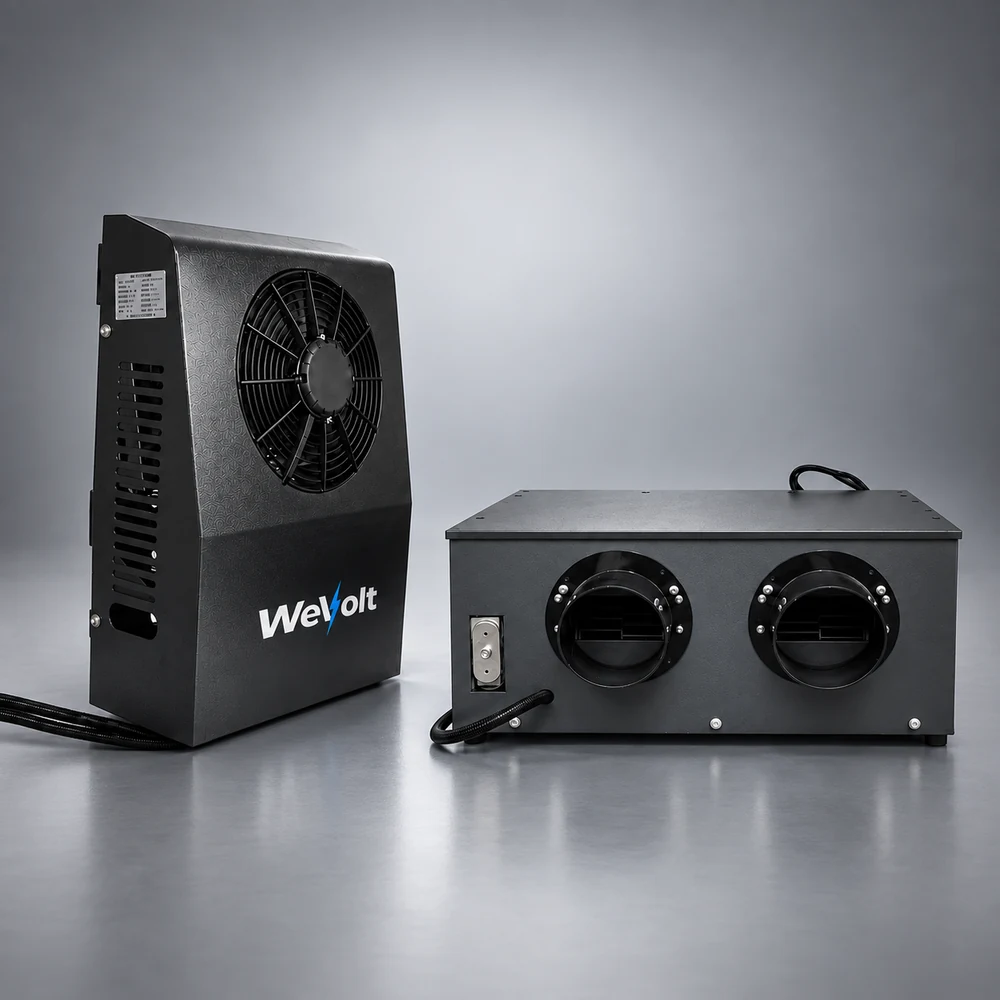
A truck air conditioner, often called a bunk air conditioner, draws from the truck's 24V house battery and runs with the engine off, no diesel burned. Two install forms:
- Rooftop: indoor and outdoor units stack on the roof, needing a standard roof cutout, which adds a little drag.
- Split under-bunk: the outdoor unit sits at the rear of the cab, the indoor unit tucks beneath the bed, no roof hole, ducting inside the cab.
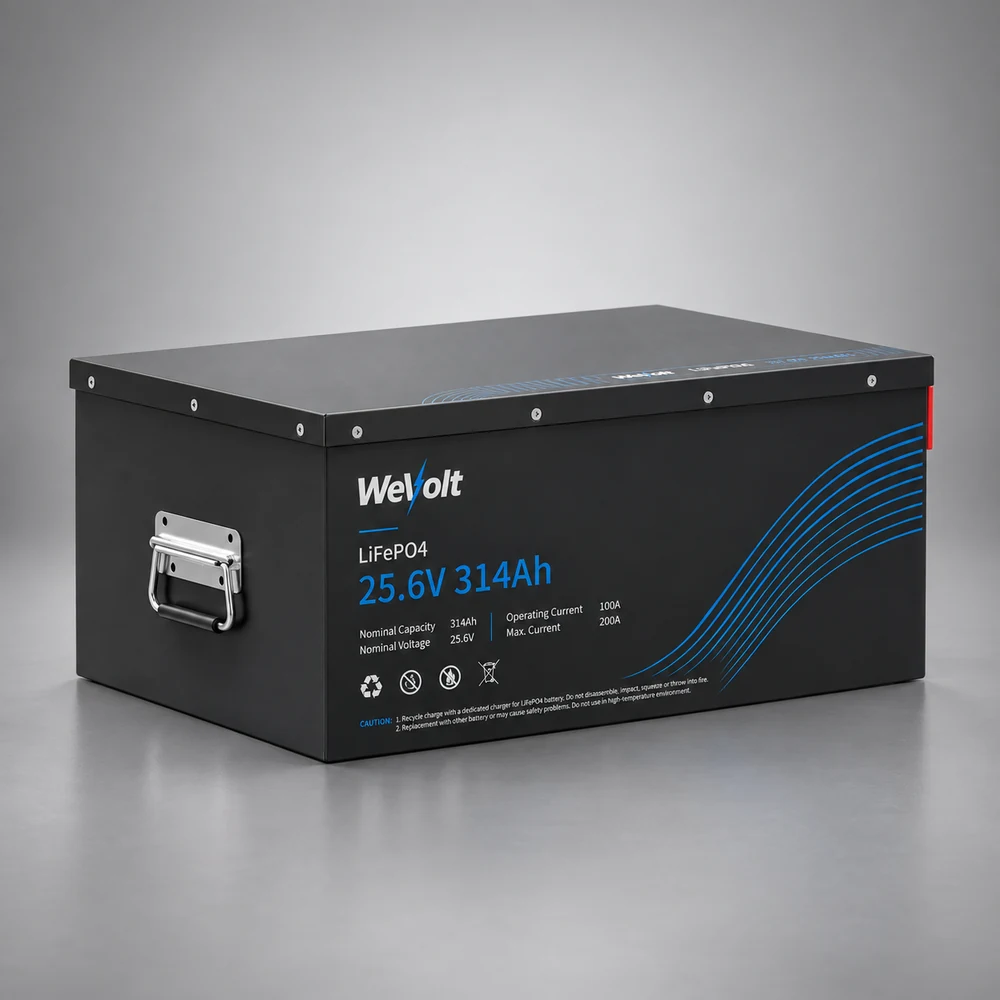
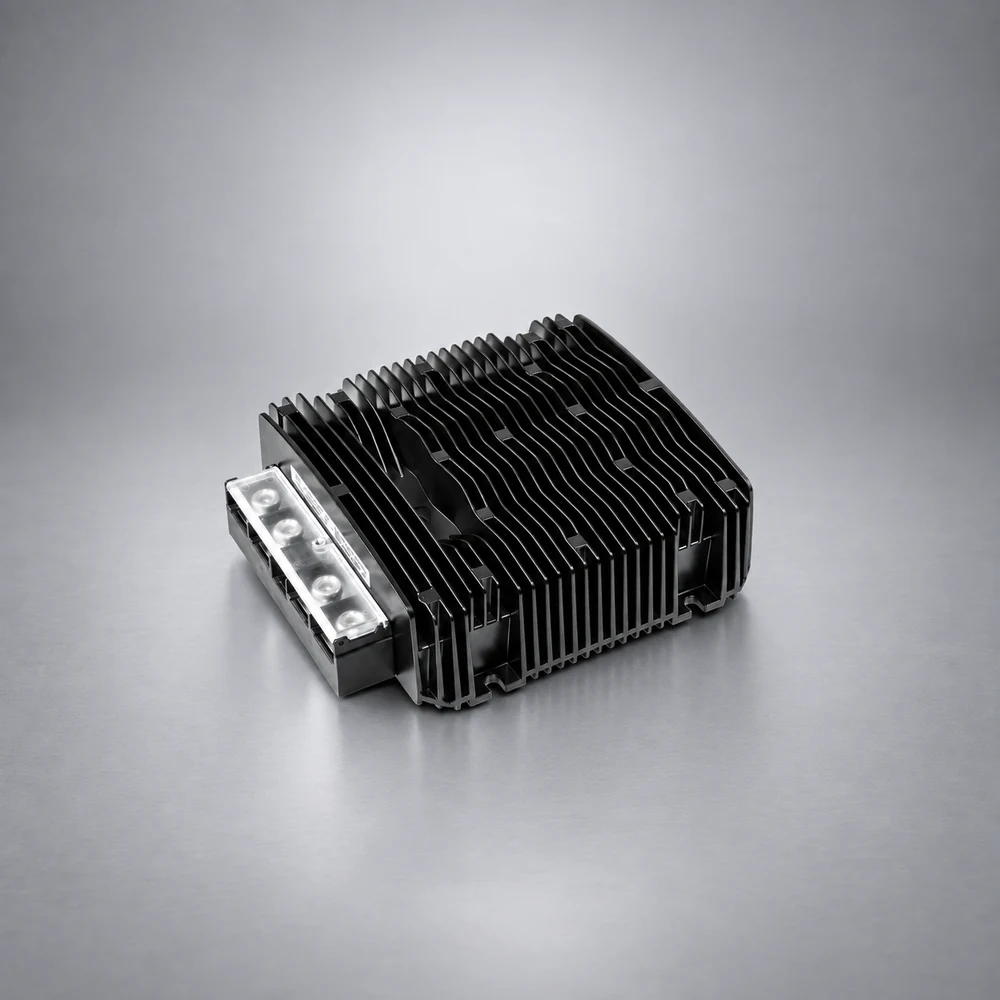
A cooling-and-heating unit adds a PTC electric heater, so it works in winter too. Inside a full eAPU system it is the HVAC module: power comes from the system's 24V parking battery, topped up by the system's bidirectional DC-DC charger while driving. In short, it keeps the bunk at a comfortable temperature after you shut the engine off.
RV unit vs truck unit: six core differences
Put the two side by side and the gap is not “does it blow cold,” but “does it blow cold for years in a truck's real conditions.” Below, the truck-built 24V unit (the WeVolt WTAC-24V-10C-5H as the example) is set against the common RV / residential 12V unit:
This compares specs only; it does not invent a “failure rate” for RV units. The basis is simple: an RV or residential unit is not built for truck road vibration and engine-bay heat, while a truck unit carries explicit design margin on those dimensions. Confirm the warranty years against each brand's factory sheet.
Why 24V instead of 12V
A truck chassis is 24V. Drop a 12V air conditioner in and it either steps down through a converter or auto-switches 12V/24V; the conversion itself loses energy, and at the same power a 12V system draws twice the current of a 24V system (power = voltage × current). Double the current means thicker cable, more heat, more line loss.
A 24V truck air conditioner runs on the same platform as the whole eAPU, with no 12V/24V auto-switch. The halved current is what lets the wiring stay simpler, and it is the same reason the eAPU is matched as a 24V set; the air conditioner is just one part of it.
Anti-vibration and high heat: only a truck-grade build holds up
On the road, vibration is constant; by the engine bay in summer, ambient can pass fifty degrees. Most residential units are not built for either.
A truck-built unit uses high-strength sheet metal with an anti-vibration structure and is rated to an operating environment up to 52°C, and that is what real-duty design margin means. For trucks running hot regions and desert routes, this matters more than a cooling number on paper.
Noise: the hard metric for sleeping in the bunk
A parking air conditioner runs while you sleep, so noise decides whether you sleep. Split under-bunk with an inverter compressor and brushless fans holds noise below 30 dB at low night speed; most rooftop parking air conditioners on the market are rated 45–55 dB. Both blow cold air, but in the bunk the quiet difference is something you hear on a long-haul night.
Noise figures are each model's rated value; actual perception also depends on install location, dampers, and cab insulation. When comparing, look at the rated gap under the same duty, not the absolute number.
Heating and year-round use: electric heat plus extreme-cold backup
A cooling-and-heating unit's PTC electric heater (1600W, about 5,500 BTU on the WTAC-24V-10C-5H) covers shoulder seasons and moderately cold nights, so it is usable year-round, not just summer.
We don't overstate extreme cold. On routes that drop dozens of degrees below zero, electric heat drains the battery fast and struggles to raise the temperature. WeVolt backs this with an optional diesel auxiliary heater (a separate 12V device, outside the 24V power loop); we don't claim one air conditioner alone carries the whole winter, nor that a single setup covers the entire year. Size to the temperature range you actually run.
Life and maintenance: over five years, but not maintenance-free
A truck-built unit's design life runs longer: the WTAC-24V-10C-5H carries a 2-year warranty and design life over 5 years, clearly longer than the one-to-three years common on entry-level white-label units. But one thing must be said plainly: it is not a maintenance-free device.
The service manual calls for the air filter to come out at least every two weeks, washed in soapy warm water, dried, and refitted; the unit must not run without a filter or the evaporator fouls. Washing the filter on time is what keeps it alive. Any unit labeled “maintenance-free” is hard to trust on a truck air conditioner that eats dust and vibration year-round.
Buy on the warranty and life, but run on the maintenance. The warranty covers manufacturing defects, not evaporator fouling from a filter left unwashed for months. Fold “does it need maintenance” into your choice; it is steadier than specs alone.
How to choose a truck parking air conditioner (buyer checklist)
Turn the six points above into a checklist you can tick off, so the words “blows cold” don't carry the decision:
- Voltage: prefer 24V dedicated, not 12V-plus-converter, not auto-switch.
- Anti-vibration: look for truck-grade sheet metal / anti-vibration structure, not a residential shell.
- Operating temperature: confirm the stated high-temp ceiling (for hot regions, the 50°C-plus tier).
- Noise: for the bunk, look for below 30–45 dB rated, not just the word “quiet.”
- Heating: if you run in winter, pick a cooling-and-heating unit with PTC electric heat.
- Warranty and life: check the warranty years and design life, and confirm the maintenance requirement (filter interval).
Take the WeVolt WTAC-24V-10C-5H as a unit that meets the list: 24V dedicated, split under-bunk, 3000W cooling (about 10,000 BTU) / 1600W heating, below 30 dB, rated to 52°C, 2-year warranty and design life over 5 years, filter every two weeks. During cooling it draws about 900W from the battery, and paired with the full 8.04 kWh parking battery runs roughly 8–9 hours (runtime math on the parking battery page). It is one matched, validated part of the WeVolt Apex eAPU system, not a standalone rooftop unit. For drivers comparing air conditioning for semi trucks, the same six checks apply to the sleeper-cab use case.
The checklist is a judgment frame, not a recommendation for one unit. Check the six points against the unit you are eyeing; wherever a figure is missing, ask the seller for it in writing; don't buy on the words “truck-built” alone.
Summary and next steps
A truck air conditioning setup draws from the 24V battery and runs with the engine off. An RV or residential 12V unit is not built for truck vibration and heat, so its durability is doubtful; pick a 24V truck air conditioner that is truck-built, split under-bunk, truck-grade anti-vibration, quiet, cooling-and-heating, and carries a real warranty, and that is the long-term call.
Three things to keep: first, 24V dedicated halves the current and line loss; second, a rated operating temperature to 52°C and below 30 dB are real-duty margin, not paper; third, design life over five years, but wash the filter every two weeks; it is not maintenance-free. To go further:
Full AC specs: truck parking air conditioner component pageThe 24V parking battery the runtime rests on12V vs 24V vs 48V: how to pick the voltageWhole system: WeVolt Apex eAPU planQuote: [email protected]
References
- WeVolt product material: air conditioner marketing brief (24V, 10,000 BTU cooling / 5,500 BTU heating, below 30 dB, 2-year warranty / 5+ year design life, 52°C, R-134a, split under-bunk).
- WTAC-24V-10C-5H installation and service manual: full specifications (3000W cooling / 1600W heating, 900W / 38A, 450 m³/h, EER 2.85, R-134a, indoor 534×315×222mm / 11kg, outdoor 682×465×192mm / 31.5kg), voltage protection thresholds, maintenance requirement (filter every two weeks).
- WeVolt Apex eAPU system technical overview: HVAC WTAC-24V-10C-5H / 24V DC, 10,000 BTU cooling & 5,500 BTU PTC heating; bidirectional DC-DC forward up to 29.2V / 50A, reverse up to 14.4V / 100A.
- WeVolt C-Series component catalog: WTAC-24V-10C-5H full spec and matched components.
- Customer-stated core advantages (Voice of Customer): inverter power saving, combined cooling and heating, truck-specific anti-vibration, longer design life than entry-level white-label units.
This article is a buying-method description. Exact refrigerant charge, cooling input power, and installation fit follow the formal spec sheet or our confirmation. Legal entity and registered address follow the official published page.
Cooling runtime and charging, measured