

A Carrier ComfortPro diesel APU costs about $11,600 as a 210STA kit before installation, with an owner invoice around $13,000 installed (2022); used units trade from $250 to $6,495 bare. Maintenance runs every 2,000 hours on 2018-and-newer machines. The most common "fault" is the SP code — shore power mode, not a failure; the most common real repair is crank-no-start, from wiring first and the alternator second. OEM parts flow through TruckAC and the Carrier Transicold network; warranty runs 2 years/4,000 hours, extendable to 8 years/16,000.
The Carrier ComfortPro is one of the highest-population diesel APUs on the road — and the most-listed on the used market (144 units on a single platform at last check). The flip side of a big population: when the unit faults, when a part wears out, when you need someone nearby who can service it — the answers live scattered across forums, parts-vendor catalogs, and a 60-page official manual.
Same rules as the Thermo King piece: every number carries its source basis (official, dealer listing, owner invoice, platform listing, forum); the fault section goes cheapest-first; and we are an electric APU maker — yet "keep repairing your ComfortPro" is a legal option in the three-way comparison, and Carrier's 8-year extended coverage makes it the only correct answer under one specific condition.
The lineage in one line: PC6000-era old machines (the salvage-parts workhorses) → the ComfortPro three (200INT / 210STA / 220PWR) → today's Aspen. Which one you own decides your parts, your service interval, and your emissions compliance — one table in Section 2 sorts it.
The sister piece — Thermo King TriPac costs, problems, the four repair-or-replace rules and the LRU component-swap philosophyQuick Answer: Costs at a Glance
- Carrier's website lists no prices — $11,600 is a dealer kit listing, $13,000 a real owner invoice. Different bases, both real.
- Every price on this page was verified against its named source in November 2026; dealer quotes move, so treat each number as a dated snapshot.
- The repair-or-replace answer lands in Section 8 — with one Carrier-only exception worth more than all four rules.
Which ComfortPro Do You Have? PC6000 vs ComfortPro vs Aspen
The spec line, official basis: 12,000 BTU/hr of cooling (middle and current generations on the same basis); heating by configuration — ComfortPro "up to 10,000 BTU," Aspen 8,200 BTU electric or 7,000 BTU fuel-fired; 6 kW of generation at 110/120V plus a 70-amp alternator; a 2-cylinder water-cooled Tier 4 Final diesel underneath. And the DPF line that matters west of the Rockies: the ClearSky system regenerates actively off the APU's own generator, and Carrier publishes it as CARB-compliant — on California lanes, that single line decides whether the old-generation used unit is even buyable.
What It Really Costs
How Much Does a Truck APU Cost? Diesel vs Electric — the full price spectrum and the three used-unit checksThe Problems That Actually Happen
In cheapest-first order — which is also your diagnostic order:
- Check SP first: it is not a fault. An SP display means shore power mode — with the truck plugged into shore power, the APU is designed not to start (manual basis). Unplug and retry. This one line has probably saved more tow bills than every part on this page combined.
- Crank-no-start: the subject of a 19-page forum thread — the wiring between components is the known failure point, the alternator second; check the wire before buying parts (forum consensus).
- Control pad not responding / not shutting down: pad relays and wiring (individual forum reports).
- The four electrical classes: fuses, weak batteries, the alternator (overcharge, undercharge, corrosion), belt slippage (multi-source basis).
- Cooling-system faults: attend promptly (multi-source basis).
The other side of the ledger: the population itself is the durability evidence — 144 used units for sale means this platform can be fixed and kept alive affordably, and Carrier doubling the service interval to 2,000 hours in 2018 is an official stamp on its reliability improvements.
Truck APU Troubleshooting, Parts and Service — the general locate-the-fault method, any brandFault Codes and the Manual: Start with SP
- The official Operator's Manual 62-12076 (covering 200INT / 210STA / 220PWR, 60 pages) carries a full "Troubleshooting Fault Codes" section — message, cause, remedy, one to one; a Service Manual PDF circulates online too (direct links in the sources block below).
- Temp Start (2018-and-newer): the APU and HVAC auto-start at temperature thresholds — a self-start at 2 a.m. is a setting, not a haunting.
- Reading order: group first (electrical / engine / A/C) → then the code table → rule out shore power on SP-class codes → and if the same code returns three times in a night, stop resetting and get a read.
Parts: Where to Buy What
Three tiers, one table — whichever part you need, the route is on it:
Buying discipline, same as the TriPac piece: order by part number — old-generation and new-generation parts do not interchange — and check the fitment year on aftermarket listings.
Service: How the Near-Me Question Actually Works
The method, in three steps:
- The Carrier Transicold dealer locator (the "trusted dealers" entry on the official site): the ComfortPro sells and warranty-services exclusively through this network — warranty repairs require an authorized dealer (Form 62-12074 terms, North America).
- Independent Carrier-refrigeration service shops: regional specialists (W&B Service in Dallas is one example of the type) service ComfortPros too — usually at lower rates, right for out-of-warranty units.
- Parts first: pull the part number through the channels above before you walk into a shop — what you save is the diagnosis fee and the wait for parts.
On warranty paper: standard 2 years/4,000 hours, a 3-year plan, extended coverage to 8 years/16,000 hours — terms you negotiate at purchase, not at the breakdown.
Repair or Replace? The Same Four Rules
The four rules live in full in the TriPac piece (the 50% rule, the accumulation rule, the hours rule, the downtime rule); here they are with Carrier's numbers substituted:
- Live alternative prices: about $13,000 installed new / used Carriers from $250 (the largest used inventory in the market) / electric entry from $3,980.
- The Carrier-only fifth rule: the extended-coverage exception. A unit inside the 8-year/16,000-hour coverage does not get replaced — repairs inside coverage are close to free, and all four rules yield to that.
- The hours rule applies as written: at 1,000 hours a year, the overhaul window opens around 8,000–10,000 hours (small-industrial-diesel basis); most PC6000-era machines are already through it, which lowers their replace threshold dramatically.
The three-way comparison table (keep repairing / refurbish the same model / switch to electric from $3,980) keeps the TriPac structure — one row differs: used Carriers are the highest-value fourth road outside the table entirely, provided the three checks pass (hour meter, warranty transfer, CARB — with old-generation DPF status checked unit by unit).
Thermo King TriPac APU — the four rules in full, plus the LRU component-swap argumentIs an Electric APU Worth It? — the payback worksheet, diesel and electric side by sideElectric Alternatives
- Inside the Carrier system: the official product page lists diesel and electric ComfortPros side by side — an in-system electric exists; details by dealer quote (this guide does not expand on unverified models).
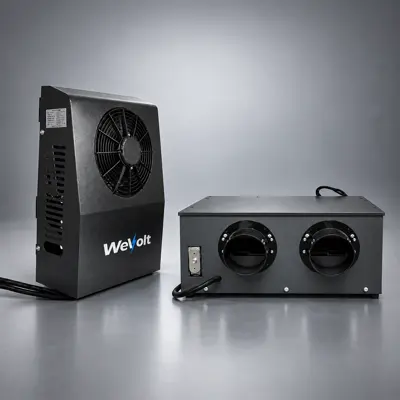
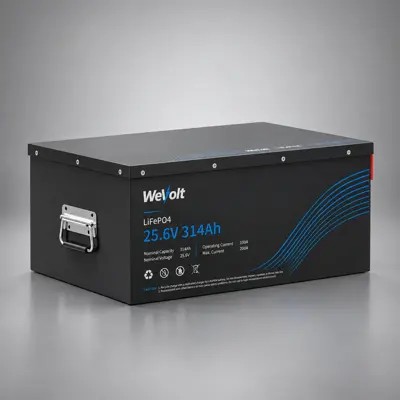
- Changing tracks: the WeVolt Apex, from $3,980, factory-direct. The repair-ledger logic matches the TriPac piece: alternator, DPF and diesel-overhaul — the three big Carrier repair categories — do not exist in an electric system; components swap the aviation LRU way (locate the fault, replace the module — full argument in the sister piece); the battery is the one high-ticket long-term line item.
- When the same diesel is still right, written before the electric rows: multi-night sits (tank range), extreme cold (mechanical heat and engine pre-warm), and a fleet with its own Carrier-refrigeration service bench.
The ComfortPro story is not the TriPac story: its used population is the largest in the market, which means two things — this platform is affordable to keep alive, and every old PC6000 owner needs that repair-or-replace table more than a new-truck buyer does.
The four rules belong to you, the extended-coverage exception belongs to Carrier, and the swap-it-and-roll LRU logic belongs to the electric side. Run your own numbers before deciding — repairing your ComfortPro or switching to our $3,980 is, as the sister piece says, a decision the numbers make for you.
Run your own numbers: idle hours and fuel price in, annual savings, payback and CO₂ out- 1Carrier — Aspen Diesel APU product page (specs and ClearSky DPF) carrier.com
- 2Carrier — ComfortPro improvements news release (2,000-hour interval, 2018) carrier.com
- 3ComfortPro 200INT/210STA/220PWR Operator's Manual 62-12076 (PDF) reefersales.com
- 4Carrier — official APU parts page carrier.com
- 5TruckAC — OEM ComfortPro parts catalog truckac.com
- 6MyLittleSalesman — used Carrier APU listings ($250–6,495 band) mylittlesalesman.com