
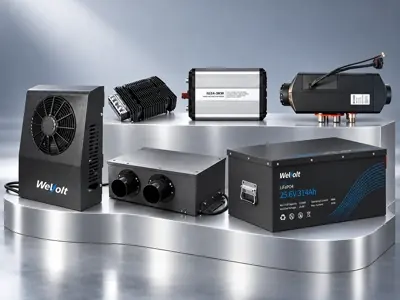
A new diesel truck APU costs $9,000–17,000+ installed — dealer quotes start near $9,000, Thermo King sits around $14,500, and the Green APU flagship lists at $14,999. A new electric APU costs $3,980–$11,700+ in the mainstream, and name-brand large-kWh systems reach $26,000. Used and rebuilt units trade from about $700 bare (eBay, no install, salvage parts lower) to $9,950 as dealer-rebuilt installs. Installation, where quoted separately, runs about $90 an hour of shop labor — one to two days for diesel, usually less for electric. Those are the numbers nobody publishes. This guide puts all of them on one table.
The price is the innermost layer of the APU black box. Manufacturer websites will show you a product photo, a spec sheet, a warranty icon — and then the button: Request a Quote. Thermo King and Carrier product pages carry no reference price at all. Even Green APU, the most outspoken brand in the diesel camp, opened its own pricing article with the admission that almost nobody will tell you what an APU costs — and then told you about exactly one brand: its own.
None of it is accidental. It is channel structure: name-brand diesel manufacturers sell through nationwide dealer networks, and a published price would strip every dealer of room to quote. For you, the practical result is a single blank — no comparable price table exists anywhere online.
This article is that table. Every price anchor we could verify, brand by brand — new diesel, new electric, used and rebuilt, and the install line item — each figure tagged with its basis and its date (snapshot: November 2026; dealer quotes move). Then one formula to decode any price you are handed: installed price = components + integration + installation + channel and brand margin. Four addends. The method works on every quote, including ours.
New to APUs altogether? Start with What Is an APU on a Truck — the 101 hub this guide hangs fromQuick Answer: The Full Price Spectrum
The answer table first. Every figure is an installed price; the used column states its basis separately. Sources and dates sit in the brand sections below.
- Basis beats everything. The answer to "what does an APU cost" depends on whether you mean bare unit or installed, diesel or electric, new or used. Every comparison in this article is flattened to the installed basis.
- The low end changed hands. The diesel camp is right that $8,000–9,000 quotes for a new diesel unit are years old — but the sub-$8,000 bracket does exist today. It belongs to entry electric systems, not to new diesel.
- Read every gap with the four addends. The same 8kWh-class energy storage retails at $11,700 through one installer network and at $3,980 factory-direct through another. The channel addend is the whole difference.
Why Nobody Publishes APU Prices
The name-brand diesel manufacturers publish no prices, for three reasons in order of importance:
- Channel protection. Thermo King and Carrier sell through dealer networks; a published MSRP confiscates the dealer's quoting power, and quoting power is the network's profit. So the TriPac product page offers a Locate a Dealer button and nothing else.
- Configuration variance. Sleeper size, heat type (electric, fuel-fired, or coolant loop) and install hours genuinely vary truck to truck, so a fixed price is hard to publish. The reason is real — and it is also the most convenient excuse ever invented for not publishing one.
- Comparison protection. With no public prices, you cannot line brands up side by side. The price black box protects the price gap itself.
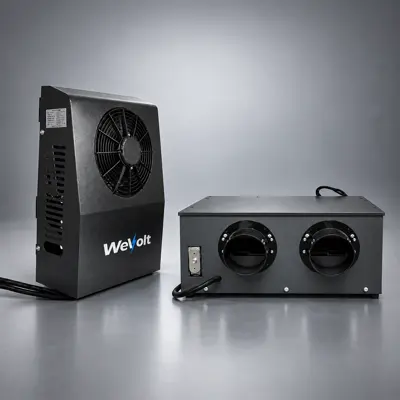
The electric camp is far more transparent, and the reason is the same structure seen from the other side: direct channels. Electric APU in Chicago publishes the industry's rare full public price list. Polar Fox sells 93 SKUs on a plain online store — the 12V compressor assembly at $1,406 and the control motherboard at $111 are prices anyone can read. WeVolt sells factory-direct with $3,980 printed on the page. Price transparency is itself a signal of channel efficiency: the brands that dare to publish are the brands whose channel markup is thin.
Diesel APU Prices, Brand by Brand
Every diesel anchor we could verify, with basis and date:
Thermo King. The brand every buyer asks about first, and its corporate site will not give you one number — but a dealer page will: Peak Thermo King publishes $14,535 installed outright, certified factory-trained installation included. The refurb channel at $6,500–7,500 installed is the value play; used Evolution units with standard install surface around $6,500 and move fast. The right way to buy a TriPac: take this range to two or three dealers and ask each for a quote that itemizes unit, installation, materials, and first service.
The machine-level deep dive — TriPac generations, the problem list, reset codes and the repair-or-replace math: Thermo King TriPac APUCarrier. The ComfortPro is the most numerous machine on the used market (its floor shows up in the next section at $700). Its real new-unit numbers sit higher than the forum folklore: the 210STA kit lists around $11,600 before installation, and owner-reported installed invoices run near $13,000 — the "starts at $8,000" Carrier figure still circulating online is years old. That is also why this article anchors the diesel floor at the dealer-quote band of roughly $9,000–10,000 rather than at any one brand's entry model: quotes vary more between dealers than between brands, and refurb and used units sit below the band.
The machine-level deep dive — ComfortPro generations, the SP code, parts channels and the repair-or-replace rules: Carrier ComfortPro APUGreen APU and Go Green APU are two different companies. The names are similar enough to swap, and even trade coverage mixes them up. Green APU (Lemont, Illinois) builds the Star Edition at $14,999 installed, sells through a 40+ dealer network, and frames new diesel at $12,000–17,000+. Go Green APU is a separate manufacturer whose Adam and Evolution models are one-box units on a two-cylinder Kubota — no external fans, no tie into the truck's cooling system — priced new by quote; its hardest public anchor is dealer-rebuilt units at $9,950 installed (a Houston rebuild program, with a trade-in promotion running on the maker's homepage). Before you compare prices, confirm which of the two you are actually quoting.
The full review of both companies — specs, the warranty numbers everyone mixes up, owner feedback and verdicts: Green APU / Go Green APU ReviewThe one honest pricing article in the field — read it with one correction. Green APU's "The Honest Breakdown" (July 2026) is the only competitor piece that takes price seriously, and most of it holds: the sticker is a third of the story, and installation, parts, and warranty are the other two-thirds. But it quotes diesel only, quotes itself only, and dismisses every low number with "check the article date" — fair for diesel, false for electric. Split the two camps into separate price tables and the attack stops working: sub-$8,000 quotes are real today; they just are not diesel.
Electric APU Prices, Brand by Brand
Same discipline on the electric side:
- Electric's entry price is half of diesel's. $3,980 against Carrier installs near $13,000 and a $14,999 Green flagship — and the gap is not missing components, it is channel: factory-direct against dealer network. Same job done, retail difference up to 2x.
- Polar Fox is the in-between case: parts transparent, systems quoted. All 93 accessory SKUs are buyable online (12V compressor assembly $1,406, evaporator unit $740, condenser unit $629, motherboard $111), but the complete system routes through a dealer for "final pricing." You can reverse-engineer a bill of materials from a brand's own parts shelf — the arithmetic black-box pricing fears most.
- The ceiling is real, and it is higher than the named rows suggest: big-brand turnkey lithium systems — dealership channel, 15–20kWh battery, full heat package — genuinely reach $20,000–26,000 installed. The named anchors cluster below $11,700 only because those are the brands that publish prices; the quote-based name brands sit above them. What puts each dollar there: the five price drivers itemized in Why Electric APUs Cost $8K–$26K.
Used and Rebuilt: What $700–$6,500 Actually Buys
Where used APUs actually change hands:
Run three checks before any used purchase — each one has caught somebody:
- Hours, not miles. An APU's life is counted in running hours. No readable hour meter — or "the gauge broke" — means price the machine at worst case. On a refurb, ask the hours at rebuild and exactly what was replaced.
- Warranty ownership. Most factory warranties do not transfer with the truck. A $700 PC6000 means every repair is self-paid from day one — Carrier and Thermo King parts availability is why their used units hold value; on obscure brands, think twice.
- Emissions compliance. California holds diesel APUs to DPF and model-year rules, so an old diesel unit's "cheap" can arrive with a fine and a retrofit bill attached. Electric systems carry no equivalent requirement.
Why used electric barely exists: the battery is the cost center of an electric system, and a used battery's state of health is hard to verify and impossible to restore. Nobody pays seventy cents on the dollar for a battery whose remaining fraction is unknown. The electric equivalent of buying used is buying smaller-new.
Who used is for: a hard budget ceiling around $8,000, an installer you trust (or your own wrenches), and a horizon of a few years. Otherwise a warranted refurb or an entry-level new electric system wins the long-run math.
APU parts availability and fault-code repairs — what owning a used unit actually asks of youThe Install Line Item: $90/hr and One to Two Days
Installation is the line dealers most like to leave vague. Separated out:
- Demand the all-in number: unit + installation + materials + first service. Four addends on one line — that is the only comparable price. Channels that quote bare-unit only (eBay, some dealers) require you to add the install back before any comparison means anything.
- Install quality decides the next three years of fault codes. Bad terminals, wrong fuses, missing stress relief — that is where the gremlins live. Fast is nice; correct is the point.
The Hidden Costs on Each Side
Green APU says the sticker is a third of the story, and that is right — but the two camps carry different hidden-cost lists:
Read it structurally: diesel's hidden costs recur monthly (fuel plus service); electric's arrive once, years out (the battery). The more nights you run, the heavier diesel's recurring bill and the thinner electric's one-time cost spreads. That is why duty cycle — not any price table — makes the final call.
Diesel APU vs Electric APU: Real Cost, Fuel & Reliability — the year-by-year TCO comparisonWhy Diesel Prices Went Up While Electric Went Down
Pull the timeline back and the two price curves cross:
- Diesel, up. In 2009 the forum-consensus price was $7,000 installed, with new units reaching $10,000. In 2026 Green APU's own framing is $12,000–17,000+, flagship $14,999 — roughly a doubling in seventeen years. What rose: three of the four addends. Tier 4 final emissions hardware (the DPF is law, not an option), small-diesel and general inflation, and dealer-channel margin.
- Electric, down — in the opposite direction. Lithium battery pack prices fell from about $1,183/kWh in 2010 to about $115/kWh in 2024 (BloombergNEF's annual survey — a ~90% decline), while direct channels cut the dealer markup out entirely. Ten years ago "electric APU" meant one tier: name-brand systems at $20,000+. Today an entry complete system costs $3,980 — under half the cheapest new diesel.
One sentence of first principles covers both curves: of the four addends in your price, diesel's are rising and electric's are falling. Components (the battery learning curve) and channel (direct sales) are both moving in the buyer's favor at once — no promo, just two industry directions stacking. What that means for timing: waiting on a diesel quote only gets more expensive, and waiting on electric probably gets cheaper — but the $25.60-a-night idle bill keeps running either way.
Which Price Bracket Fits Your Duty Cycle
Read sideways, the price table is a menu; read against your duty cycle, it is a decision. Sort by nights slept in the truck per week:
The unit of account is cost per night: idling $25.60, diesel APU ≈$18.40 plus service, electric ≈$3.20 — the math and its derivation are in the 101 hub's Cost per Night section. And a truck sold with an APU typically brings $2,000–4,000 more; book it into the payback.
Want named picks instead of price brackets? Best APU for Semi Trucks (2026) — the scenario-level shortlist built on this tableRun your own numbers — the payback worksheet in Is an Electric APU Worth It?How to Get a Real Quote
The table gives you the range; a quote sheet gives you the number. Six questions, asked exactly (the first five are the industry-standard set; the sixth is ours):
- What is the all-in price? Unit + installation + materials + first service, itemized, on one sheet.
- How is the warranty counted — hours or years? What is the cap, and what voids it?
- Are the parts proprietary? Proprietary means one seller, forever.
- How many service points sit on my regular lanes? Forty dealers and three dealers are different products.
- What is the service budget per 1,000 hours? In writing — "not much" is not a number.
- Battery or fuel tank? Which hidden-cost structure fits your duty cycle: monthly (fuel plus service) or one-time (battery)? The table in the hidden-costs section settles it.
On timing: real promo windows exist — Green APU has run $1,000 off MSRP during Driver Appreciation Week (September 2024), and Go Green keeps a trade-in credit running year-round. Factory-direct electric prices carry no dealer padding to discount, so waiting for a sale matters less than starting the savings clock — every idled night is $25.60.
Now step back from the whole spectrum. The name-brand diesel camp has no cheap tier, and the electric camp has no black box. Sub-$8,000 quotes are not scams; the industry structure moved — batteries are on a learning curve, channels went direct, and two of the four addends are walking toward the buyer.
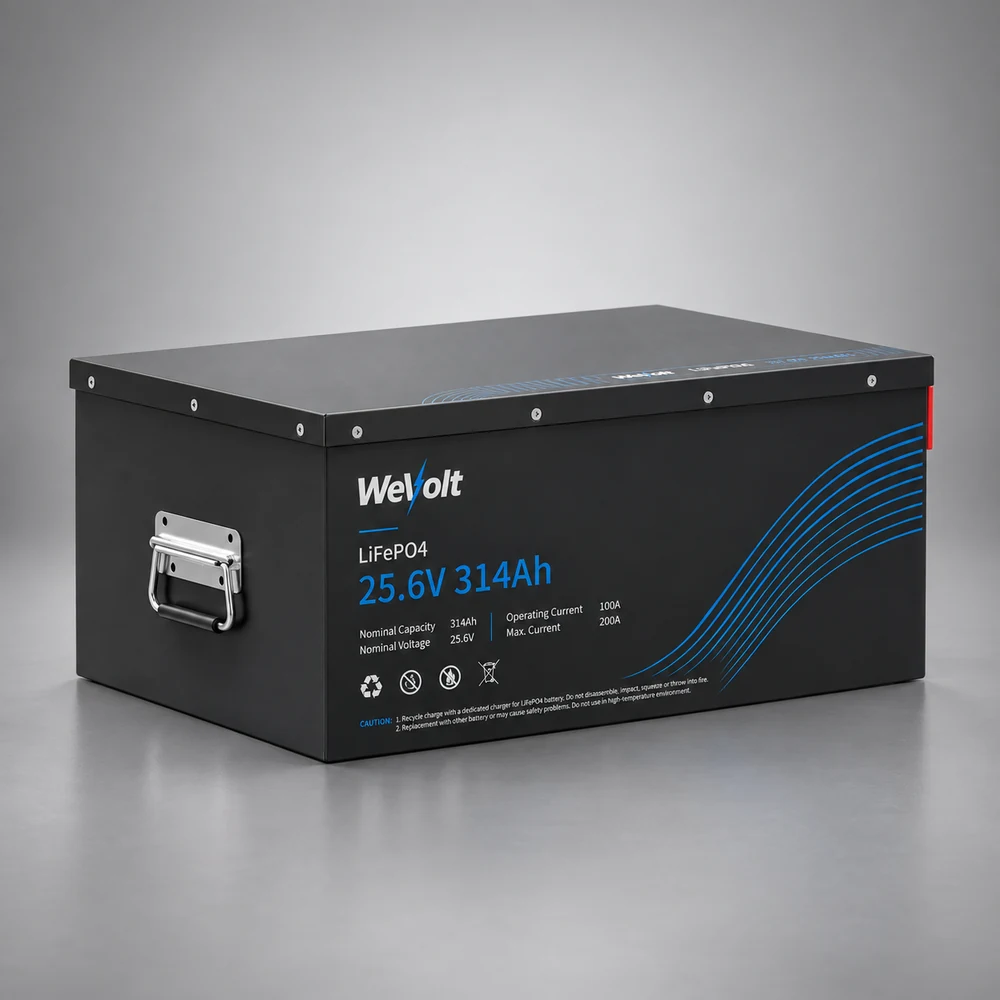
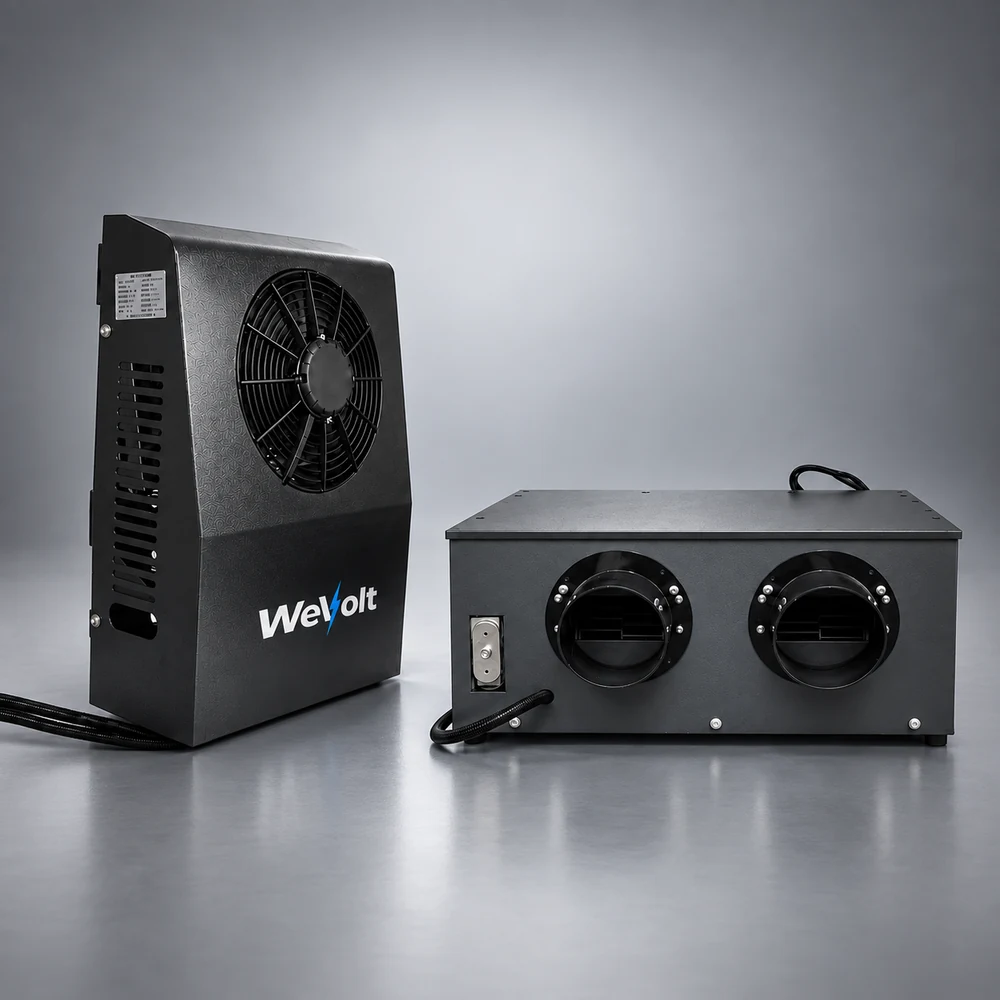
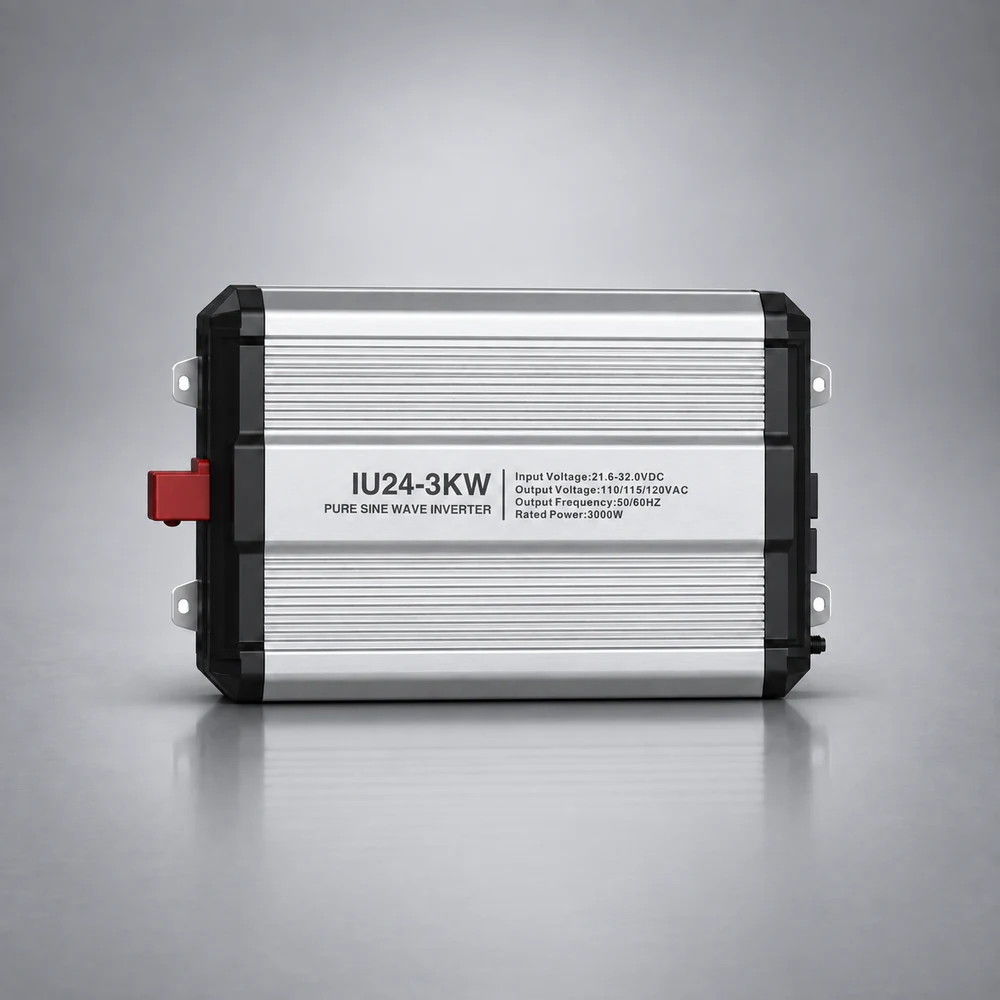
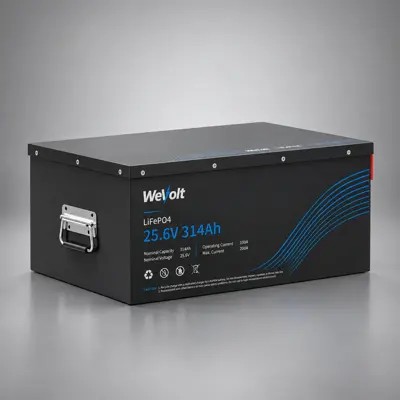
WeVolt's position on this table is plain: $3,980 starting, factory-direct, every specification published — the one entry in the spectrum that puts its bill of materials and its price on the same page. We do not claim cheapest; a salvage part will always beat us on price. We claim that every dollar maps to a component you can see: 8.04kWh LiFePO4, 10,000 BTU, 3,000W continuous, 1,500W bidirectional charging. Price-to-performance you can check line by line: bring the six questions above — every one has a written answer.
Run your own numbers: idle hours and fuel price in, annual savings, payback and CO₂ out- 1Green APU — official site and pricing greenapu.com
- 2Go Green APU — Adam model page gogreenapu.com
- 3Electric APU — public price list electricapu.com
- 4Polar Fox — FAQ pricing and parts shelf polarfoxapu.com
- 5The Truck Savers — rebuilt Go Green at $9,950 installed store.thetrucksavers.com
- 6Peak Thermo King — dealer-published TriPac installed price peakthermoking.com
- 7Fleet Maintenance — top diesel and electric APUs for 2026 (Feb 2026) fleetmaintenance.com