
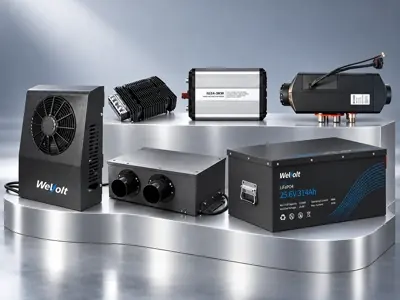
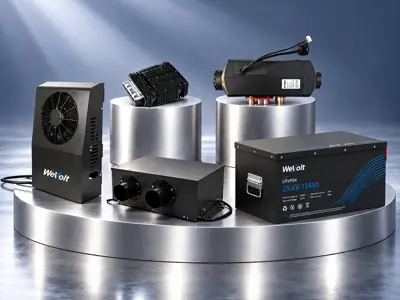
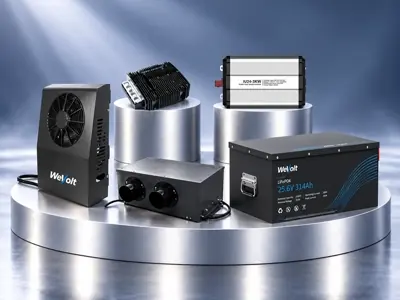
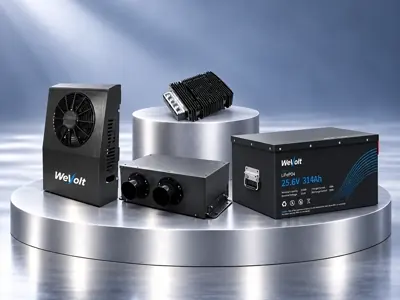

An APU (auxiliary power unit) is a self-contained system mounted on a semi-truck that powers the cab's heating, air conditioning, and electrical outlets while the main engine is off, so the driver can sleep comfortably overnight without idling. Truck APUs come in two types: diesel-powered and battery-electric. Installed costs run from about $3,980 for an entry electric system to $17,000+ for a name-brand diesel unit. This guide opens the box on both.
The traditional process for buying an APU goes like this: You visit a manufacturer's website, see a product photo, a list of technical specifications, and a "Request a Quote" button. You ask a sales rep for the price, compare options based on rumors from forums, and wait for the distributor to fix it if it breaks. Even Green APU—the most outspoken player in the diesel APU sector—admitted on its own blog: "Almost no one will tell you how much an APU costs—every website looks the same: a photo, a list of features, and a quote button."
That has been the industry's condition for five decades: a black box. You are not supposed to know what is inside, so you cannot compare prices, run the math, or judge whether the premium is justified.
This article takes a different approach. We open the box: which components make up an APU, how to read each component's specs, how those specs convert into one another, and how value converts into dollars per night. The method applies to every brand — including the ones we compete with. Once you can run it, you will never sit through an APU sales pitch as an outsider again.
This page is the hub — the APU 101 that every other guide on this site starts from. Six routes out of it, depending on where you are in the decision:
Going electric? Start with What Is an Electric APU — the deep dive on battery systemsDiesel or electric? The full cost, fuel and reliability comparisonWhich solution fits your truck? eAPU vs diesel vs parking AC vs battery-onlyWhat does the market actually charge? Diesel vs electric prices, brand by brand — the 2026 price guideReady for a shortlist? Best APU for Semi Trucks (2026) — named picks by scenarioWhy electric APUs cost $8K–$26K — the component-level price breakdownWhat Does "APU" Mean on a Truck?
APU stands for auxiliary power unit: a small, independent power device mounted on a heavy-duty truck that takes over cab power and climate control when the main engine is shut off. Thermo King's official definition describes a unit that provides cooling, heating, and electrical power for hotel loads in the cab while the tractor's main engine is off, and maintains the tractor's battery charge. Whatever the phrasing — APU unit, auxiliary power unit, truck APU — every one of these names describes the same system.
This term wasn't coined by the trucking industry. APUs have been used in aviation for decades—when passenger planes shut down their main engines on the ground, they rely on the auxiliary power unit at the tail for power and air supply. The logic behind truck APUs is exactly the same: let a small device handle the overnight load, giving the large engine—worth tens of thousands of dollars—a rest. And this aviation heritage goes beyond mere etymology—the core components of today's electric APUs were also developed in industries like aviation and yachting, which solved the "off-grid overnight" problem much earlier, and have since been re-engineered to withstand the vibration-prone environment of trucks (see First Principles below).
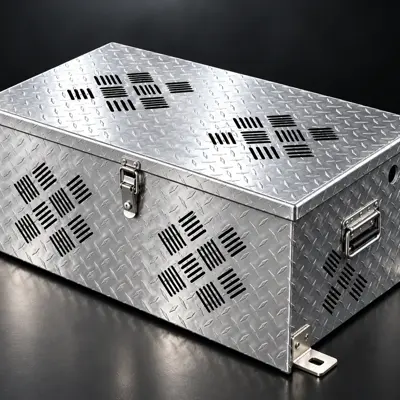
A typical truck APU mounts on the exterior frame rails, behind the passenger-side fuel tank. From that position it takes over everything that used to require an idling engine: air conditioning, heat, outlets, and battery charging.
What an APU is not — a boundary many articles leave blurry:
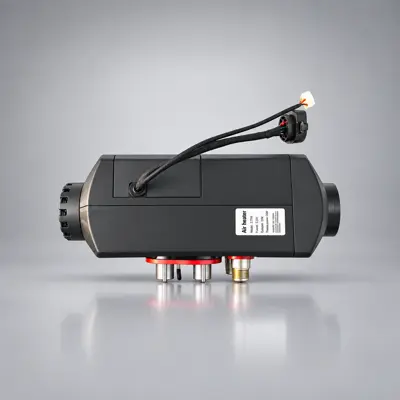
- Not a diesel bunk heater. Webasto and Espar heaters solve heat only, at $1,600–2,800 a unit — no cooling, no 120V power, no battery charging. Many drivers who say "APU" mean one of these. See Truck Diesel Parking Heater.
- Not a battery bank with an inverter. That solves electricity only — no cooling, no heat.
- Not idling. Idling is what an APU exists to eliminate: running a 15-liter engine to power a microwave is the habit this industry is paying to stop.
APUs serve other equipment too — bucket trucks, service cranes, aircraft — but this guide focuses on the North American Class 8 sleeper-tractor context, which is what almost every truck-APU question is really about.
What an APU Actually Powers
There is also a hidden role: backup power. If the main truck fails on the road, an APU keeps the cab heated or cooled and the outlets live for the hours it takes to sort things out.
Types of Truck APUs: Diesel, Electric, and the Lookalikes
A diesel APU packages a small diesel engine (the industry workhorse is a Kubota three-cylinder), an A/C compressor, a generator, and a coolant loop into one frame-mounted unit that draws from the main fuel tank. Runtime is limited only by the tank — with fuel, it runs, whether that is one night or four. The trade-off: it is still a diesel engine, with scheduled service (typically every 1,000 hours), noise, exhaust, and a California emissions hurdle covered below. Representative models: Thermo King TriPac, Carrier ComfortPro, Green APU, RigMaster, Dynasys.
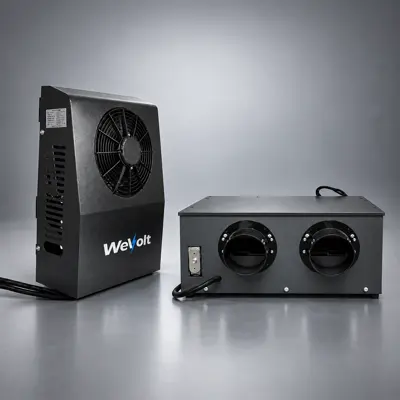
An electric APU (eAPU) is a lithium battery bank plus an inverter and an electric-compressor air conditioner. A DC-DC charger refills the bank while you drive; parked, the bank runs cooling and outlets with zero fuel burned on the spot, zero local emissions, and near silence — and no second engine to service. The limit is runtime set by battery capacity: mainstream systems deliver 8–12 hours, high-end configurations claim 20. Winter heat, on most systems, comes from a fuel-fired heater — an industry-wide convention, including among diesel APU owners (see First Principles). Representative models: Thermo King TriPac Envidia, Polar Fox, Electric APU, RoyPow 48V, and the WeVolt Apex (24V / 8.04kWh / 10,000 BTU / 3,000W, from $3,980).
Then there are the lookalikes — solutions that solve part of the problem and get called an APU:
Each is a legitimate build — many drivers run a heater-plus-battery pair. How they trade off against a full APU is laid out in Truck APU Solutions Compared. The DOE keeps research records on hydrogen fuel-cell APUs; nothing commercial yet, so this guide leaves them aside.
First Principles: What's Inside an APU
This is the heart of the guide. Every APU — whatever the badge and whatever the price — is built from the same short list of components. Brand difference is component-spec difference plus channel-structure difference.
The Five Components of an Electric APU
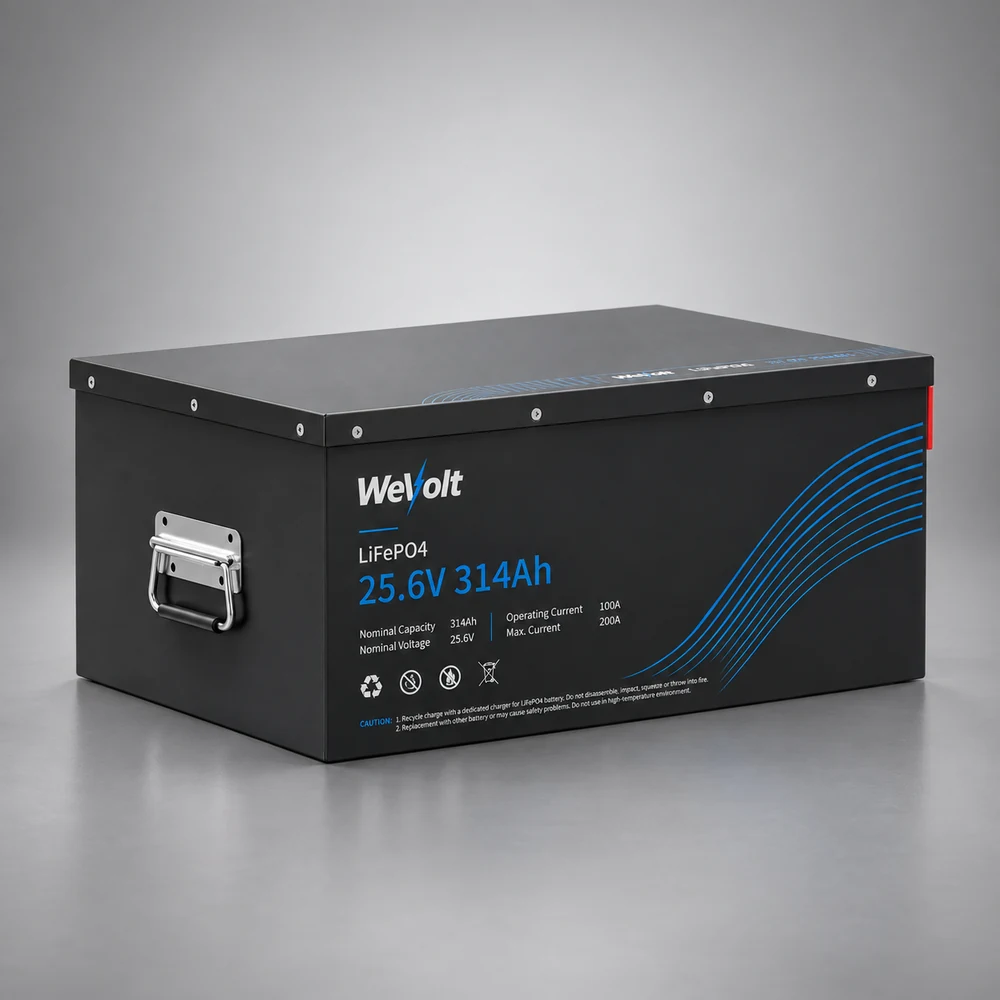
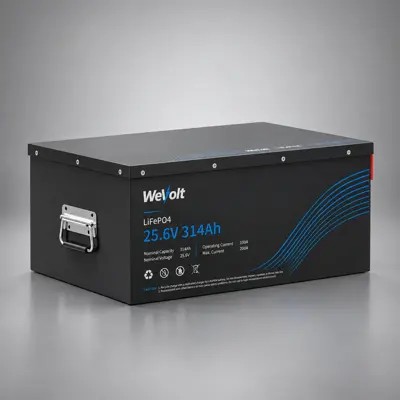
The battery bank — the fuel tank. Read: kWh (energy), amp-hours at voltage (capacity), chemistry (LiFePO4 vs AGM), cycle life, low-temperature charge protection. What it means: kWh sets runtime, and amp-hours mean nothing without voltage — 12V 100Ah (1.2kWh) and 24V 100Ah (2.4kWh) differ by a factor of two, a distinction the industry's marketing regularly blurs (see 12V vs 24V vs 48V). AGM is cheap but heavy and shallow; LiFePO4 offers 3,000+ cycles — a decade at one cycle per night. Ask: usable capacity (kWh × depth of discharge)? Does it charge below freezing? Is the battery warranty counted in years or cycles? The WeVolt Apex carries 8.04kWh of LiFePO4 at 25.6V/314Ah — see 24V 314Ah Truck House Battery.
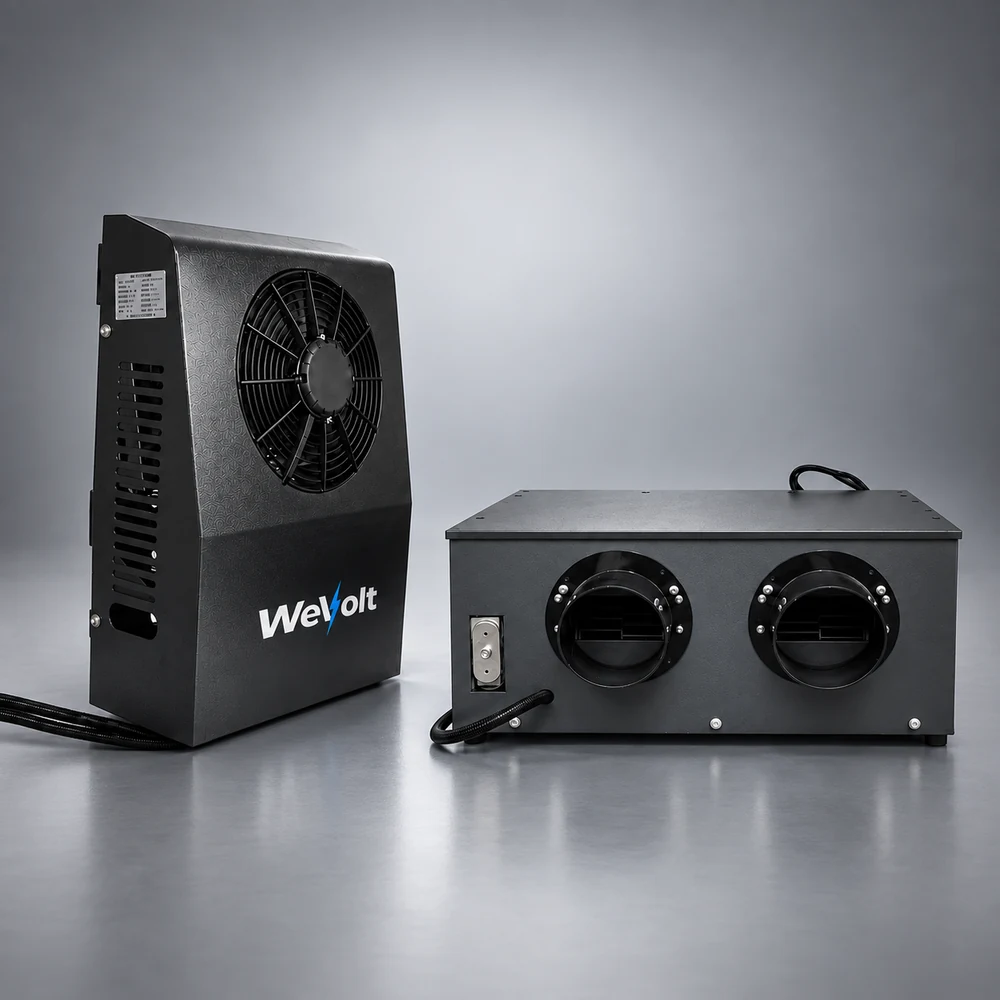
The electric A/C — the appetite. Read: BTU (cooling capacity), input watts, variable-speed or fixed. What it means: BTU must match sleeper volume — the sweet spot for a mainstream 72-inch sleeper sits around 10,000 BTU; only oversized sleepers in a Texas August push toward 15,000+. Input watts set how fast the battery drains: two 10,000 BTU units one efficiency class apart differ by two hours of runtime (see Air Conditioning for Semi Trucks All Night). Ask: how many input watts? A vendor who publishes BTU but not watts is omitting half the specification.
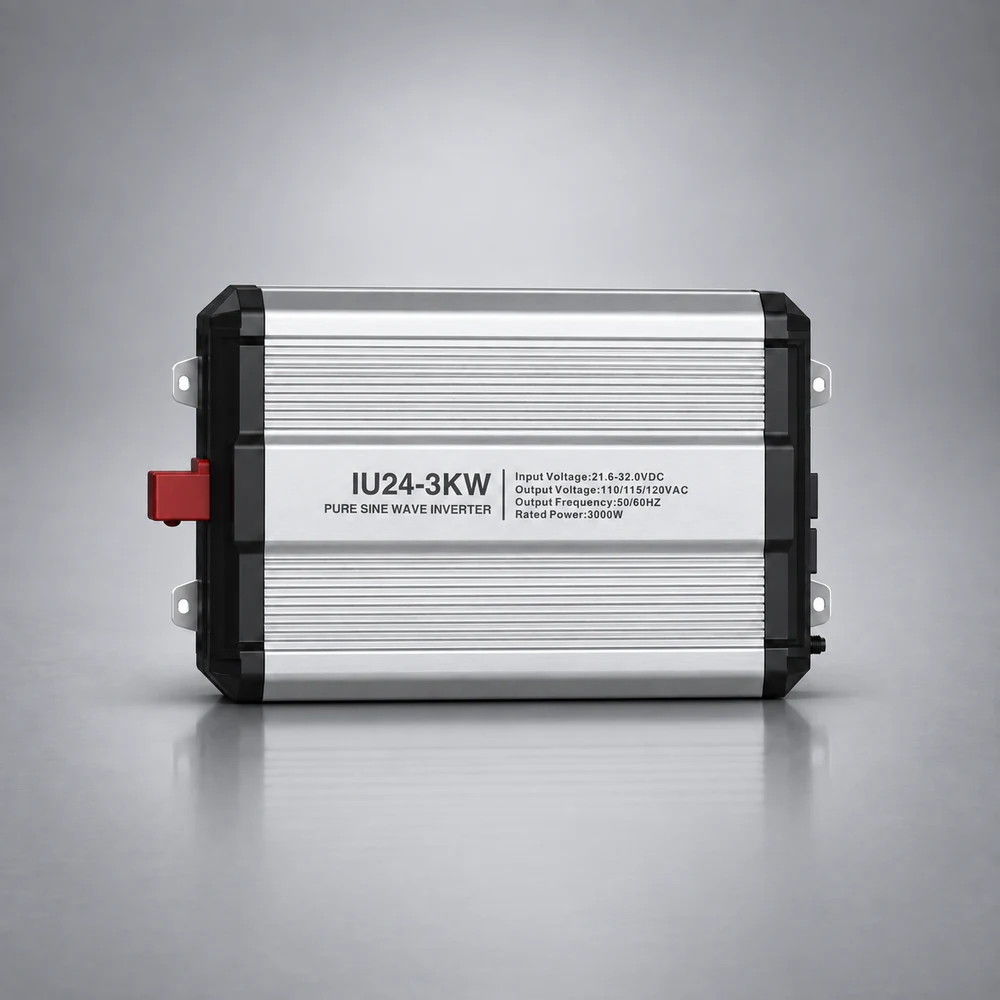
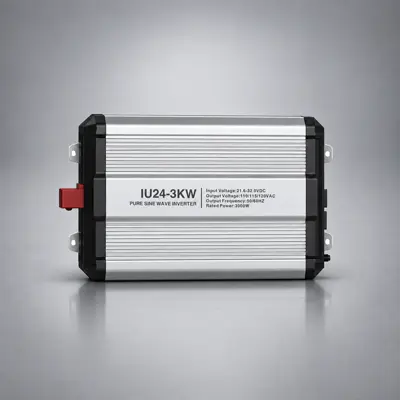
The inverter — the outlets. Read: continuous watts, surge watts, pure sine or modified. What it means: continuous watts decide what runs at the same time (microwave ~1,000W + CPAP ~50W + fridge ~100W); pure sine is a hard requirement for medical devices and sensitive electronics. The common trick is headlining the surge number — always ask for continuous (see Truck Inverter Sizing Guide). Ask: is that 3,000W continuous or peak? Is it safe for a CPAP?
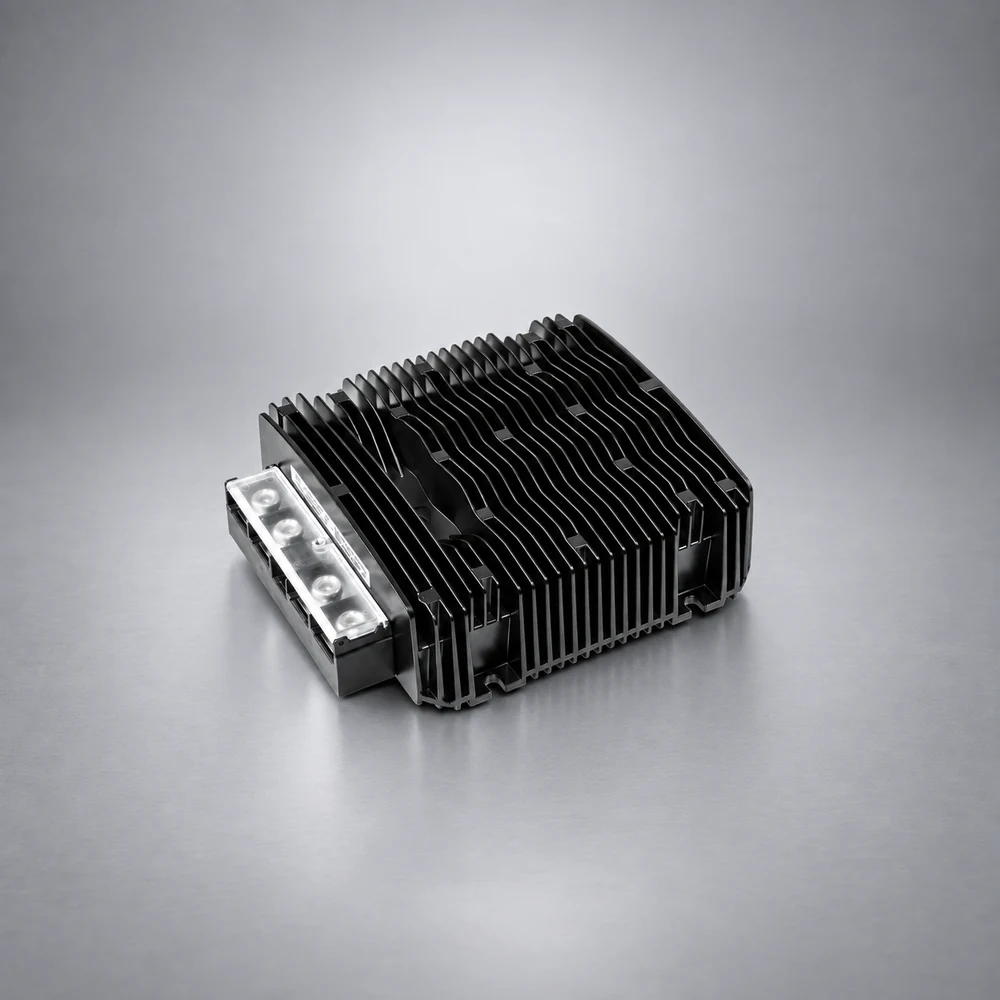
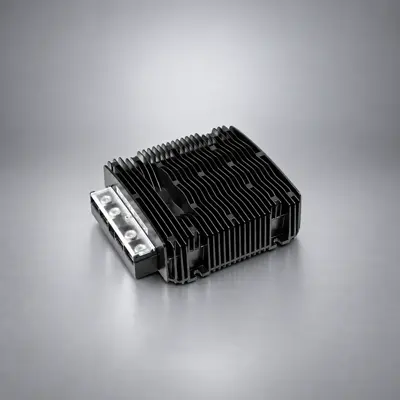
The DC-DC charger — the gas station. Read: charging watts or amps, bidirectional or one-way, compatibility with your alternator. What it means: it sets how much driving refills the bank. A 1,500W charger takes roughly four hours of driving to bring 8kWh from 20% to full — invisible on a normal driving day. Bidirectional adds the ability to rescue a dead starter battery, saving a jump start (see Bi-directional DC-DC Charger). Ask: how many driving hours to full? Can it back-feed the starter bank?
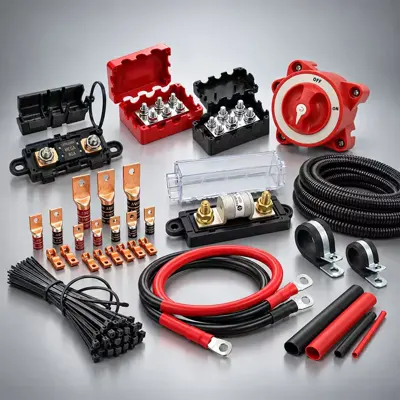
The BMS, wiring, and fusing — the veins. Read: wire gauge, fuse coordination, monitoring (app or display). What it means: the least-discussed part of the system is the dividing line between install quality and fire risk, and it is where 24V architecture earns its keep — at the same power, a 24V circuit carries half the current of 12V, so thinner wire, lower copper loss, less heat. Ask: what gauge wire, and how is the fusing staged? See eAPU Wiring & Fuse Sizing.
Component Lineage & Vibration: Aircraft and Yachts Ran the Test First
LiFePO4 batteries, inverters, DC-DC chargers, and BMS—this electric architecture has been operating reliably for more than a decade in onboard power systems for business jets and general aviation aircraft, as well as in house power systems for yachts and sailboats. The yachting environment bears a striking resemblance to that of trucks: operating far from the power grid, relying solely on batteries overnight, carrying expensive equipment, and having zero tolerance for failure—yacht owners and pilots validated the reliability of these components more than a decade before truck drivers did. This is one of the primary reasons why the price of electric APUs has been driven down: the component supply chain is mature, eliminating the need to pay the "tuition" associated with new technologies.
But a truck has one working condition harsher than any ramp or anchorage: vibration. Interstate expansion joints, job-site washboard, frame twist thousands of times a minute, main-engine resonance — in that environment an unhardened marine-grade mounting loosens fasteners, walks connectors out of their locks, and fatigues solder joints. Vibration is the number-one reliability killer of vehicle electronics, and it is the line between "marine parts relocated to a truck" and "a truck-grade electric APU."
Mature components are the starting point; the engineering that earns truck duty is the anti-vibration work:
- Vibration-isolated mounting — bracket and damper design that keeps road shock out of the cells and solder joints
- Harness stress relief — every conductor's motion path under continuous shake fixed in place; connectors locked against walk-out
- Vibration-conditioned BMS — sensing and protection logic calibrated for a shaking vehicle, not a lab bench
That is a question to put to any vendor, including us: what did you change specifically for truck vibration? A vendor with no answer is a marine-parts reshipper, whatever the brochure says. At WeVolt this is a core engineering investment — aviation- and marine-proven components, then deep optimization for truck vibration — and it is why the system carries a 10+ year battery design life.
The first-principles conclusion is reassuring rather than alarming: buying an electric APU is not a bet on new technology. It is mature components (reliable, affordable, supply-chain-proven) plus truck-grade engineering (vibration, integration). The first half explains how it can cost half of a diesel unit and still be more reliable; the second half explains why it belongs on a truck at all.
The Five Components of a Diesel APU, for Comparison
A small diesel engine (the de facto standard is a Kubota three-cylinder), a generator/alternator, an A/C compressor (Green APU rates 26,000 BTU), a coolant loop that pre-heats the engine, and a controller. The diesel APU's "battery" is the main fuel tank and its "charger" is its own fuel pump — which is why its runtime is unlimited and why every hour of it burns money (0.15–0.25 gal/hr).
Three questions to ask on the diesel side: What is the PM interval in hours, and what does one service cost? Is the warranty hour-capped — a common trap where the hours run out long before the calendar does, which is exactly why Green APU markets "two years, unlimited hours"? And are the service parts proprietary or standard automotive — can a NAPA or AutoZone stock them?
Why Manufacturers Would Rather You Didn't Do This Teardown
Because the teardown reveals two things. First, the gap between an $8,000 system and a $16,000 system maps almost entirely onto specific component specs — how many more kWh of battery, how much more continuous inverter — or simply onto one more layer of channel margin (Why Electric APUs Cost $8K–$26K breaks down the five price drivers). Second, you start asking which specs your duty cycle actually needs — and once that question is asked, you stop paying for the ones it doesn't. That is the value of first principles: it doesn't tell you whom to buy from. It lets you compute the answer.
How to Read the Four Numbers That Matter
Spec sheets stop intimidating people the moment the conversions are on the table. Four numbers and three formulas estimate any eAPU's real behavior:
- Runtime ≈ usable kWh ÷ A/C input kW. Example: 8.04kWh × 90% usable depth ≈ 7.2kWh; a 10,000 BTU unit at an efficiency ratio of ~3 draws about 1kW, so roughly 7 hours flat-out. Compressors cycle (50–70% duty), so a real night runs 10–12 hours, matching the road-test data in Real-World eAPU Performance. A vendor claiming 20 hours should be asked to walk this formula — the usual explanation is a smaller BTU unit under gentle assumptions.
- Recharge time ≈ kWh to replace ÷ charge kW. Example: down to 20%, replace 6.4kWh ÷ 1.5kW ≈ 4.3 hours of driving. A "fully charged while you drive" claim that assumes less driving than this is hiding its charge rate.
- Simultaneous load = sum of load watts ≤ inverter continuous rating. Microwave 1,000W + fridge 100W + laptop 100W ≈ 1,200W — comfortable on a 3,000W continuous inverter, already over the line on a unit whose headline "2,000W" is a surge number.
The diesel-side equivalents: gallons per hour (fuel per night = gal/hr × hours × price) and the PM interval in hours (service amortized per night = one service ÷ the nights between services).
How Much Fuel Does an APU Save?
- Main-engine idle: 0.8–1 gallon per hour. DOE cites 0.8–1 gal/hr; New Mexico Environment Department measured 0.82 gal/h; heavy electrical loads and extreme weather push it to 1.5 and beyond.
- Diesel APU: about 0.15–0.25 gallons per hour (industry convention: 0.2).
- Electric APU: zero while parked. A winter fuel-fired heater adds roughly a gallon per 10 hours.
At the industry's standard conservative assumptions — 8 hours parked per night, 250 nights a year, $4/gallon diesel:
That $4,800-a-year spread is the ground diesel and electric APUs hold against idling. EPA and Thermo King both publish "about 75% fuel reduction" for APU-class systems; Thermo King's page puts its TriPac at about 2,500 gallons saved per year and 10,000 gallons over a typical ownership — computed on a heavier idle assumption. Every vendor's savings number is a function of the idle hours it assumes; read the assumptions line before the number. Green APU's "about $9,000 a year" rests on 10-hour nights, 3,200 hours a year and $3.75 diesel — roughly double the conservative basis, not wrong, just assumed. And idling costs more than fuel: DPF plugging, forced parked regens, oil dilution (see Why More Truckers Are Ditching Idle).
What Does an APU Cost in 2026 — and Why the Spread Is So Wide
The full spectrum, installed, with sources (collected November 2026):
Installed scope varies by truck and installer. These are public, sourced figures — not WeVolt pricing claims — and each row's basis is named so you can check it.
Now read the table the first-principles way. Installed price = components + integration + installation labor + channel and brand margin — four addends. Most of the electric market's $8K–26K spread is battery kWh and channel layers: the same 8kWh of energy retails at $11,700 through one installer network and at $3,980 factory-direct through another. The channel addend is the whole difference.
- "How much is an APU" is being rewritten by electric. The diesel camp is right that $8,000–9,000 quotes for a new diesel unit are years old — but today the sub-$8,000 bracket is entry electric systems. The low end changed hands.
- Compare installed prices, never unit-only. Installation is skilled work — frame mounting, electrical, coolant lines, A/C lines into the sleeper; some trucks take a day or two. Ask what the quote includes, how long they keep the truck, and who stands behind the labor.
- Hidden costs arrive in year three. Diesel APUs need a PM every ~1,000 hours (drivers have posted $1,150 single-service bills) plus the California DPF chain; electric's hidden item is the battery — ask any vendor what a replacement bank costs and when. A vendor who answers that question plainly is one worth buying from.
Financing runs $300–450 a month industry-wide; Electric APU works with Synchrony (12 months interest-free) and QuickSpark, Polar Fox with TimePayment. For a cash-tight owner-operator, the honest comparison is the monthly payment set beside the idle fuel it replaces — most months, the payment loses.
Every anchor in that table, expanded — brand-by-brand prices, the used market and install labor: How Much Does a Truck APU Cost? Diesel vs ElectricHow to Measure Value: Cost per Night
Once specs and prices are decomposed, value needs one universal unit: the full cost of one parked night. It is the smallest unit of fleet TCO and the only one marketing cannot touch. Cost per night = purchase price ÷ total nights + energy per night + service amortized per night.
Basis: 250 nights/year × 5 years = 1,250 nights, $4/gal, straight-line amortization, resale excluded (APU-equipped trucks typically resell $2,000–4,000 higher, which improves electric's figure further). The electric system's recharge fuel is spent on the driving side — under $1 a night — and ignored here.
Same bunk, same eight hours, three price tags. A $15-per-night gap is what "value" means in this market — five figures over five years. Drop any vendor's quote into this formula and the worth-it question answers itself. Our savings calculator does exactly that, with your idle hours and your fuel price: see Compare Electric APU Savings.
How Long Until an APU Pays for Itself?
Published figures cluster at 12–24 months (Polar Fox's FAQ); Green APU quotes about 14 months for diesel on its aggressive 3,200-hour basis; electric, with a lower purchase price and zero parked fuel, pays back in about 10 months at the conservative $4,800-a-year basis. Three variables set the clock: how many nights a year you sleep in the truck, your local diesel price, and purchase price plus service. The honest flip side: a regional driver home every night in a mild climate can stretch payback past two years — but that operation was never a heavy idler to begin with. The full math is in Is an Electric APU Worth It.
Diesel vs Electric APU: The Short Version
The full comparison — 3-year TCO, 5-year totals, reliability data — is in Diesel APU vs Electric APU. The decision frame fits in three lines:
- On the road for weeks, multi-day sits, real winters and summers → diesel's tank-is-the-runtime remains a hard advantage.
- Home most nights, mild climate, short sits, silence prized → electric's zero-fuel, zero-maintenance case compounds.
- The large middle (a few nights a week in the sleeper) → both work; decide on cost per night, not on a spec sheet.
The diesel camp (Green APU) publishes four objections to electric, and each deserves a straight answer rather than a dodge:
- "Runtime is only 8–14 hours" — true of the mainstream; 20 hours in the top configuration (Electric APU's published figure); a full night of 10,000 BTU on 8.04kWh is confirmed in Real-World eAPU Performance. Multi-day sits remain diesel's home turf — we will say it for them.
- "Cooling is only 7,500–15,000 BTU" — the mainstream-sleeper sweet spot sits right around 10,000 BTU; an oversized bunk in a Texas August is the honest exception. Size to sleeper volume, not to the biggest number on the sheet.
- "Electric still burns fuel for winter heat" — true, and it is the whole industry's practice, diesel users included: the winter answer on both sides of the market is a Webasto or Espar heater. WeVolt integrates it as an option rather than pretending otherwise. See Truck Diesel Parking Heater.
- "The battery box weighs 470 lb" — a real engineering fact (Green APU's own citation); the federal weight exemption covers it (see Anti-Idling Rules below), and 24V architecture delivers the same night of output from a lighter, thinner-wired system.
Truck APU Brands at a Glance
The brands you will actually cross-shop, diesel camp first:
Green APU and Go Green APU compared in full — two different companies, specs, warranties and owner feedbackMachine deep dive — Thermo King TriPac: costs, the fault list, reset codes and the repair-or-replace rulesMachine deep dive — Carrier ComfortPro: generations, the SP code, parts channels and the extended-coverage exceptionAnti-Idling Rules, Fines, and the 550-lb Weight Exemption
Three things, each skipped by most "what is an APU" articles. First: anti-idling law is the legal engine of APU demand. Most U.S. states and cities cap commercial idling at 3–5 minutes, with fines from $250 to $10,000 (California's ceiling is $10,000, with additional restrictions within 100 feet of schools and residences). The key point: most jurisdictions write an explicit APU exemption — an APU-equipped truck can shut the engine down and stay legal. ATRI's annual Compendium of Idling Regulations (the "Cab Card") is the authoritative roll-up; the state-by-state table lives in Anti-Idling Laws.
Second: California holds diesel APUs to their own emissions rule. A diesel APU used overnight in California must carry a CARB-verified DPF or a 2010-or-newer compliant engine; the "Certified Clean Idle" sticker exempts the idle limit but is recognized only in California. That is a hidden compliance cost on every diesel APU running West — and a chain electric APUs never touch.
Third: the federal government lets an APU-equipped truck weigh more. 23 U.S.C. §127, as amended by MAP-21 §1510, allows a heavy truck fitted with idle-reduction technology to exceed the standard weight limit by up to 550 lb on the Interstate System (the previous allowance was 400 lb) — the battery box or the diesel unit does not eat payload allowance. Conditions: written proof of the equipment weight and a functional unit; states vary off the Interstate (the AFDC state-law database is the starting point).
How to Choose: A Component Buyer's Checklist
Three questions locate your duty cycle:
- Do you sleep in the truck at least three nights a week? Yes → the APU math works. No → price your idling first; a heater-plus-battery pair may be enough (Truck APU Solutions Compared).
- Do you run California or the strict Northeast? Compliance gains compound. Deep-winter lanes → treat the heating answer as mandatory, on either side of the market.
- Cash or financing? Cash → compare installed prices across the full spectrum above. Financing → set the monthly payment beside the monthly idle fuel it replaces.
Then take this list to any vendor — including us:
- Usable capacity in kWh — not amp-hours?
- A/C in BTU and input watts? (Formula one estimates runtime.)
- Inverter continuous watts — and is it pure sine?
- DC-DC charge rate in watts, bidirectional or not? (Formula two estimates refill time.)
- Wire gauge and fuse staging? (See eAPU Wiring & Fuse Sizing.)
- Installed price, install days, warranty in years or hours?
- What does a battery replacement or a PM service cost?
- Component lineage and vibration — how many years have these batteries and inverters run in aviation or marine duty, and what was changed specifically for truck vibration?
A vendor that answers all eight plainly is the best price-to-performance — whatever the badge. The WeVolt Apex is built the way this list reads: 24V architecture, 8.04kWh LiFePO4, 10,000 BTU, 3,000W continuous, bidirectional 1,500W charging, from $3,980, factory-direct. Every spec in the open — which is the only condition under which a price deserves to be in the open too.
Not sure whether your truck fits? The compatibility checker covers Peterbilt 579, Freightliner Cascadia, Kenworth T680, Volvo VNL and more.
Related reading: What Is an Electric APU · Diesel APU vs Electric APU · Why Electric APUs Cost $8K–$26K · Is an Electric APU Worth It · Truck APU Solutions Compared · Anti-Idling Laws · Truck APU Troubleshooting, Parts and Service · Why More Truckers Are Ditching Idle · 24V 314Ah Truck House Battery · 12V vs 24V vs 48V · Truck Inverter Sizing Guide · Bi-directional DC-DC Charger · eAPU Wiring & Fuse Sizing
Run the cost-per-night numbers on your own idle hoursCheck fitment for your truck make and model- 1Thermo King — TriPac product page and official definition thermoking.com
- 2Green APU — site, specs and published pricing greenapu.com
- 3Electric APU — the industry's rare public price list electricapu.com
- 4Polar Fox — FAQ pricing and parts shelf polarfoxapu.com
- 5Peak Thermo King — dealer-published TriPac installed price peakthermoking.com
- 6Fleet Maintenance — top diesel and electric APUs for 2026 (Feb 2026) fleetmaintenance.com
- 7AFDC — state idling laws database afdc.energy.gov