
A new Thermo King TriPac runs about $14,535 installed — a dealer-published price with certified factory-trained installation. Refurbished units run $6,500–7,500 installed; preventive maintenance $220–450. The most common repair is the charging system: a $900–1,000 dealer alternator job, a $220–420 aftermarket part, or a broken charge-control wire that costs nothing to find. Two four-digit repairs inside twelve months is the signal to stop repairing and start comparing.
The Thermo King TriPac is the category incumbent: the highest-population diesel APU on the road, nearly 200 North American dealers, and a machine line with well over a decade behind it — the "ten-year-old TriPac that fires right up" story is genuinely out there in the forums. The bigger the population, the more repair knowledge exists; and TK repair knowledge happens to be the most scattered in the industry: forum threads, parts listings, and three official manuals, each speaking its own language.
When your TriPac throws a fault, the question you ask out loud is "how do I fix it" — and the question that actually decides your money is "is it still worth fixing." The forums answer the first in pieces; nobody answers the second — because answering it takes a framework, not a parts price list.
This article delivers both, with its weight on the money question. The rules: every number carries its source basis (dealer-published, owner report, aftermarket part price, official manual number); the fault section follows a cheapest-first diagnostic discipline; and we are an electric APU maker — yet in the three-way comparison in Section 7, "keep repairing your TriPac" is a legal option, and in two situations it is the correct one.
APU basics and the site-wide troubleshooting method live elsewhere — the 101 hub, and the parts-and-service guideQuick Answer: Costs at a Glance
- Thermo King's corporate site lists no MSRP — but a dealer page does: $14,535 installed, published outright with certified installation. Not an estimate.
- All repair knowledge splits by generation: whether you own an Evolution or a TriPac 3 decides your parts, your service interval, and your code-clearing procedure (one table, next section).
- The heart of this article is Section 7: four rules for repair vs replace — that is where "is it still worth fixing" gets its answer.
- Every price on this page was verified against its named source in November 2026; dealer quotes move, so treat each number as a dated snapshot, not a standing offer.
Which TriPac Do You Have? Evolution vs TriPac 3
Identify the machine before discussing its faults — the two generations carry different parts and different numbers:
Used-buyer note: most of what circulates is an Evolution. The good news is mature parts, deep repair knowledge, and the money-saving 2,000-hour interval; the bad news is emissions compliance runs by model year and region (the California stretch is in the rules article). One mismatch to settle first: the TriPac's 13,000 BTU and the 26,000 BTU advertised on Green-line APUs are numbers from different HVAC bases — never hard-compare them in one column. When buying used, do not let the spec sheet scare you or fool you.
Anti-Idling Laws — CARB's DPF and model-year requirements, state by stateWhat a TriPac Really Costs
The installed price is only the start. The holding math at 1,000 hours a year:
On the factory schedule — fuel plus one PM visit a year at 1,000 hours — the holding cost runs about $1,800–2,050; once small repairs mix in, owner-reported reality trends to $2,500–3,000, DPF models above that. For the full price spectrum — including the three checks on refurb and used units — see the price guide.
How Much Does a Truck APU Cost? Diesel vs Electric — the full installed-price tableThe Problems That Actually Happen
Written in cheapest-first order — which is also the order you should diagnose in.
The charging system — the biggest single repair item, three price tiers, three truths:
- Check the free thing first: the classic case is a broken charge-control wire (the white wire near the unit) — forum owners have replaced batteries and parts only to find it was a wire (forum report). The symptoms imitate a dead alternator (no charge, alarm); before money goes into parts, check the wire.
- The $220–420 aftermarket part: a 12V 120A replacement alternator for the Yanmar 2TNV70 starts at $219.88 at RareElectrical and runs $261.80–416.67 at TriPac specialists (parts-vendor prices). Rotation trap: the engine comes in CCW and CW versions — buy the wrong one and it will not fit. Common replacement numbers: 41-9925, 20-45-2259, 45-2596, 45-2671, 1E78291G02. For a hands-on owner, this is the value tier.
- The $900–1,000 dealer job (owner reports): part, labor, diagnosis. If a new alternator still does not charge, or voltage spikes to 15.6V, the problem is wiring or the regulator — do not buy a second alternator.
- Start and shutdown faults: an [ENG] code at startup traced through the engine toggle switch, fuses, and the ETC breaker reset (forum report); a lit control panel with no response (forum report); the four common shutdown causes — alternator failure, air in the coolant loop (it needs bleeding), the water-temp sensor, loose plugs (forum + manual basis).
- DPF models: soot load and regeneration needs are real — the gen-3 metal-mesh 8-minute regeneration exists precisely for this. The Espar bunk heater "gets fussy now and then" (single-source report).
The other side of the ledger: a TriPac working through 115°F in Laredo (single owner report), and the "ten-year-old unit that fires right up" consensus-level narrative. The TriPac's durability reputation is real. This article covers faults because fault knowledge is valuable.
Truck APU Troubleshooting, Parts and Service — the general locate-the-fault method, any brandReset Button & Fault Codes: The Official Sequence
The TriPac's HMI sorts alarms into three groups — ENG (engine), ALT (charging), ACS (air conditioning). Read the group first, then the code.
Official code-clearing sequence (DPF models, per the manual): a shutdown on an [Eng] code → switch the HMI main power off to clear the code → power back on → restart the APU. If it still will not start, it goes to diagnosis — do not cycle restarts.
- The four common triggers behind a flashing code (manual + forum basis): low battery voltage → coolant sensor → oil sensor → same-family sensors and plugs. Work that order: half of all "fault codes" are voltage and sensors, not mechanics.
- When to stop pressing reset: the same code three times in one night, or anything accompanied by noise or dropping pressure — call for a code read. Reset clears the code and leaves the cause in place.
Official documents, cited by number: Operator Manual TK-57075-19-OP-EN (February 2024, 60 pages), Installation Manual TK-57113-19-IM-EN (144 pages), and service document 55770 for DPF-equipped TriPacs — all downloadable from thermoking.com.
Installation: Why the Manual Is 144 Pages
The page count of the official installation manual is itself the answer: this is not a DIY job. Frame mounting, wiring, the coolant loop, A/C lines into the sleeper — the water side and the refrigerant side alone are the professional threshold.
- Certified dealer install: Peak's $14,535 includes certified factory-trained installation — non-certified installs can compromise warranty claims, and forum owners have made multiple dealer trips over exactly that (owner reports).
- Shop time: 8–12 hours on forum/dealer-report basis — the site-wide "one to two days for diesel" in other words (weak basis, labeled as such).
- The electric contrast: an A/C-only electric system installs same-day; with a fuel-fired heater, about two days — no coolant loop, no refrigerant lines.
Repair or Replace? The Four Rules
Four rules, all calculable. Run them on your own numbers and the verdict falls out.
- Rule 1 — the 50% rule. A single repair quote above 50% of the alternative's live price means run the replacement math seriously. Example: a $1,000 alternator job is 15% of a $6,500 refurb and 25% of a $3,980 electric entry — on its own, "worth fixing." Whether to keep fixing at all is Rule 2.
- Rule 2 — the accumulation rule. Two four-digit repairs inside twelve months → stop repairing. Machine failures come in waves: the alternator year is followed by the starter year and the water-pump year — you are making installment payments on a machine entering its decline phase.
- Rule 3 — the hours rule. At 1,000 hours a year, the overhaul window opens at 8,000–10,000 hours — the range typical for small industrial diesels (the overhaul itself, four digits). The moment an overhaul quote appears, the comparison table below generates itself — when the overhaul exceeds half the refurb price, the answer is already written.
- Rule 4 — the downtime rule. One repair means 2–3 days down = 2–3 nights back on idle ($25.60 a night) plus possible missed lanes. Book that into the repair bill — many "successfully repaired" machines are underwater once downtime is counted.
Payback basis: on the conservative basis (idle fuel $6,400/year, 75% net ≈ $4,800/year), the $3,980 entry pays back in about 10 months — the worksheet is in Is an Electric APU Worth It.
Is an Electric APU Worth It? — the payback worksheet, diesel and electric side by sideThe sister piece — Carrier ComfortPro: the same four rules with Carrier's numbers, plus the SP code and the parts channelsThe electric route carries one more line item that does not exist in a Thermo King budget: the repair model itself changes.
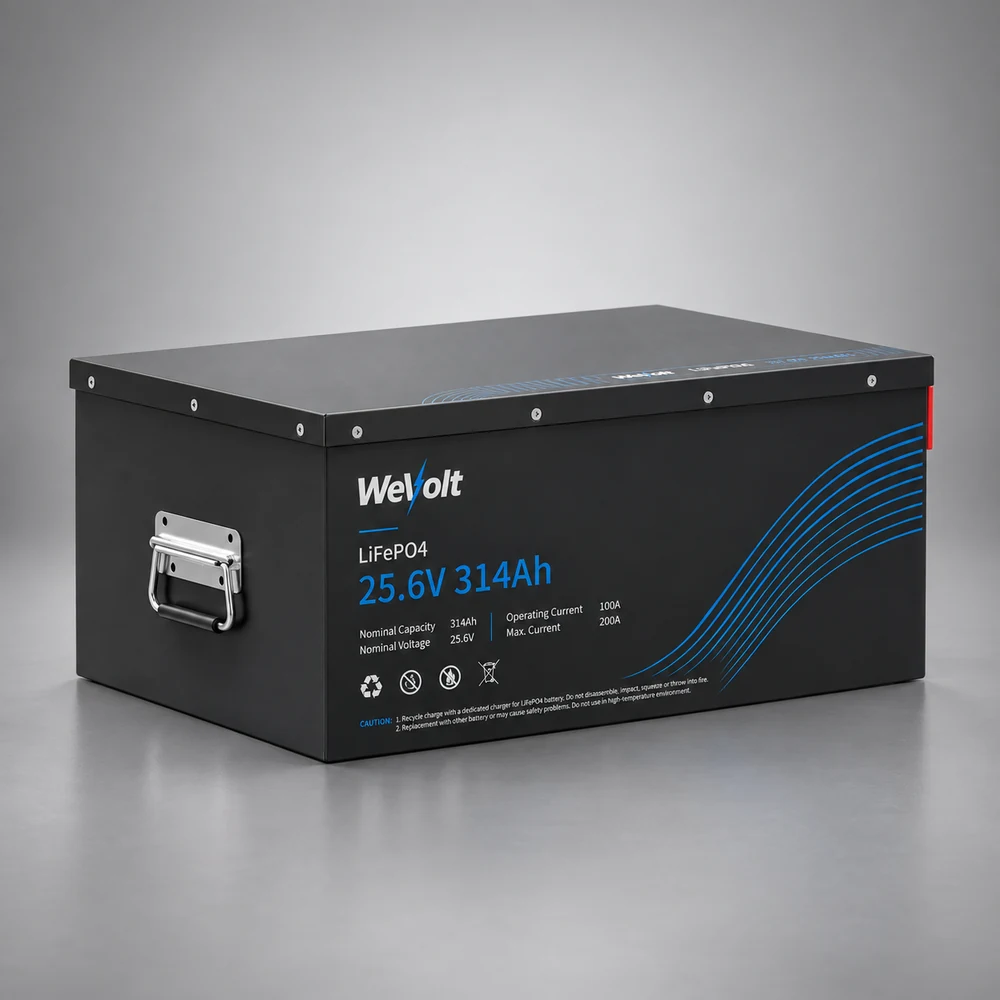
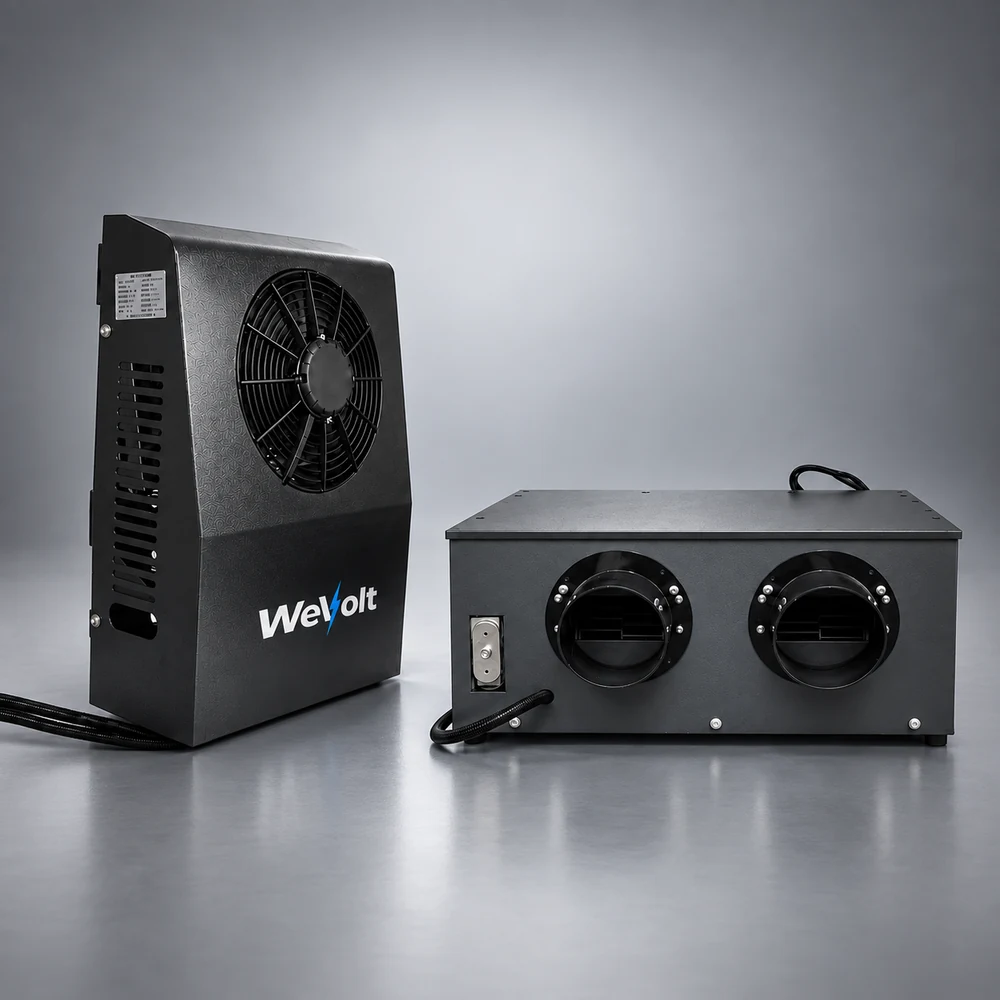
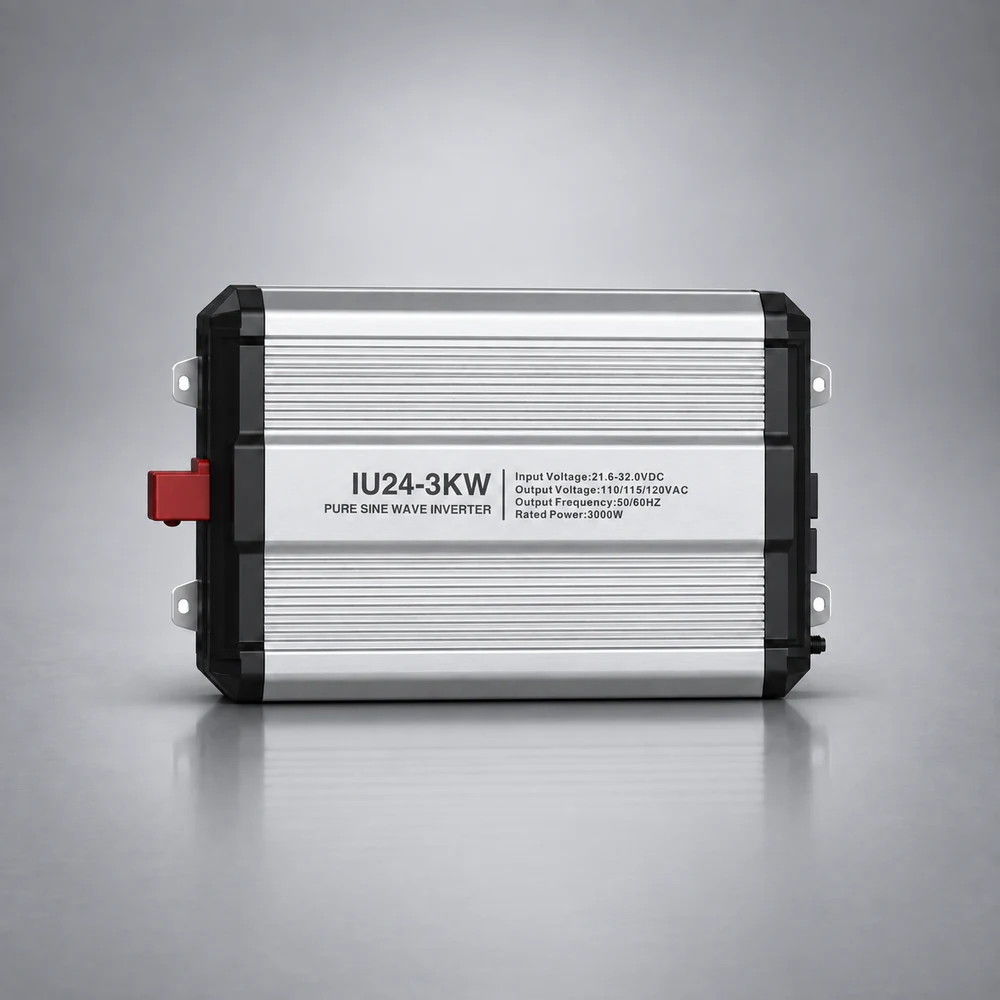
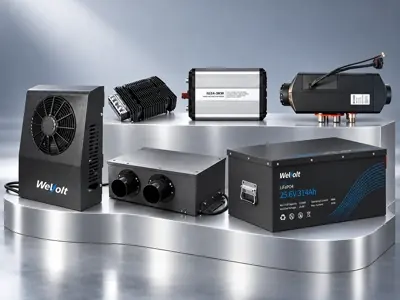
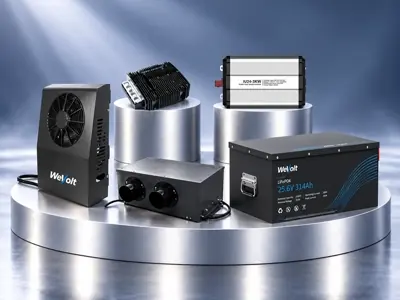
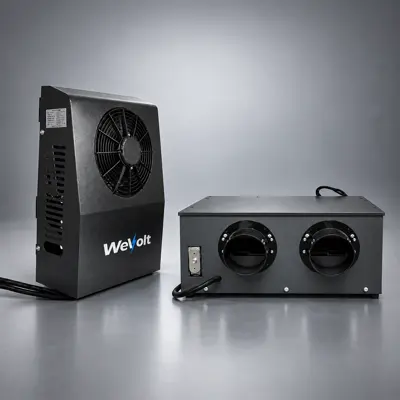
This is where the first-principles teardown pays off. An APU breaks into six components — the electric system's five from the 101 hub (battery, HVAC, inverter, bidirectional DC-DC, BMS and wiring) plus the winter fuel-fired heater — and every one of them is an independently replaceable module that is not expensive to buy on its own. There is public proof: Polar Fox sells its parts on an open shelf — compressor assembly $1,406, evaporator unit $740, control motherboard $111, fans $18.50–166.50. The bulk of a system price has always been the channel addend, never the components (the four addends, in the price guide).
The service philosophy arrives with the component lineage: aviation maintenance runs on LRUs — Line Replaceable Units. You do not open one up trackside; you diagnose to the component, swap the whole module, and send the old one to the depot. Marine house-power systems work the same way. That is how we build the WeVolt Apex: inside this system the step "open it up and repair" does not exist — there is only "locate the fault, replace the component." For your budget it means electric repair spending is component-priced (locate + swap), not work-order-priced (diagnosis + $90/hr labor + parts): downtime turns from "waiting on parts and labor" into "swap it and roll." The honest boundary, written plainly: the battery is the one high-ticket component, budgeted in the next section.
Electric Alternatives
Two electric routes — one stays inside the Thermo King system, one changes tracks:
- Stay inside TK: the TriPac Envidia (the name-brand electric unit). It reuses the repair radius of nearly 200 dealers — a real asset for TK fleets; note that its NXT battery is AGM, not lithium — weight and cycle life are the price.
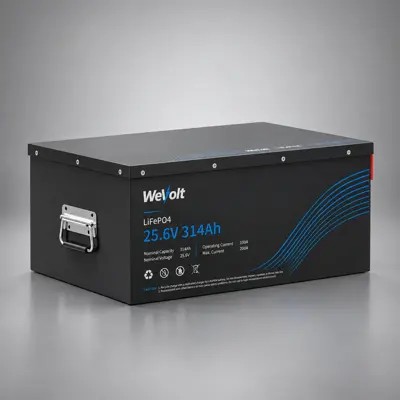
- Change tracks: the WeVolt Apex, from $3,980, factory-direct. From the repair-ledger side of electric: alternator, DPF, small-diesel overhaul — the three big TriPac failure categories do not exist in an electric system; and the act of "opening it up to repair" does not exist either — six components swapped the aviation way (Section 7). What you take on instead is the one long-term battery line item (cell specs commonly 3,000+ cycles — a decade-plus at 250 nights a year). $0 parked fuel, no PM schedule.
When the same diesel is still the right call — three scenarios, written before the electric ones so this stays fair: multi-night sits (a fuel tank is unlimited runtime); extreme cold (the coolant loop and mechanical heat); a fleet with its own TK service bench (retraining and tooling belong in the total cost).
Diesel APU vs Electric APU — the year-by-year TCO comparisonIs the TriPac worth repairing? Most of the time, yes — it is the category incumbent, and its durability reputation was not built by marketing. But "worth repairing" has boundaries: the four rules are those boundaries. Run your own numbers and the answer writes itself.
If your numbers point to changing tracks: the WeVolt Apex starts at $3,980, factory-direct, every specification published — the three big TriPac repairs (alternator, DPF, diesel overhaul) do not exist in our system, and neither does "opening it up": six components, locate the fault, swap it and roll — experience we brought over from aviation and marine service. The price is written honestly: one long-term battery line item. Repairing your TK or switching to our electric is arithmetic; run the numbers and they make the call.
Run your own numbers: idle hours and fuel price in, annual savings, payback and CO₂ out- 1Thermo King — 3rd Generation TriPac product page thermoking.com
- 2Thermo King — TriPac 3 Operator Manual TK-57075-19-OP-EN (PDF) thermoking.com
- 3Peak Thermo King — dealer page publishing the $14,535 installed price peakthermoking.com
- 4Fleet Maintenance — top diesel and electric APUs for 2026 (Feb 2026) fleetmaintenance.com
- 5RareElectrical — 12V 120A TriPac alternator for the Yanmar 2TNV70 rareelectrical.com